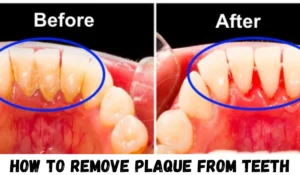
HOW TO REMOVE PLAQUE FROM TEETH
The Evidence-Based Guide: What Works, What Doesn’t & When You Need a Dentist
That fuzzy, rough feeling on your teeth after a long day? That is dental plaque — a living bacterial film that forms on your teeth within hours of brushing. Everyone gets it. The difference between healthy teeth and dental problems almost entirely comes down to how consistently and how correctly you remove it. This guide covers exactly that: what plaque is, the methods that genuinely work (and the ones that are overhyped), and the clear line between what you can handle at home and what only a dentist can fix.
| 📌 | The most important fact about plaque: it can be fully removed at home — but only while it is still soft. Once it hardens into tartar (dental calculus), no amount of brushing, flossing, or home remedy will remove it. That transformation begins within 24 to 72 hours of undisturbed plaque sitting on your teeth. This timeline is the foundation of every plaque-removal strategy. |
1. What Is Dental Plaque and Why Does It Keep Coming Back?
Dental plaque is a soft, sticky biofilm — a structured community of bacteria, saliva, and food particles — that continuously forms on every tooth surface. It is colorless or pale yellow, which is why it is easy to overlook. Bacteria in your mouth feed on sugars and starches from food and drinks, producing acids as a byproduct. Those acids attack tooth enamel, irritate gum tissue, and, when plaque is left undisturbed, trigger the chain of events leading to cavities and gum disease.
Plaque cannot be eliminated permanently. Bacteria are a natural part of your oral ecosystem, and they begin recolonizing tooth surfaces within minutes of brushing. This is not a failure — it is biology. The goal of oral hygiene is not to achieve a plaque-free mouth but to disrupt and remove plaque consistently enough that it never gets the chance to harden or cause damage.
Plaque vs. Tartar: The Critical Difference
These two terms are often confused, but they describe very different problems that require very different solutions:
| Dental Plaque | Tartar (Calculus) | |
| What it is | Soft, sticky bacterial film — colorless or pale yellow | Hardened, mineralized plaque — yellow or brown, rough texture |
| How it forms | Continuously, from bacteria + food + saliva | When plaque sits undisturbed for 24–72 hours, minerals from saliva calcify it |
| Where it builds | All tooth surfaces, especially gumline and between teeth | Inside of lower front teeth and outside of upper molars most commonly — near saliva gland openings |
| Can it be removed at home? | Yes — with brushing and flossing | No — only a dental professional can remove it with scaling instruments |
| Health risks | Cavities, gum irritation, bad breath | Gum disease (gingivitis → periodontitis), tooth loss, tooth sensitivity |
| ⚠️ | Harvard Medical School research has documented an association between chronic gum disease — which begins with unmanaged plaque — and elevated rates of cardiovascular problems including heart attack and stroke. Plaque management is not just about your teeth; it connects to systemic health. |
2. How to Remove Plaque from Teeth: What the Evidence Actually Shows
These are the methods with genuine evidence behind them, ranked by effectiveness and clinical consensus.
Method 1: Brushing — The Non-Negotiable Foundation
Brushing is the single most effective plaque-removal tool available to you. But technique matters as much as frequency. The most common mistakes — brushing too hard, using a horizontal scrubbing motion, and spending less than the recommended time — all reduce effectiveness while risking enamel and gum damage.
- Frequency: Twice daily — morning and before bed. Brushing before sleep is the more critical session because saliva production drops at night, reducing the mouth’s natural self-cleaning ability.
- Technique: Hold your brush at a 45-degree angle to the gumline. Use small circular or gentle back-and-forth strokes. Brush every surface: outer, inner, and chewing surfaces of all teeth. Do not forget the back molars — these are the most commonly missed areas.
- Duration: Two full minutes. Most people brush for less than 45 seconds — significantly below what is needed for thorough plaque removal.
- Toothbrush type: Use a soft-bristled brush. Medium and hard bristles do not remove plaque more effectively and can damage enamel and gum tissue with consistent use. Electric toothbrushes are clinically proven to remove more plaque than manual brushes, particularly oscillating-rotating models.
- Toothpaste: Use fluoride toothpaste. Fluoride strengthens enamel against acid attack and has robust evidence for cavity prevention. No other toothpaste additive has comparable evidence.
Method 2: Flossing — The 40% You’re Missing
Your toothbrush physically cannot reach the contact areas between teeth or beneath the gumline. These surfaces represent approximately 40% of each tooth’s total area. Plaque left in these spaces is the primary cause of both interproximal (between-tooth) cavities and gum disease.
- Frequency: Once daily. Evening is optimal — removing the day’s accumulated plaque before the overnight period.
- Correct technique: Pull about 18 inches of floss, wind most of it around your middle fingers, and guide a clean section between each pair of teeth. Curve the floss into a ‘C’ shape around each tooth and slide it gently up and down against the tooth surface — this friction is what physically dislodges the plaque. Snapping floss straight down without curving around the tooth is a common ineffective technique.
- Alternatives: Interdental brushes (small cylindrical brushes designed for the spaces between teeth) are clinically at least as effective as string floss and may be easier to use correctly. Water flossers are useful as a supplement, particularly for people with braces or bridges, but are not a complete replacement for mechanical plaque removal with string or interdental brushes.
Method 3: Antimicrobial Mouthwash — A Useful Supplement
Mouthwash containing chlorhexidine, cetylpyridinium chloride (CPC), or essential oils (such as thymol and menthol) has demonstrated ability to reduce oral bacteria and reach areas that brushing and flossing cannot. However, mouthwash should be used after brushing and flossing — it is a supplement to mechanical removal, not a replacement for it. Using mouthwash instead of flossing misses the physical removal of plaque between teeth that no liquid can replicate.
- When to rinse: After brushing and flossing, not immediately after brushing — rinsing right after brushing washes away the fluoride coating left by toothpaste before it has time to act.
- Which type: Antimicrobial mouthwashes (chlorhexidine or CPC-based) have more evidence for plaque reduction than cosmetic fresh-breath rinses. Fluoride mouthwashes add enamel protection.
Method 4: Baking Soda — Evidence-Supported, With Limits
Baking soda (sodium bicarbonate) has genuine research supporting its use for plaque removal. Multiple clinical studies show that baking soda dentifrices significantly reduce plaque levels compared to non-baking-soda toothpastes. A 2017 study published in the Journal of the American Dental Association also confirmed its acid-neutralizing and antimicrobial properties against the bacteria most associated with tooth decay. However, baking soda has no fluoride — so it should complement fluoride toothpaste, not replace it. Using it 2–3 times per week as an occasional scrub is a reasonable approach.
Method: Dip a wet, soft toothbrush into a small amount of baking soda and brush gently for about two minutes. Rinse thoroughly. Do not use it daily long-term as a sole dentifrice — it lacks fluoride’s protective properties.
Method 5: Diet — Plaque Prevention Through What You Eat
Certain dietary habits directly support plaque control by reducing the bacterial fuel supply and stimulating saliva — your mouth’s own natural defense system.
- Reduce frequency of sugar and refined carbohydrates: Bacteria in plaque metabolize sugars to produce acids within minutes of eating. The number of times you eat sugar matters more than the total amount — each exposure triggers a 20-minute acid attack on enamel.
- Increase crunchy, fibrous vegetables and fruits: Foods like celery, carrots, and apples have a mild scrubbing effect on tooth surfaces and stimulate saliva, which neutralizes acids and washes away food particles.
- Drink water consistently: Water rinses away food debris and maintains saliva production. Fluoridated tap water provides an additional enamel-protection benefit.
- Dairy products: Cheese and milk are alkaline and help neutralize the acid environment that plaque bacteria thrive in. Cheese in particular has been shown to raise oral pH and reduce enamel demineralization.
3. Methods That Are Overhyped: Honest Assessment
Oil Pulling
Oil pulling — swishing coconut, sesame, or other edible oil through your teeth for 15–20 minutes — is widely promoted as a plaque remedy, particularly on social media. The honest picture from the research is mixed. A 2022 meta-analysis of nine randomized controlled trials found that oil pulling can reduce total bacterial counts and modestly reduce plaque and gingival scores. A 2024 systematic review confirmed a probable benefit for gingival (gum) health, but found chlorhexidine mouthwash significantly outperformed oil pulling for plaque reduction.
The American Dental Association does not recommend oil pulling for plaque or tartar removal, citing insufficient high-quality evidence. If you choose to try it, it may offer a mild supplementary benefit — but it should not replace brushing, flossing, or professional cleaning, and the time investment (20 minutes daily) is disproportionate to the modest, inconsistent evidence of benefit.
Scraping Tartar at Home
Dental scrapers sold for consumer use cannot safely remove tartar. Tartar bonds to tooth surfaces with significant force, and attempting to scrape it with consumer tools risks gouging enamel, cutting gum tissue, and pushing bacteria deeper below the gumline — potentially worsening the problem it is meant to solve. Tartar removal requires professional scaling with calibrated dental instruments. This is not an area where a DIY approach is appropriate.
| ✅ | What you can control at home: soft plaque, fresh food debris, bacterial load, and acid environment. What only a professional can address: hardened tartar, sub-gingival calculus, and early-stage gum disease assessment. Both matter for long-term oral health. |
4. When You Need a Professional Dental Cleaning
Professional cleaning (prophylaxis) is not optional even for people with perfect home hygiene. Here is why: plaque accumulates in areas that no home technique reaches consistently — deep in gum pockets, on root surfaces, and in tight proximal contacts. Over time, even with diligent brushing and flossing, some plaque calcifies in areas where home care misses it.
- Standard recommendation: Every six months for most adults. People with a history of gum disease, high cavity risk, or other dental conditions may need cleaning every three to four months.
- Signs you need to go sooner: Gums that bleed when brushing or flossing (a sign of active inflammation from plaque), visible yellow or brown deposits on teeth (tartar), persistent bad breath despite good hygiene, gum tenderness or recession, or any visible changes in your teeth or bite.
- What happens at a professional cleaning: A dental hygienist uses ultrasonic scalers and hand instruments to remove all calculus deposits — both above and below the gumline — then polishes tooth surfaces to make them less hospitable to plaque attachment. The dentist checks for cavities and early-stage gum disease that home care cannot detect.
Official Guidance: American Dental Association — Dental Plaque (ada.org) — The ADA’s evidence-based guidance on plaque and oral hygiene
5. Frequently Asked Questions: Removing Plaque from Teeth
Q: How quickly does plaque form on teeth?
A: Plaque begins reforming within minutes of brushing. Bacteria re-attach to clean tooth surfaces almost immediately. A significant plaque film is present within a few hours, and without removal, it begins hardening into tartar within 24 to 72 hours. This is why daily brushing and flossing — not just occasional cleaning — is the only effective strategy.
Q: Can you remove plaque without going to the dentist?
A: Yes — soft plaque can be fully removed at home with correct brushing and flossing. The key word is ‘soft.’ Once plaque has hardened into tartar (calculus), no home method will remove it safely. Additionally, professional cleanings reach areas — particularly beneath the gumline — that even excellent home hygiene cannot consistently clean. Both home care and professional care are necessary components of plaque management.
Q: Does baking soda remove plaque?
A: Yes, with caveats. Multiple clinical studies confirm that baking soda effectively disrupts plaque and neutralizes the acid environment bacteria need to thrive. It is safe to use occasionally as a supplement to regular brushing. However, baking soda contains no fluoride, so it should not replace fluoride toothpaste as your primary dentifrice. Using it two to three times per week is a reasonable approach.
Q: What is the fastest way to remove plaque at home?
A: There is no instant method. The fastest evidence-based approach is: brush with a fluoride toothpaste for a full two minutes using correct 45-degree angle technique, then immediately floss all interdental spaces using a C-shape technique. This two-step combination removes plaque from both tooth surfaces and the spaces between teeth — covering the areas where plaque causes the most damage. Using an electric toothbrush modestly accelerates plaque removal compared to manual brushing.
Q: What does plaque look like and how do I know if I have it?
A: Plaque is colorless or pale yellow and almost invisible on the tooth surface. The most reliable way to feel it is to run your tongue across your teeth several hours after brushing — a fuzzy, rough, or coated feeling indicates plaque accumulation. Disclosing tablets (available at pharmacies) temporarily stain plaque pink or blue, making it visible and helping you identify areas your brushing is missing.
Q: Can poor plaque control affect overall health?
A: Research from Harvard Medical School and multiple peer-reviewed studies has documented associations between chronic gum disease — which originates from unmanaged plaque — and increased rates of cardiovascular disease, pneumonia, and dementia. The relationship is associative rather than definitively causal, but the biological mechanisms are plausible: oral bacteria can enter the bloodstream through inflamed gum tissue and affect systemic inflammatory processes. This makes plaque management relevant well beyond dental aesthetics.
Q: How do I remove plaque from between teeth?
A: Flossing is the primary method. Pull 18 inches of string floss, guide a clean section between each pair of teeth, and use a C-shape technique — curving the floss around each tooth and moving it up and down against the tooth surface, not just popping it in and out. Interdental brushes are an equally effective alternative for many people and are easier to use correctly. Water flossers are a useful supplement for people with braces or bridges but do not provide the same mechanical plaque removal as string floss or interdental brushes.
The Honest Summary: What Works and What to Do
Removing plaque from teeth is straightforward in principle but demands consistency in practice. The evidence-based routine is not complicated: brush for two full minutes with fluoride toothpaste using correct angle and technique, floss every tooth space once daily with proper C-shape technique, and supplement with an antimicrobial mouthwash after — not instead of — mechanical cleaning.
Baking soda offers genuine supplementary benefit a few times per week. Dietary changes that reduce sugar frequency and increase saliva flow support the whole system. Oil pulling has modest and inconsistent evidence — it will not hurt, but it is not a substitute for the basics. And regardless of how well you follow this routine at home, tartar removal and sub-gingival cleaning require professional care every six months.
The 24-to-72-hour window before plaque hardens is the clock that governs everything. Daily, consistent removal is the only strategy that works. Everything else is secondary.
Editorial Note
This article is educational and non-promotional. All information is based on clinical dental research, ADA guidance, Cleveland Clinic, Medical News Today, and peer-reviewed studies including those from JADA and PMC. This article does not constitute dental or medical advice. Consult a licensed dental professional for personal guidance.
Medically reviewed by:
Dr. Aziz Liaquat, DDS
Doctor of Dental Surgery
New York University College of Dentistry