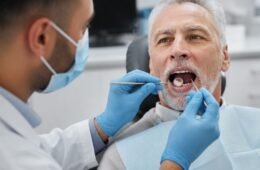
BRACES FOR ADULTS
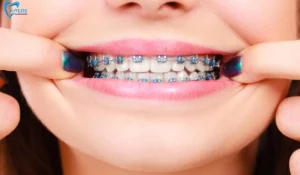
The Complete, Honest Guide: Types, Costs, Insurance Coverage & Everything You Need to Know in 2026
More adults than ever are choosing orthodontic treatment. According to the American Association of Orthodontists, roughly one in every four orthodontic patients in the United States today is an adult — a statistic that has grown steadily for two decades. If you have been wondering whether braces for adults are effective, how much they cost, whether insurance covers them, or which type is best for you, this guide answers every major question using current, factual information.
This article covers every search question adults commonly ask: types of braces, cost ranges with and without insurance, what Medicaid and Medicare cover, how long treatment takes, Invisalign vs. braces comparisons, free and low-cost programs, and which dental insurance plans actually include orthodontic benefits for adults. Nothing here is promotional — the goal is simply to give you accurate information so you can make an informed decision.
| 📌 | Key Facts at a Glance: Adult braces typically cost $2,500–$8,000 depending on type and complexity. Treatment takes 12–36 months on average. Most private dental insurance covers 25–50% of adult orthodontic costs if orthodontic benefits are included. Medicare does NOT cover braces. Medicaid coverage varies by state and is limited for adults. Invisalign and traditional metal braces both produce excellent results for most adults. |
1. Why Adults Choose to Get Braces
Adults seek orthodontic treatment for many of the same reasons teenagers do — but often with added motivation. Common reasons adults decide to pursue braces or other orthodontic appliances include:
- Correcting crowding or spacing: Teeth that are crowded, overlapping, or unevenly spaced affect both appearance and oral hygiene. Tight spaces trap food and make thorough brushing and flossing harder.
- Fixing a misaligned bite: Overbites, underbites, crossbites, and open bites can cause uneven tooth wear, jaw pain, and difficulty chewing. Orthodontic treatment addresses these functional issues at any age.
- Shifting teeth after earlier treatment: Adults who had braces as teenagers but did not consistently wear retainers often experience relapse — teeth shifting back toward their original positions.
- Improving confidence: Many adults report that a straighter smile improves their confidence in professional and social settings. This is among the most commonly cited reasons adults seek orthodontic care.
- Preparing for restorative dentistry: Orthodontists and dentists sometimes recommend braces before dental implants, crowns, or bridges to ensure teeth are positioned correctly for optimal long-term outcomes.
- Addressing jaw and TMJ issues: In some cases, bite correction through orthodontics reduces jaw joint strain and associated headache or jaw pain symptoms.
The good news is that adult bone is fully developed and stable, which means tooth movement may be slightly slower than in children but is equally effective. Age alone is not a barrier to successful orthodontic treatment.
| ✅ | Orthodontic treatment is effective at any adult age. The American Association of Orthodontists confirms that healthy teeth can be moved orthodontically throughout life — the key requirements are good gum health and adequate bone support, not age. |
2. Types of Braces for Adults: A Full Comparison
Adults today have more orthodontic options than any previous generation. Understanding the different types of braces for adults — and the trade-offs among them — is the first step toward choosing the right treatment. Below is a detailed breakdown of each major option, including ceramic braces, clear aligners, metal braces, lingual braces, and self-ligating systems.
| Type of Braces | Visibility | Average Cost (USA) | Best For | Key Consideration |
| Traditional Metal Braces | Most visible | $2,500–$5,500 | Complex bite issues, all budgets | Most proven track record; durable |
| Ceramic Braces | Tooth-colored; less visible | $3,000–$7,000 | Adults wanting low-profile fixed option | May stain; slightly more fragile |
| Clear Aligners (Invisalign, etc.) | Nearly invisible | $3,000–$8,000 | Mild–moderate crowding & spacing | Removable; requires ~22 hrs/day wear |
| Lingual Braces | Invisible (behind teeth) | $8,000–$13,000 | Professionals needing full invisibility | Highest cost; tongue comfort adjustment |
| Self-Ligating Braces | Similar to metal/ceramic | $3,000–$6,000 | Faster appointments; sensitive mouths | No rubber bands; built-in clips |
| Retainer / Minor Correction Aligners | Near-invisible | $1,000–$2,500 | Minor relapse or very mild crowding | Not suitable for complex cases |
Metal Braces for Adults
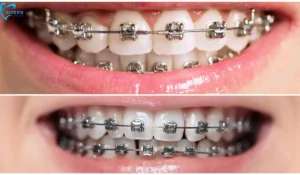
Metal Braces for Adults
Traditional metal braces remain the most widely used orthodontic appliance and the most thoroughly researched. Modern versions are significantly smaller and more comfortable than older designs. Metal braces are fixed — attached to the teeth throughout treatment — which means there is no compliance requirement beyond keeping appointments. They handle the widest range of orthodontic problems, including severe crowding, complex bite corrections, and tooth rotations that clear aligners sometimes struggle with.
Cost for metal braces for adults in the United States ranges from approximately $2,500 to $5,500, making them the most affordable option for most patients. They are covered more often by dental insurance orthodontic benefits than aligner systems, though coverage policies vary by plan.
Ceramic Braces for Adults
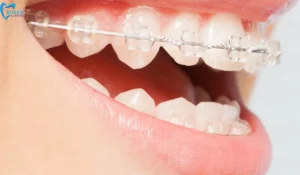
Ceramic Braces for Adults
Ceramic braces work identically to metal braces but use tooth-colored or clear ceramic brackets that blend with tooth enamel. They offer a less visible appearance while maintaining the precision of fixed orthodontic treatment. The brackets can be matched closely to natural tooth color, making them popular among adults who want orthodontic treatment without the obvious metallic look.
The main considerations with ceramic braces are that the brackets can stain with heavy coffee, tea, or wine consumption, and they are slightly more fragile than metal brackets. Clear braces for adults cost between $3,000 and $7,000 on average — more than metal but less than lingual braces or premium aligner systems.
Invisible Braces for Adults: Aligners (Invisalign and Others)
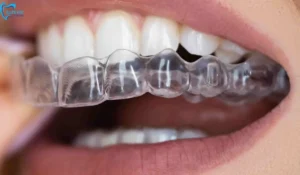
Invisible Braces for Adults
Clear removable aligners — often generically called invisible braces for adults — have been the fastest-growing orthodontic option since Invisalign launched in the late 1990s. Rather than brackets and wires, treatment consists of a series of custom-fitted transparent plastic trays worn over the teeth. Each tray exerts gentle pressure to move teeth incrementally.
Aligners offer several advantages for adults: they are nearly invisible, removable for eating and brushing, and generally more comfortable than fixed appliances. However, they require strict patient compliance — trays must be worn 20–22 hours per day. Patients who remove them too frequently see slower or incomplete results. Aligners are most effective for mild to moderate crowding and spacing; complex bite problems may still require traditional appliances.
How much do clear braces for adults cost? Invisalign for adults typically ranges from $3,000 to $8,000, depending on the complexity of the case and the treating provider. Several alternative clear aligner brands exist, some at lower price points, though Invisalign remains the most widely prescribed system with the longest clinical evidence base.
| 💡 | Invisalign vs. Braces for Adults: For mild to moderate cases, the outcomes are generally comparable. For complex cases — significant bite problems, severe crowding, or tooth rotations — traditional metal or ceramic braces typically provide more precise control. Your orthodontist is the right person to assess which approach will achieve the best result for your specific situation. |
Lingual Braces for Adults
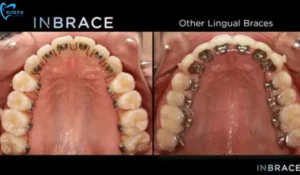
Lingual Braces for Adults
Lingual braces are fixed braces attached to the back (tongue-side) surfaces of the teeth, making them completely invisible from the front. They offer the precision of traditional braces with full invisibility — a combination no other option matches. However, lingual braces are the most expensive option, require a longer adjustment period due to tongue contact, and are offered by fewer orthodontists since specialized training is required.
Average cost for lingual braces for adults ranges from $8,000 to $13,000 or more, placing them beyond many patients’ budgets. They are generally recommended only when other options are unsuitable and when full invisibility is a clinical or professional necessity.
You May Also Like: Dental Implants Cost in the USA (2026 Complete Guide)
3. How Much Do Braces Cost for Adults in 2026?
The cost of braces for adults is one of the most frequently searched questions — and the answer depends on several factors: the type of braces, case complexity, geographic location, the individual orthodontist’s pricing, and whether dental insurance covers any portion. Below is a comprehensive breakdown.
| Braces Type | Low Estimate | High Estimate | Notes |
| Metal braces | $2,500 | $5,500 | Most affordable; widely covered by insurance |
| Ceramic (clear) braces | $3,000 | $7,000 | Tooth-colored brackets; slightly higher cost |
| Clear aligners (Invisalign) | $3,000 | $8,000 | Removable; compliance-dependent |
| Lingual braces | $8,000 | $13,000+ | Fully hidden; highest cost |
| Self-ligating braces | $3,000 | $6,000 | No elastic ties; similar to metal/ceramic |
| Average cost of all types | $3,000 | $7,000 | Typical adult case, USA average |
What Affects the Cost of Braces for Adults?
Several factors push the final price higher or lower than these averages:
- Case complexity: Simple spacing corrections cost less than severe crowding or bite correction, which requires longer treatment and more frequent adjustments.
- Geographic location: Orthodontic fees in major metropolitan areas like New York, Los Angeles, and San Francisco are typically higher than in smaller cities or rural areas. How much do braces cost in Texas versus New York? The range can differ by $1,000–$2,000 for the same type of treatment.
- Orthodontist vs. general dentist: Board-certified orthodontists typically charge more than general dentists offering orthodontic services, but have completed an additional 2–3 years of specialty training.
- Payment plans and financing: Most orthodontic practices offer in-house payment plans with zero or low interest, spreading costs over the treatment period. Third-party financing through companies like CareCredit is also widely available.
- Retainers (post-treatment): Retainers — essential for maintaining results after braces — typically cost an additional $150–$600 depending on the type (removable vs. fixed/bonded). This is separate from treatment cost.
How Much Do Braces Cost Without Insurance for Adults?
If you have no dental insurance coverage, the full fee is your responsibility. How much do braces cost without insurance for adults? The out-of-pocket cost for traditional metal braces averages $3,500–$5,000 for a complete treatment course. Clear braces without insurance averages $4,500–$7,000. How much are braces for adults with insurance? With a plan that includes orthodontic benefits, the insured portion typically covers $1,000–$1,500 toward the total, significantly reducing out-of-pocket expense.
How expensive are braces for adults? While the total cost is significant, most orthodontists structure payments as monthly installments over the treatment period (usually 18–30 months), making the monthly outlay $100–$300 per month for many patients — more manageable than the lump-sum figures suggest.
| 💡 | Important: Always request an itemized treatment estimate during your orthodontic consultation. Ask specifically what the fee includes — X-rays, records, all adjustments, retainers, and emergency visits should be listed. Some advertised prices do not include all of these components. |
4. Does Insurance Cover Braces for Adults?
Insurance coverage for adult braces is one of the most searched topics in this area — and the most misunderstood. The short answer: some dental insurance plans cover braces for adults, but many do not, and the details matter enormously.
Does Dental Insurance Cover Braces for Adults?
Standard dental insurance plans (cleanings, fillings, crowns) often do not include orthodontic benefits at all. Orthodontic coverage must be specifically included in the plan. When it is included, plans typically cover a lifetime maximum of $1,000–$2,000 toward orthodontic treatment, regardless of actual treatment cost. This means even with insurance, most adults pay the majority of their treatment cost out of pocket.
What dental insurance covers braces for adults? To find a plan with adult orthodontic benefits, look for language in the plan documents specifically referencing ‘adult orthodontia,’ ‘orthodontic benefits for adults,’ or a lifetime orthodontic maximum that applies to all ages (not just under-18 or under-19 dependents).
Which Insurance Companies Cover Adult Braces? (Major Carriers)
| Insurance Provider | Adult Ortho Coverage? | Typical Lifetime Max | Key Notes |
| Delta Dental | Plan-dependent | $1,000–$2,000 | Does Delta Dental cover braces for adults? Yes on some plans — check your specific contract |
| Cigna | Plan-dependent | $1,000–$2,000 | Does Cigna cover braces for adults? Available on select Cigna Dental plans |
| Anthem | Plan-dependent | $1,000–$1,500 | Does Anthem cover braces for adults? Varies by employer and plan tier |
| Humana | Plan-dependent | $1,000–$2,000 | Does Humana cover braces for adults? Yes on some plans — verify at enrollment |
| Aetna | Plan-dependent | $1,000–$2,500 | Dental plans from Aetna may include adult ortho benefits |
| MetLife Dental | Plan-dependent | $1,000–$2,000 | Does MetLife Dental cover braces for adults? Check your employer plan |
| Blue Cross Blue Shield | Plan-dependent | $1,000–$2,000 | Does Blue Cross cover braces for adults? Varies significantly by plan |
| Guardian Dental | Plan-dependent | $1,000–$2,000 | Does Guardian Dental cover braces for adults? Available on select plans |
| UnitedHealthcare | Plan-dependent | $1,000–$1,500 | Does United Healthcare cover braces for adults? Varies by employer contract |
| ⚠️ | Critical: No major insurer automatically covers adult braces under a standard dental plan. Coverage exists only on specific plan tiers that include orthodontic benefits for adults. Always review the Evidence of Coverage document or call your insurer’s member services to confirm adult orthodontic benefits BEFORE starting treatment. |
Does Medicaid Cover Braces for Adults?
This question generates among the highest search volume in the entire adult braces topic — and the answer is more complex than most people expect.
Standard Medicaid dental coverage for adults is extremely limited. Most states provide only emergency dental services (pain relief, extractions) to adult Medicaid enrollees. Orthodontic treatment — including braces — is typically not covered for adults under federal Medicaid requirements.
However, Medicaid dental coverage is determined state by state. A small number of states offer more comprehensive adult dental benefits, and in rare circumstances, braces may be covered if they are determined to be medically necessary — meaning the orthodontic condition is causing or contributing to a documented medical problem (not merely cosmetic). The threshold for medical necessity is very high.
If you are asking ‘will Medicaid pay for braces for adults?’ or ‘can I get braces with Medicaid as an adult?’ — the practical answer is: very unlikely in most states, unless a treating physician and dentist document clear medical necessity. Contact your state’s Medicaid office or a Medicaid-participating orthodontist to ask about your specific state’s current coverage rules.
- Does Medicaid cover braces for adults in New York? New York’s Medicaid dental program is more comprehensive than most states and may cover orthodontic services when medically necessary. Contact NY Medicaid directly for current eligibility.
- Does Medicaid cover braces for adults in Illinois? Illinois Medicaid covers limited dental services for adults. Orthodontic coverage for adults is not routinely included; medical necessity criteria apply.
How to get free braces with Medicaid for adults: The most realistic path is documenting that your orthodontic problem causes a medically significant functional problem (severe bite misalignment causing chewing difficulty, speech impairment, or contributing to a diagnosed medical condition). A letter of medical necessity from both a physician and a dentist or orthodontist strengthens a coverage request. Even so, approval is not guaranteed.
Does Medicare Cover Braces for Adults?
No. Medicare does not cover dental care of any kind, including braces, orthodontic appliances, or dental exams. Medicare Part A (hospital insurance) and Part B (medical insurance) specifically exclude routine dental care. Medicare Advantage (Part C) plans may include some dental benefits, but orthodontic treatment is virtually never covered. Does Medicare cover braces for adults? The definitive answer for standard Medicare is no.
Braces Insurance for Adults: What to Look For
When shopping for dental insurance that covers braces for adults, look for the following in the plan documents:
- Orthodontic lifetime maximum: A specific dollar amount (typically $1,000–$2,500) designated for orthodontic treatment. If this is listed as ‘dependent children only’ or ‘under age 19,’ it does not apply to you.
- Waiting period: Most plans with orthodontic benefits include a 12-month waiting period before benefits can be used. If you need treatment soon, factor this in.
- Percentage covered: Most orthodontic benefits cover 50% of treatment up to the lifetime maximum — not 50% of the total cost.
- Network requirements: Benefits may be higher or available only when using in-network orthodontists. Verify that your preferred orthodontist accepts your plan.
5. How Long Do Braces Take for Adults?
One of the most common questions adults ask before committing to treatment is about treatment duration. How long do braces take for adults? The honest answer is that it varies significantly based on the complexity of the case, the type of braces, and the patient’s compliance.
| Case Complexity | Metal/Ceramic Braces | Clear Aligners | Typical Examples |
| Minor (relapse, slight crowding) | 6–12 months | 3–9 months | Post-retainer relapse, 1-2 teeth shifted |
| Moderate (standard adult case) | 12–20 months | 12–18 months | Crowding, spacing, mild bite issues |
| Complex (significant bite/crowding) | 20–36 months | 18–30 months | Severe crowding, bite correction needed |
| Surgical cases (orthognathic) | 24–48 months total | Less common for surgical cases | Jaw surgery combined with braces |
How long do braces take to straighten teeth for adults? For the most common adult cases — moderate crowding or spacing with no significant bite issues — most adults complete treatment in 18–24 months with traditional braces or 12–18 months with clear aligners.
Do braces take longer for adults than for teenagers? In general, yes — slightly. Adult bone is denser and no longer growing, which means tooth movement happens a little more slowly. However, the difference is usually measured in months rather than years, and adults often comply better with treatment requirements, which can offset the physiological difference.
How long do braces last for adults? Once treatment is complete, braces are removed. However, retainer wear is permanent — teeth will shift without retention. Most orthodontists recommend wearing a retainer every night indefinitely.
| 💡 | The single most important factor in keeping treatment on schedule is keeping every appointment. Missed appointments add months to treatment time. For clear aligner patients, wearing trays the required hours per day is equally critical — poor compliance is the most common reason clear aligner cases extend beyond the estimated timeline. |
You May Also Like: 10 WARNING SIGNS YOU MAY NEED A ROOT CANAL
6. Free and Affordable Braces for Adults: Legitimate Options
The cost of braces is the primary barrier for many adults who need or want treatment. While truly free braces for adults are rare, several legitimate pathways exist for reducing cost significantly.
Free Braces Programs for Adults
- Dental school orthodontic clinics: University dental schools with accredited orthodontic residency programs treat patients at significantly reduced fees — typically 40–60% less than private practice rates. Treatment is performed by supervised dental residents. This is one of the most reliable paths to affordable or low-cost braces for adults in most major cities. Search for dental schools near your location through the Commission on Dental Accreditation (CODA) directory.
- Community health centers (FQHCs): Federally Qualified Health Centers receive federal funding to provide care on a sliding-fee scale based on income. Not all FQHCs offer orthodontic services, but some do. Search the HRSA Find a Health Center tool for locations.
- Donated services programs: Organizations including Smiles Change Lives and various state dental associations run programs providing free or heavily subsidized braces to qualifying low-income adults. Eligibility requirements and availability vary.
- Clinical trials and research programs: Orthodontic researchers at universities sometimes offer free or reduced-cost treatment to patients who meet study criteria. These are legitimate programs but availability is limited and location-specific.
- Employer benefits and HSA/FSA accounts: If your employer’s dental plan includes orthodontic benefits, enroll during open enrollment. Health Savings Accounts (HSA) and Flexible Spending Accounts (FSA) allow you to pay for braces with pre-tax dollars — effectively a 20–35% discount depending on your tax bracket.
Cheap Braces for Adults: What to Avoid
The search for cheap braces for adults or braces for adults near me at a very low price sometimes leads people toward options that carry real risks. Mail-order aligner companies — those that provide aligners without any in-person examination, X-rays, or professional monitoring — have been strongly cautioned against by the American Dental Association, the American Association of Orthodontists, and the American Association of Oral and Maxillofacial Surgeons.
The concern is not with the concept of at-home aligners but with the absence of proper diagnosis. Orthodontic tooth movement without confirmed bone and gum health assessment can cause irreversible bone loss, root damage, and gum recession. Several class-action lawsuits have been filed against direct-to-consumer aligner companies over these concerns. Legitimate orthodontic treatment always begins with an in-person examination, X-rays, and a professional diagnosis.
| ⚠️ | Affordable braces for adults are possible through legitimate channels (dental schools, FQHCs, insurance, HSA/FSA). Mail-order or direct-to-consumer aligner companies that require no in-person exam carry documented health risks and have faced significant regulatory scrutiny. This is not a judgment on budget — it is a clinical safety concern. |
7. When Are Braces Medically Necessary for Adults?
The question of when are braces medically necessary for adults carries significant practical importance — because ‘medically necessary’ braces may qualify for insurance coverage that cosmetic orthodontics would not.
Braces may be considered medically necessary for adults in the following circumstances:
- Severe malocclusion affecting function: A bite misalignment so significant that it impairs normal chewing, causes excessive tooth wear, or contributes to a documented functional problem.
- Orthodontic treatment required before oral surgery: When jaw surgery (orthognathic surgery) is recommended to correct skeletal discrepancies, orthodontic treatment is typically required before and after surgery as part of a comprehensive plan.
- Braces as part of trauma or disease treatment: After accidental tooth loss, cancer treatment affecting the jaw, or other medical events requiring restorative work, orthodontic treatment to position remaining teeth may be medically necessary.
- Sleep apnea (in limited cases): Some orthodontic interventions — particularly palate expansion in adults — have been explored in relation to obstructive sleep apnea management, though this remains a specialized area.
- Temporomandibular joint (TMJ) dysfunction: In some cases, bite correction through orthodontics is recommended as part of TMJ treatment, though the relationship between malocclusion and TMJ disorders is debated in the literature.
For insurance or Medicaid coverage purposes, establishing medical necessity requires documentation from treating clinicians — typically including clinical examination findings, radiographs, and letters explaining the functional basis for treatment. Cosmetic improvement alone does not meet medical necessity criteria.
8. Invisalign vs. Braces for Adults: An Honest Comparison
Invisalign vs. braces for adults is among the most-searched comparisons in orthodontics. Here is an evidence-based, non-promotional breakdown of the key differences.
| Factor | Traditional Braces | Invisalign / Clear Aligners |
| Visibility | Metal or ceramic — visible | Nearly invisible plastic trays |
| Removability | Fixed; worn 24/7 throughout treatment | Removable for eating, brushing, special occasions |
| Compliance requirement | None — braces do the work continuously | Must wear 20–22 hrs/day; poor compliance extends timeline |
| Effectiveness: mild-moderate cases | Excellent | Excellent; comparable outcomes |
| Effectiveness: complex cases | Superior — handles full range of complexity | May require more refinement; some limitations |
| Oral hygiene | Requires extra care around brackets/wires | Easier — remove aligners for normal brushing |
| Diet restrictions | Yes — hard, sticky foods must be avoided | None — remove aligners to eat anything |
| Typical cost | $2,500–$7,000 | $3,000–$8,000 |
| Insurance coverage | More commonly covered when plan includes ortho benefits | Usually covered similarly if plan covers orthodontics |
| Treatment timeline | 12–36 months typically | 6–24 months typically (compliance-dependent) |
The bottom line on Invisalign vs. braces for adults: neither is universally better. For adults who prioritize aesthetics and compliance is not a concern, clear aligners are an excellent option. For adults with complex bite problems or who prefer a treatment that does not depend on patient discipline, fixed braces are the proven solution. The best way to determine which is right for your case is an in-person consultation with a licensed orthodontist.
You May Also Like: Invisalign vs Braces for Adults: Cost, Comfort & Results (2026)
9. Pros and Cons of Braces for Adults
Before committing to orthodontic treatment, it is worth reviewing the full picture of benefits and considerations specific to adult patients.
Benefits of Getting Braces as an Adult
- Improved oral health: Straighter teeth are easier to clean. Reducing crowding and closing gaps decreases the areas where plaque accumulates, lowering the risk of cavities and gum disease over the long term.
- Better bite function: Correcting malocclusion reduces uneven tooth wear, improves chewing efficiency, and can alleviate strain on the jaw joints and muscles.
- Confidence and quality of life: Multiple studies have documented improvements in self-reported confidence and quality of life following orthodontic treatment in adults.
- Supports other dental work: Positioning teeth correctly before implants, bridges, or crowns often leads to better long-term outcomes for those restorations.
- No age limit: Orthodontic treatment can be successful well into adulthood. Adults in their 40s, 50s, and beyond can and do complete successful treatment.
Considerations and Challenges
- Cost: Adult orthodontic treatment is a significant financial investment, and insurance coverage is incomplete for most patients.
- Time commitment: Treatment requires regular appointments (typically every 4–8 weeks) over 1–3 years.
- Discomfort: Particularly in the first few days after placement and after adjustments, soreness and pressure are common. This is normal and temporary.
- Gum disease risk during treatment: Fixed braces create more areas for plaque buildup. Adults — who are at higher baseline risk for gum disease than teenagers — must be especially diligent with oral hygiene during treatment.
- Root resorption: In rare cases, orthodontic movement causes mild shortening of tooth roots (root resorption). Your orthodontist monitors for this with periodic X-rays.
- Longer bone healing: Adult bone remodels more slowly than growing bone, which can extend treatment duration compared to adolescent cases.
10. Finding Affordable Braces for Adults Near You
When you are ready to explore treatment, finding the right provider is as important as understanding the options. Here is a practical guide to locating adult orthodontic care at different price points.
- Search for board-certified orthodontists: The American Association of Orthodontists (AAO) member search at mylifemysmile.org allows you to find orthodontists by ZIP code. Board-certified orthodontists have completed specialty training beyond dental school.
- Request multiple consultations: Initial consultations are typically free. Getting assessments from 2–3 orthodontists allows you to compare treatment plans, timelines, and pricing.
- Ask specifically about adult experience: Ask prospective orthodontists what percentage of their patients are adults and whether they have experience with the specific issues you need addressed.
- Check dental school clinics: Search for dental schools in your area through the CODA directory. University orthodontic clinics offer significantly reduced fees.
- Check for insurance network providers: If your insurance plan includes orthodontic benefits, using an in-network provider will maximize your coverage.
- Ask about payment plans: Most orthodontic practices offer in-house interest-free payment plans. For braces for adults near me searches, look for practices that specifically mention flexible financing.
Searching for ‘affordable braces for adults near me’ or ‘cheap braces for adults near me’ online is a reasonable starting point, but complement online searches with verification of the provider’s credentials and patient reviews. The goal is to find a qualified provider at a price that works for you — not the lowest possible price from an unverified source.
11. Frequently Asked Questions: Braces for Adults
Q: How much do braces cost for adults on average?
A: The average cost of braces for adults in the United States ranges from $2,500 to $7,000 depending on the type of braces and complexity of treatment. Metal braces are typically the most affordable ($2,500–$5,500), followed by ceramic braces ($3,000–$7,000) and clear aligners like Invisalign ($3,000–$8,000). Lingual braces are the most expensive at $8,000–$13,000.
Q: What insurance covers braces for adults?
A: There is no single insurer that automatically covers adult braces under all plans. Coverage depends on whether your specific dental plan includes orthodontic benefits for adults. Major insurers including Delta Dental, Cigna, Anthem, Humana, Aetna, MetLife, Blue Cross Blue Shield, and United Healthcare all offer at least some plans with adult orthodontic coverage — but you must verify this in your specific plan documents. The typical lifetime orthodontic maximum is $1,000–$2,000.
Q: Does Medicaid cover braces for adults?
A: In most states, Medicaid does not cover braces for adults. Medicaid dental benefits for adults are very limited federally, and orthodontic treatment is considered a non-covered service in most state Medicaid programs. In rare circumstances where braces are medically necessary (documented functional impairment, not cosmetic), some states may authorize coverage. Contact your state’s Medicaid office to understand current rules in your state.
Q: Does Medicare cover braces for adults?
A: No. Standard Medicare (Parts A and B) does not cover dental care of any kind, including orthodontic treatment. Medicare Advantage (Part C) plans may include some dental benefits but virtually never cover orthodontic treatment. This is one of the most important coverage gaps for adults on Medicare.
Q: How long do braces take for adults?
A: Treatment time varies by case complexity. Minor cases may take 6–12 months. Typical adult cases with moderate crowding or spacing take 12–20 months with traditional braces. Complex cases involving significant bite correction can take 20–36 months. Clear aligner treatment for comparable cases typically takes slightly less time, but only if the patient wears the aligners the required 20–22 hours per day.
Q: Is Invisalign better than braces for adults?
A: Neither is universally better — the right choice depends on your specific case. Invisalign (and other clear aligners) are excellent for mild to moderate crowding and spacing, offer better aesthetics and oral hygiene convenience, and are equally effective for appropriate cases. Traditional braces handle a wider range of complexity, require no patient compliance beyond attendance, and are often less expensive. Your orthodontist is the right person to assess which is best suited to your individual situation.
Q: Can adults get braces at 30, 40, or 50?
A: Yes. There is no upper age limit for orthodontic treatment. Adults in their 30s, 40s, 50s, and older successfully complete orthodontic treatment regularly. The primary requirements are good gum health and adequate bone support — not age. A professional evaluation will confirm whether you are a candidate.
Q: How can I get free braces as an adult?
A: Completely free braces are rare for adults. The most realistic paths to reduced-cost braces include: dental school orthodontic clinics (40–60% below private rates), community health centers with sliding-scale fees, state Medicaid if you qualify and your state has relevant coverage, donated orthodontic services programs, and using HSA/FSA pre-tax dollars if your employer offers them. Using dental insurance with orthodontic benefits, if available, is also important.
Q: What type of braces is best for adults?
A: The best type of braces for adults depends on the specific problem being treated, lifestyle factors, and budget. Metal braces handle the widest range of issues at the lowest cost. Ceramic braces offer less visibility at slightly higher cost. Clear aligners offer the best aesthetics and convenience for appropriate cases. Lingual braces are fully invisible but most expensive. An orthodontic consultation is the essential first step — a professional assessment of your specific teeth and bite will guide the recommendation.
Q: Are braces painful for adults?
A: Discomfort rather than pain is the more accurate description for most patients. After placement and after each adjustment, pressure and soreness in the teeth and jaw are common for 1–3 days. Over-the-counter pain relievers (ibuprofen, acetaminophen) manage this effectively for most people. Soft foods are recommended for a few days after adjustments. Broken brackets or poking wires should be addressed by your orthodontist promptly.
Q: What is the average cost of braces for adults without insurance?
A: Without dental insurance, the out-of-pocket cost for adult braces averages $3,500–$5,000 for traditional metal braces and $4,500–$7,500 for clear aligners. Most orthodontic practices offer payment plans that spread the cost over the treatment period, making monthly payments of $100–$300 more manageable than the full upfront figure.
Conclusion: What Adults Should Know Before Getting Braces
Braces for adults are more accessible, more effective, and more diverse in options than most people realize. The major barriers — cost and the misconception that orthodontic treatment is only for teenagers — are addressable with the right information.
The most important takeaway from this guide is that no online resource, including this one, can replace an in-person orthodontic consultation. The type of braces that is best for you, the realistic treatment timeline, the actual cost, and whether your specific case can benefit from clear aligners or requires fixed appliances are all questions that require a professional assessment. That consultation is typically free, and most orthodontists will provide a written treatment estimate at the same appointment.
What this guide can do is ensure that when you walk into that consultation, you understand your options, know the right questions to ask about cost and insurance, and can evaluate the information you receive with confidence.
| 📌 | Next Steps: (1) Check your dental insurance plan documents to confirm whether you have adult orthodontic benefits and what the lifetime maximum is. (2) Use HSA or FSA funds if available — orthodontic treatment is an eligible expense. (3) Contact your state Medicaid office if you are enrolled, to ask about current adult dental coverage. (4) Schedule a free consultation with a board-certified orthodontist to get a professional assessment of your specific situation. |
Editorial Disclaimer
This article is provided for informational and educational purposes only. It does not constitute dental, medical, or financial advice. Cost figures are estimates based on US averages as of early 2026 and will vary by location, provider, and individual case. Insurance coverage details vary by plan, employer, and state — always verify directly with your insurer. For personal dental guidance, consult a licensed dentist or orthodontist.
Medically reviewed by:
Dr. Aziz Liaquat, DDS
Doctor of Dental Surgery
New York University College of Dentistry