CAN A DENTIST TELL IF YOU VAPE?
What Oral Health Signs Reveal, What the Research Shows & What Patients Need to Know
Vaping has grown dramatically in popularity over the past decade, particularly among teenagers and young adults. A question patients increasingly bring to the dental chair — or type into a search engine before their appointment — is whether a dentist can detect vaping from an oral examination alone.
The clinical answer is yes, in most cases involving regular use. Dentists do not rely on a single diagnostic test. Instead, they observe a pattern of oral changes — many of which are directly linked to the chemical components of e-cigarette aerosol — and assess whether that pattern is consistent with a vaping habit. This article explains what those signs are, what the current peer-reviewed research confirms about vaping’s effects on oral health, and what patients should understand about confidentiality.
| 📌 | Summary: Dentists identify vaping through a combination of clinical signs — not a single definitive test. The signs are cumulative and dose-dependent: regular use over weeks to months produces detectable oral changes; occasional or single-use vaping is very unlikely to be identified during a routine exam. |
1. What Peer-Reviewed Research Shows About Vaping and Oral Health
The evidence base on e-cigarettes and oral health has grown substantially since 2018. Several systematic reviews and meta-analyses published through 2024 have identified consistent patterns of oral health disruption in regular vapers.
A 2024 systematic review published in the Journal of Pharmacy and Bioallied Sciences, drawing on PubMed, Cochrane, and Scopus databases, found consistent associations between e-cigarette use and gingival inflammation, dry mouth, and mucosal changes across multiple included studies. [1] A comprehensive review by Charde et al., published in PLOS Global Public Health (March 2024), evaluated scoping evidence on e-cigarettes and periodontal disease, concluding that vaping is associated with measurable periodontal health deterioration including increased plaque index, bleeding on probing, and probing depth compared to non-users. [2]
A 2024 meta-analysis in PubMed Central (PMC12142770) on e-cigarettes and periodontal health specifically found statistically significant increases in periodontal pocket depth and gingival bleeding in e-cigarette users compared to non-smokers. The authors noted that while the magnitude of damage is generally less severe than with traditional cigarettes, the periodontal effects of vaping are clinically real and measurable. [3]
Regarding oral microbiology, a 2022 study in Microbiology Spectrum found that e-cigarette aerosol exposure significantly promotes the growth of Streptococcus mutans — the primary bacterial driver of dental caries — compared to commensal (healthy) oral bacteria. [4] This provides a direct mechanistic explanation for the elevated cavity rates observed in clinical practice among regular vapers.
A narrative review published in Nutrients (PMC11675017, 2024) confirmed that e-cigarettes alter salivary composition, disrupt the oral microbiome, and promote mucosal lesion formation — effects that overlap with but are mechanistically distinct from those of traditional tobacco smoke. [5]
| 📌 | Research bottom line: Multiple peer-reviewed systematic reviews and meta-analyses published in 2023–2024 confirm that regular e-cigarette use causes measurable, clinically detectable changes in gingival health, saliva composition, oral tissue, and caries risk. This is not anecdotal — it is documented in the published dental literature. |
2. How Dentists Detect Vaping: The Six Clinical Signs
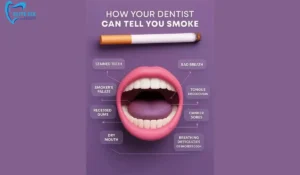
During a routine dental examination, clinicians assess several oral health indicators as part of standard care. The following six findings, particularly when they appear together in an otherwise low-risk patient, are consistent with regular e-cigarette use.
Dry Mouth (Xerostomia)
Propylene glycol — one of the primary base ingredients in e-liquids — is hygroscopic, meaning it absorbs moisture from surrounding tissue. Repeated aerosol exposure reduces salivary flow and alters saliva viscosity. Clinically, this presents as a tacky mucosal surface, reduced saliva pooling under the tongue, and patient-reported difficulty speaking, swallowing, or waking with a dry mouth. Nicotine compounds this effect through vasoconstriction of salivary gland blood supply.
Chronic xerostomia is the gateway to several downstream oral complications: accelerated plaque formation, reduced enamel remineralization, elevated cavity risk, and a less hostile environment for periodontal pathogens.
Gingival Inflammation and Recession
Nicotine is a potent vasoconstrictor. By narrowing the arterioles supplying gum tissue, it reduces the delivery of oxygen, immune cells, and repair proteins to the periodontium. The 2024 meta-analysis referenced above found statistically significant increases in gingival bleeding on probing and pocket depth in e-cigarette users compared to non-users. [3] Clinically, this presents as red, edematous gum tissue, increased probing depths, and in longer-term users, visible gum recession with root surface exposure.
An important clinical subtlety: nicotine’s vasoconstrictive effect can suppress visible gum bleeding, causing some vapers to underestimate their periodontal disease severity. Experienced clinicians use pocket depth measurements — not just bleeding — to assess periodontal status accurately.
Increased Caries Rate and Plaque Accumulation
Beyond xerostomia’s contribution to cavity risk, e-cigarette aerosol directly alters the oral microbial environment. The Streptococcus mutans proliferation documented in peer-reviewed research [4] — combined with sweet or acidic e-liquid flavoring compounds that create a prolonged cariogenic oral pH — produces a measurable increase in cavity incidence. Clinically, a dentist observing unexpectedly high caries rates in a young patient with apparently reasonable oral hygiene habits will frequently inquire about vaping as part of the differential assessment.
Oral Mucosal Changes
The oral mucosa responds to repeated chemical and thermal aerosol exposure with several characteristic changes:
- Palatal erythema: Localized redness or inflammation on the roof of the mouth, associated with repeated aerosol heat and propylene glycol exposure.
- Leukoplakia: White patches on the buccal mucosa, lateral tongue, or other soft tissues. While non-specific, leukoplakia in a young non-smoker warrants monitoring and may prompt inquiry about vaping.
- Recurrent aphthous ulcers: Chemical irritants in e-liquids are associated with increased frequency of oral ulceration in susceptible individuals.
- Oral candidiasis risk: Sweet e-liquid residues and reduced salivary antimicrobial function create favorable conditions for Candida growth, particularly in immunocompromised or medicated patients.
Tooth Discoloration
Nicotine, when it contacts tooth enamel repeatedly through saliva during vaping, produces yellow-to-light-brown surface staining. This discoloration is generally milder and less uniform than tobacco-smoke staining — vaping staining tends to concentrate on the labial surfaces of the maxillary anterior teeth and in interproximal spaces. Vegetable glycerin, another e-liquid base component, has been shown to increase enamel surface porosity, making teeth more susceptible to extrinsic staining from all dietary sources. [5]
Characteristic Aerosol Scent
E-liquid flavoring compounds can leave a distinct sweet or chemical scent in the oral cavity, detectably different from tobacco odor. In the absence of tobacco signs but with other vaping-consistent findings, this scent contributes to the overall clinical picture. It is not a standalone diagnostic indicator but adds contextual information during examination.
| Clinical Sign | Primary Cause | Detected By | Specificity |
| Dry mouth | Propylene glycol hygroscopic effect + nicotine vasoconstriction | Mucosal inspection, patient history | Moderate |
| Gum inflammation / recession | Nicotine-induced vasoconstriction; bacterial proliferation | Probing, visual examination | Moderate |
| Elevated caries rate | S. mutans proliferation; sweet flavors; reduced saliva | Radiographs, visual exam | Low (many causes) |
| Mucosal changes | Chemical / thermal aerosol irritation | Soft tissue examination | Moderate–High |
| Tooth staining | Nicotine + saliva; enamel porosity from VG | Visual examination | Moderate |
| Aerosol scent | E-liquid flavoring residue | Clinical olfactory assessment | Low–Moderate |
3. Does Frequency Matter? What Dentists Can — and Cannot — Detect
Detectability is dose-dependent. The clinical signs above develop through cumulative exposure, not from isolated events. Understanding this relationship clarifies what is and is not realistic for a dentist to identify.
| Vaping Pattern | Detectability | Clinical Reasoning |
| Single use | Very unlikely | No cumulative tissue changes; transient effects resolve within hours |
| Occasional (1–2x/week) | Unlikely with good hygiene | Insufficient cumulative exposure to form recognizable pattern |
| Regular (daily) | Likely — pattern typically present | Multiple signs accumulate over weeks to months of daily use |
| Stopped 24–48 hrs before visit | Acute signs reduce; structural changes remain | Short abstention reduces dryness and fresh irritation; tissue and gum changes persist |
| Nicotine-free vaping | Harder to detect; possible | No nicotine-specific gum changes; PG still causes dry mouth; tissue irritation possible |
| Cannabis vaping (no nicotine) | Low specificity | Dry mouth and mild irritation present but non-specific; no nicotine signature signs |
| 💡 | For patients who vape regularly: stopping briefly before an appointment reduces the most acute signs — dryness and fresh tissue irritation — but does not erase months of cumulative tissue, gum, and enamel changes. Clinicians assess patterns over time, not snapshots of a single session. |
4. Vaping vs. Smoking: How Dentists Distinguish Between the Two
Dentists who regularly treat patients who smoke traditional cigarettes develop a recognized clinical pattern for tobacco use: heavy yellow-brown staining, strong tobacco odor on breath and clothing, severe gum disease, tar-related mucosal changes, and significantly elevated oral cancer risk. Vaping produces a distinct — though overlapping — set of findings.
| Feature | Vaping | Traditional Smoking |
| Tooth staining | Mild–moderate yellow; diffuse distribution | Heavy brown-yellow; typically on lingual and buccal surfaces |
| Breath odor | Sweet, chemical, or no distinguishable odor | Strong persistent tobacco smell |
| Gum changes | Inflammation, recession — may be masked by vasoconstriction | Severe gum disease; often more visibly advanced |
| Mucosal changes | Palatal erythema, chemical lesions from PG/heat | Keratosis, tar deposits, leukoplakia from combustion |
| Oral cancer risk | Under study; DNA damage reported in vitro; case reports [6] | Well-established; 90% of oral cancers in smokers |
| Overall detectability | Moderate — subtler signs, less tobacco-specific | High — multiple obvious signs accumulate early |
5. Confidentiality: Will a Dentist Tell Your Parents You Vape?
This question is among the most searched in this topic, and the answer depends on the patient’s age and applicable laws.
Adult Patients (18 and Older)
In the United States, adult dental records are protected under HIPAA (Health Insurance Portability and Accountability Act). A dentist cannot share information about any aspect of a patient’s health — including observations consistent with vaping — with family members, employers, or anyone else without the patient’s explicit written consent. For adult patients, dental records and clinical observations are fully confidential.
Minor Patients (Under 18)
For patients under 18, the picture is more nuanced. HIPAA generally grants parents or legal guardians the right to access their minor child’s medical and dental records. This means that while a dentist will not typically interrupt a routine appointment to inform a parent directly that their child vapes, the following disclosure pathways exist:
- Medical records access: A parent who requests their minor child’s records may encounter documented clinical observations referencing signs associated with nicotine use or vaping.
- Explanation of Benefits (EOB): If the minor is covered under a parent’s dental insurance, the EOB sent to the policyholder may contain billing codes or treatment notes that indirectly reference concerns observed during the visit.
- Direct clinical counseling: A dentist who observes signs consistent with vaping in a minor will typically counsel the patient directly about the associated health risks and encourage open communication with their family and healthcare providers.
- Safety exception: If a clinician determines that the vaping is causing significant harm or that the minor is in danger from substance use, they may have both ethical and legal grounds to involve parents or appropriate authorities.
| ⚠️ | For minor patients who have concerns about confidentiality: the most straightforward approach is to ask the dental office directly — before the examination — what their confidentiality policy is for minors regarding sensitive health disclosures. Most practices will answer this clearly and without judgment. |
6. Why Disclosing Vaping Habits Leads to Better Dental Care
Patients sometimes avoid mentioning vaping out of concern about judgment or privacy. From a clinical standpoint, disclosure produces meaningfully better outcomes for the patient:
- Accurate diagnosis: Many vaping-related signs overlap with signs of other conditions. A patient who discloses vaping allows their dentist to rule out other causes and focus the diagnostic process appropriately.
- Targeted monitoring: Knowing a patient vapes enables the clinician to monitor specifically for soft tissue changes that require surveillance over time — particularly mucosal lesions that need periodic re-examination to rule out pathological progression.
- Tailored preventive care: Interventions — fluoride treatment frequency, antimicrobial rinse recommendations, cleaning intervals — can all be adjusted to account for the elevated risk profile.
- Pre- and post-procedure guidance: Nicotine impairs healing. For patients undergoing extractions, implants, or periodontal surgery, knowledge of vaping habits is clinically essential for managing post-operative risk and setting realistic recovery expectations.
- Cessation support: Dentists and dental hygienists are trained to provide brief cessation counseling and can connect patients with evidence-based cessation resources. This support is inaccessible if the habit is not disclosed.
| ✅ | The dentist-patient relationship is built on clinical trust, not judgment. Disclosing vaping habits — like any other health habit — allows the treating clinician to provide care that is accurate, relevant, and calibrated to the patient’s actual situation. Adult records are fully confidential under HIPAA. |
7. Protecting Your Oral Health: Evidence-Based Recommendations for Patients Who Vape
For patients who vape, the American Dental Association emphasizes that increased oral hygiene diligence and more frequent professional care are the primary protective measures. The following recommendations are consistent with ADA guidance and the oral health literature:
- Increase hydration: Consistent water intake throughout the day directly counteracts propylene glycol’s moisture-absorbing effect and supports salivary flow. This is the single most accessible daily intervention.
- Brush twice daily with fluoride toothpaste: Fluoride strengthens enamel against the acidic oral environment that vaping promotes. Use a soft-bristled brush and two-minute sessions.
- Floss or use interdental brushes daily: Vaping-related dry mouth accelerates plaque accumulation in interproximal spaces. Daily interdental cleaning is essential — not optional — for regular vapers.
- Use an antimicrobial or fluoride mouthwash: Antimicrobial rinses (chlorhexidine or cetylpyridinium chloride-based) reduce bacterial load in the dry-mouth environment. Fluoride rinses add enamel protection.
- Increase professional cleaning frequency: Most general dental patients are seen every six months. Regular vapers benefit from quarterly professional cleanings to control plaque levels and allow early detection of soft tissue changes.
- Choose lower-sugar e-liquids where possible: Sweet and dessert-flavor profiles present the highest cariogenic risk. Less sweetened formulations reduce the sugar-adjacent oral environment created by frequent vaping.
ADA Resource: American Dental Association — Electronic Cigarettes & Oral Health (ada.org) — Official ADA evidence summary on e-cigarettes, vaping, and dental health
8. Patient Questions Answered
Q: Can a dentist tell if you vape?
A: Yes — in most cases involving regular use. Dentists identify vaping through a clinical pattern: dry mouth, gingival inflammation, elevated cavity rates, characteristic soft tissue changes, and mild tooth staining. No single sign is definitively diagnostic, but the pattern across multiple indicators is clinically recognizable. Peer-reviewed research (2023–2024 systematic reviews and meta-analyses) confirms that these oral changes are measurably associated with e-cigarette use.
Q: Can dentists detect vaping if you only vape occasionally or vaped once?
A: Occasional or single-use vaping is very unlikely to be detectable. The clinical signs dentists identify are cumulative and require consistent exposure over weeks to months to develop into a recognizable pattern. A patient who vapes once or twice a week and maintains thorough oral hygiene presents minimal detectable oral evidence of the habit.
Q: Can dentists detect vaping if you stopped a few days before the appointment?
A: Stopping for a few days reduces the most acute signs — fresh tissue dryness and recent irritation — but does not reverse the cumulative structural changes from months of regular use. Gingival changes, tissue lesions, staining, and measured pocket depths do not normalize within days of abstention.
Q: Can dentists identify cannabis vaping specifically?
A: Cannabis vaping is harder to attribute specifically. Without nicotine, the nicotine-specific gum changes and characteristic staining pattern are absent. A clinician may observe dry mouth and minor tissue irritation — both present in cannabis vaping — but these signs are non-specific and insufficient to identify cannabis as the cause. A dentist cannot definitively distinguish cannabis vaping from many other causes of the same findings.
Q: Will a dentist tell your parents if you vape?
A: For adult patients, no — HIPAA fully protects dental records from third-party disclosure without the patient’s consent. For minors, parents generally retain rights to access medical records, and an EOB from dental insurance may contain relevant notations. Direct parental disclosure during an appointment is not standard practice, but clinical findings may be documented and accessible to authorized parties. Patients concerned about this should ask the dental office directly about their confidentiality policy for minors.
Q: Does vaping cause cavities?
A: Yes — through two established mechanisms. First, propylene glycol and nicotine reduce salivary flow, removing the mouth’s primary defense against acid and bacterial overgrowth. Second, peer-reviewed research shows that e-cigarette aerosol promotes the colonization of Streptococcus mutans — the primary caries-causing bacterium — over commensal oral bacteria (Catala-Valentin et al., Microbiology Spectrum, 2022). Sweet e-liquid flavors further sustain a cariogenic oral environment throughout the day.
Q: Does vaping stain teeth?
A: Yes, though less severely than traditional cigarette smoking. Nicotine repeatedly contacting tooth enamel through saliva produces gradual yellow discoloration, primarily on the labial surfaces of upper front teeth. Vegetable glycerin — a base e-liquid ingredient — increases enamel surface porosity, making teeth more susceptible to extrinsic staining from all sources. The degree of staining correlates with use frequency and nicotine concentration.
Q: Can signs of vaping in the mouth be reversed?
A: Early-stage changes are largely reversible with cessation and improved oral hygiene. Saliva flow normalizes, tissue irritation resolves, and gingival inflammation improves with consistent professional care after cessation. Established tooth staining can be professionally managed. However, significant gum recession and bone loss from advanced periodontal disease — which vaping accelerates — may require professional periodontal intervention and may not fully reverse without treatment. Early detection and cessation produce the best outcomes.
Summary
The current body of peer-reviewed dental research — including multiple systematic reviews and meta-analyses published in 2023 and 2024 — confirms that regular e-cigarette use produces measurable, clinically detectable changes in oral health. These changes include gingival inflammation, reduced salivary flow, accelerated caries risk, mucosal tissue changes, and mild tooth staining. Experienced dental clinicians can identify this clinical pattern in patients who vape regularly, even without the patient disclosing the habit.
Detectability is dose-dependent. Occasional or single-use vaping is unlikely to produce identifiable signs. Regular daily use typically does. For adult patients, dental records are protected under HIPAA. For minors, the situation involves parental access rights that vary by jurisdiction and clinic policy.
The most important clinical message is this: being transparent with your dental provider enables better care, more accurate diagnosis, and more targeted monitoring for oral tissue changes that warrant clinical follow-up. Dentists are not there to judge — they are there to help you maintain your oral health, whatever your current habits.
References
[1] Oral Health of the Electronic Cigarette Smokers: A Systematic Review. J Pharm Bioallied Sci. 2024 Dec; PMC11888654.
[2] Charde V et al. Effects of e-cigarette smoking on periodontal health: A scoping review. PLOS Glob Public Health. 2024 Mar 20;4(3):e0002311. doi:10.1371/journal.pgph.0002311
[3] Effects of Electronic Cigarettes on Periodontal Health: A Systematic Review and Meta-Analysis. PMC12142770. Published 2024.
[4] Catala-Valentin A et al. E-Cigarette Aerosol Exposure Favors the Growth and Colonization of Oral Streptococcus mutans Compared to Commensal Streptococci. Microbiol Spectr. 2022;10(5):e0242121. doi:10.1128/spectrum.02421-21
[5] The Impact of E-Cigarettes on Oral Health — A Narrative Review. Nutrients. PMC11675017. Published 2024.
[6] Sultan AS, Jessri M, Farah CS. Electronic nicotine delivery systems: Oral health implications and oral cancer risk. J Oral Maxillofac Surg. 2023;81(5):583-92. doi:10.1016/j.joms.2023.01.009
Editorial Note
This article is educational, non-promotional, and intended for general patient information. All clinical claims are referenced to peer-reviewed publications indexed in PubMed and PMC (National Institutes of Health). This article does not constitute dental or medical advice. Consult a licensed dental professional for personal clinical guidance.