
Dental implants have gained popularity as a solution people rely on to replace missing teeth. They provide firmness, strength, and natural appearance. When you are considering replacing missing teeth, it is critical to know the various types of long-lasting dental implants that are.
All types are intended to meet certain needs. Depending on the health of your teeth, your bone structure, and your personal aspirations, your dentist will suggest the best option.
What are Dental Implants?
Dental implants are artificial tooth roots that are placed in the jawbone. They are used to hold crowns, bridges, or dentures. Titanium, which fuses with bone, is used in the implants. This bonding helps in forming a strong foundation. The implants, therefore, are realistic and act as real teeth.
Also, dental implants enhance chewing and speech articulation, which makes everyday life easier. They are also used to preserve the face’s natural form by hindering bone loss in the jaw. Implants do not slip, unlike removable dentures. They can be used for many years with proper maintenance and dental check-ups. This renders them a dependable and permanent remedy on lost teeth.
Endosteal Implants
The most common are endosteal implants. They are inserted into the jawbone. These implants tend to be tiny screws or cylinders.
Once implanted, the bone grows around the implant. This forms a good basis to the replacement tooth.
Endosteal implants can be applied to patients with healthy gums and adequate bone strength. When a person desires a long-term solution, they will be the first option.
Subperiosteal Implants
Subperiosteal implants are placed above the bone, yet below the gum. The implant is attached to a metal frame.
This kind is applied when the patient lacks a healthy jawbone. It can also be used by those who do not wish to have a bone graft.
Subperiosteal implants are less frequently used nowadays, but in some instances they may still be useful.
Zygomatic Implants
A more advanced one is the zygomatic implants. They are placed in the cheekbone instead of the jawbone.
These types of implants are applied in cases of severe loss of bones in the upper jaw. They are more than normal implants and need a professional expert.
Zygomatic implants are not common, but they can offer a solution to patients who are unable to use traditional implants.
All-on-4 Implants
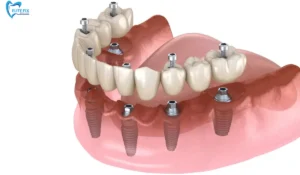
All-on-4 implants are designed to replace a full set of teeth. The technique employs four implants to hold an entire arch.
People who have lost all or most of their teeth prefer it. The process is quicker than using separate implants for each tooth.
All-on-4 implants are stable and natural-looking. They also minimize bone grafting in most instances.
Mini Dental Implants
Small dental implants are smaller than traditional implants. They are commonly used when there is a lack of space or bone.
These implants are less invasive and normally have a shorter recovery period. They are usually employed to secure dentures.
Although they are not as robust as the regular implants, they can be used successfully by some patients.
Single-Tooth
Single-tooth implants are employed to restore a single lost tooth. One crown is supported by a single implant.
This is the best alternative when patients prefer a permanent replacement that does not affect adjacent teeth. It aids in the natural arrangement of the mouth.
Implant-Supported Bridges
Implant-supported braces are used when multiple teeth are lost. Rather than having an implant per tooth, a couple of implants hold a bridge.
This minimizes the number of implants required while still providing good support. It is an inexpensive and dependable alternative.
Implant-Supported Dentures
Implant-supported dentures are also more secure. They are not placed on the gums, but on implants.
This enhances comfort and eliminates slipping. Patients can talk and eat more confidently.
Depending on the design, these dentures may be fixed or removable.
Selecting the appropriate Type
The superior type of dental implant is determined by several factors. These are your bone health, missing teeth and your budget.
Your dentist will carry out an extensive assessment. This can involve X-rays or scans to examine the bone density and structure.
On this evaluation, they will recommend the best alternative that fits you.
Final Thoughts
Dental implants exist in various forms to suit various needs. There is a single-tooth implant and a full-mouth solution, so nearly any patient can have an option.
Additionally, implant-supported bridges are used when multiple teeth are missing in a row. Mini implants are also available and are suitable for patients with less bone density or those seeking a less invasive procedure.
Knowing these types will help you make a decision. It also equips you with what to expect in the treatment.
Should you be considering long-lasting dental implants, consult a qualified dentist. You can get your smile back and enhance your quality of life with the right plan for many years to come.