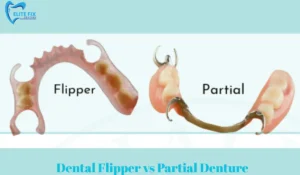
Dental Flipper vs Partial Denture
A complete educational breakdown of two of the most common removable tooth replacement options — what they are, how they differ, and which situations each is best suited for.
⚠️ Important Note on CostThese are general estimates only. Always obtain a written treatment plan and itemized quote from your dental provider. Dental insurance coverage, deductibles, and annual maximums significantly affect out-of-pocket costs. Ask your dentist and insurance provider about your specific benefits before proceeding.
Does Insurance Cover Dental Flippers and Partial Dentures?
Most dental insurance plans with basic or major coverage include some coverage for removable partial dentures. The coverage percentage is typically 50% after the deductible is met, up to the plan’s annual maximum. Dental flippers may or may not be covered — some insurers classify them as cosmetic, while others cover them as a necessary interim restoration. Always verify your plan details with your insurance provider before treatment.
5. Pros & Cons of a Dental Flipper
Advantages
- Very affordable compared to other options
- Quick to fabricate — often ready within days
- Lightweight and easy to remove
- Preserves appearance while waiting for implants
- Simple to adjust or reline as needed
- Good interim solution post-extraction
- Minimal tooth preparation required
- Can be made immediately after extraction
Disadvantages
- Not designed for long-term use
- Acrylic is fragile — breaks if dropped
- Can feel bulky or uncomfortable
- May affect speech initially
- Limited ability to chew harder foods
- Less stable than cast metal partials
- Can cause gum or tooth irritation
- Covers the palate, reducing taste
- Must be removed at night (for most patients)
6. Pros & Cons of a Partial Denture
Advantages
- Designed for long-term everyday use
- Stronger, more durable materials
- Better chewing function than flippers
- More stable in the mouth
- Can replace multiple missing teeth
- Better for maintaining bone and facial structure
- More natural-looking, especially flexible types
- Better long-term value for money
Disadvantages
- Significantly higher initial cost
- Takes several weeks to fabricate
- Metal clasps may be visible when smiling
- Requires more complex fitting appointments
- More difficult to adjust after fabrication
- Must still be removed for cleaning
- Can place stress on adjacent natural teeth
- Not an option during healing phase post-extraction
7. Comfort & Fit: What to Expect
Both dental flippers and partial dentures have an adjustment period. For most patients, it takes two to four weeks to adapt to speaking, eating, and moving with the appliance in place. During this time, some mild soreness, irritation, and changes in speech (such as lisping or difficulty with certain sounds) are normal.
Dental Flipper Comfort
Because a flipper is made entirely of acrylic, it is generally bulkier and covers more palate or gum tissue than a cast metal partial. Some patients find it uncomfortable or feel that it interferes with eating and tasting food. However, its lightweight nature can also be an advantage — many patients find it easier to get used to than heavier appliances. Flippers also tend to be easier to adjust chairside by the dentist if there is a pressure point or sore spot.
Partial Denture Comfort
A well-fitted cast metal partial denture is often more comfortable for long-term use because it covers less tissue surface area due to the precision-fit metal framework. The metal framework distributes chewing forces more evenly. Flexible partial dentures (such as Valplast) are often praised for their comfort — the soft nylon material conforms more naturally to gum tissue and does not require metal clasps that can dig into gum tissue.
💡 Comfort TipBoth appliances require several professional adjustments after initial placement. Do not attempt to adjust them yourself. Return to your dentist if you experience persistent discomfort, sore spots, or looseness — these are normal post-delivery concerns your dentist can quickly resolve.
8. Durability & Lifespan
Durability is one of the most significant differences between a dental flipper and a partial denture, and it directly affects the long-term cost equation.
Dental flipper lifespan: A dental flipper is typically considered functional for anywhere from six months to two years, depending on how carefully it is used and maintained. Because it is made entirely of acrylic, it is relatively fragile and will crack or break if dropped. The acrylic material also absorbs water and can warp or stain over time.
Partial denture lifespan: A cast metal partial denture, with proper care, can last anywhere from 7 to 15 years — and sometimes longer. The metal framework remains intact for many years, though the acrylic teeth and gum-colored base may need to be replaced or relined periodically as the shape of the jaw changes. Flexible partial dentures typically last 5 to 10 years.
As the jawbone naturally resorbs (shrinks) after tooth loss, any removable appliance will eventually need relining or replacement to maintain an accurate fit. Regular dental check-ups — typically every six months — allow your dentist to monitor the fit and condition of your appliance.
9. Which One Should You Choose?
The decision between a dental flipper and a partial denture is not one-size-fits-all. It depends on your clinical situation, budget, timeline, and long-term dental goals. Here are the scenarios where each option is typically more appropriate.
A Dental Flipper May Be Right For You
- You just had a tooth extracted and need something immediately
- You are waiting for implants or a bridge to be completed
- Budget is a primary concern right now
- You only need to replace 1–2 teeth temporarily
- You need a cosmetic placeholder for social or professional reasons
- You are a child or teen whose jaw is still developing
- You need something fabricated very quickly
A Partial Denture May Be Right For You
- You need a long-term tooth replacement solution
- You are missing multiple teeth in different areas
- You are not a candidate for dental implants
- You want better chewing function and stability
- You have fully healed from extractions
- You want a more natural aesthetic appearance
- Your dentist recommends it as a definitive restoration
📌 ImportantThe best way to determine which option is right for you is through a comprehensive examination and consultation with a licensed dentist or prosthodontist. Factors like bone density, number of remaining teeth, bite alignment, gum health, and your overall medical history all play a role in this decision.
10. Alternatives to Dental Flippers and Partial Dentures
If neither a flipper nor a partial denture seems like the right fit, there are other tooth replacement options worth discussing with your dentist.
Dental Implants
A dental implant is a titanium post surgically placed into the jawbone that acts as an artificial tooth root. A crown is placed on top. Implants are considered the gold standard for tooth replacement because they preserve bone, look and feel like natural teeth, and can last a lifetime. However, they require surgery, a healing period of several months, and a significantly higher upfront investment ($3,000–$5,000 per tooth in most U.S. markets).
Dental Bridge
A fixed dental bridge is a non-removable restoration that uses the natural teeth on either side of a gap as anchors to support one or more artificial teeth. Bridges are more stable than removable appliances but require the preparation (grinding down) of healthy adjacent teeth. They typically cost $1,500–$5,000 and last 10–15 years.
Implant-Supported Denture
For patients who are missing many teeth, an implant-supported overdenture combines the stability of dental implants with the coverage of a denture. Two to four implants are placed, and the denture clips onto them for superior retention. This eliminates most of the slipping and discomfort associated with conventional dentures.
Doing Nothing
Leaving a missing tooth space untreated is not usually advisable. Over time, adjacent teeth can drift into the empty space, opposing teeth can over-erupt, bone loss occurs in the area, and bite alignment may shift — all of which can lead to more complex and costly dental problems later. Your dentist can explain the long-term consequences of untreated tooth loss for your specific situation.
11. Frequently Asked Questions
Yes, you can eat with a dental flipper in place, but it is recommended to stick to soft foods and to avoid hard, crunchy, or sticky foods that could dislodge or crack the appliance. Many dentists advise removing flippers while eating to prolong their lifespan and reduce the risk of breakage. Partial dentures, particularly cast metal types, generally allow for a broader range of foods.
No, though both are removable dental appliances, they differ significantly. A dental flipper is a temporary, lightweight, acrylic appliance intended for short-term use. A partial denture is a more permanent, more durable restoration made from metal alloys, flexible nylon, or stronger acrylic, designed for years of daily use. A flipper is sometimes called an “acrylic partial denture,” which creates confusion, but clinically it is a distinct, transitional appliance.
Dental flippers are typically intended to be worn for six months to two years — primarily during the transitional period while waiting for a more permanent restoration. Some patients wear them longer for financial reasons, but extended use can cause gum irritation, bone resorption, and can make fitting a permanent restoration more complicated later. Most dental professionals advise transitioning to a long-term solution as soon as practical.
Dentists generally recommend removing both dental flippers and partial dentures at night. Removing them while sleeping gives your gum tissue time to rest and recover from the pressure of the appliance. It also reduces the risk of nocturnal accidental swallowing or choking. When removed, both should be stored in clean water or a denture solution to prevent warping.
Both appliances should be removed and rinsed with clean water after meals. They should be brushed gently with a soft-bristle toothbrush and a non-abrasive denture cleaner — never regular toothpaste, which is too abrasive and can scratch the surface. Soaking in a denture cleaning solution at night helps disinfect the appliance. Avoid hot water, which can warp acrylic components.
A flipper tooth is used primarily to fill the cosmetic and functional gap left by a missing tooth during a transitional dental period. This most commonly occurs while healing after a tooth extraction before receiving a dental implant, or during the fabrication of a permanent bridge or full denture. It ensures the patient is not without a tooth for an extended period, which can affect confidence, speech, and adjacent tooth stability.
A partial denture should not hurt once properly adjusted. Some initial soreness or pressure is expected during the first few weeks of wear as your mouth adapts. If you experience persistent pain, sore spots, or jaw discomfort, this usually indicates the appliance needs adjustment — which your dentist can perform quickly. Never tolerate ongoing pain with any dental appliance; contact your dentist promptly.
Without dental insurance, a dental flipper for a single tooth typically costs between $300 and $600 in the United States. For two teeth, the cost may range from $500 to $900. Costs vary based on the dentist’s location, the dental lab used, and any modifications needed. Some dental schools offer the procedure at reduced cost, which can be a viable option for patients without insurance coverage.