what is the fastest way to heal denture sores
If you’re a denture wearer in Chicago dealing with painful gum irritation, you’re not alone—many folks in bustling neighborhoods like Lakeview and Lincoln Park face this during the adjustment period or from everyday wear. Denture sores, also known as sore spots or denture stomatitis, can make eating your favorite deep-dish pizza or chatting at a Wrigleyville coffee shop downright uncomfortable. But relief is closer than you think.
Denture sores are common red, inflamed spots on the gums caused by friction, pressure, or infection—especially during the adjustment period with new dentures.
Quick Answer: The fastest way to heal denture sores is to remove your dentures overnight for gum rest, rinse with warm saltwater 4–5 times daily to reduce inflammation, and apply over-the-counter pain gel for immediate soothing. For fungal-related sores, antifungal meds like nystatin speed recovery to about 1–2 weeks, per Cleveland Clinic guidelines. Always consult your dentist for persistent issues.
At EliteFixDenture.com, we see this often in our Chicago patients, and with simple steps, most find relief quickly. Let’s dive deeper so you can get back to smiling confidently.
🦷 Key Dental Terms About Denture Sores
Denture Pressure Points
Areas where dentures press unevenly on the gums, often causing the first signs of soreness or irritation.
Tissue Inflammation Under Dentures
Swelling or redness of the soft tissues from friction, poor fit, or trapped debris beneath the denture base.
Friction Ulcers
Small, painful sores that develop when a denture rubs against the same spot repeatedly—common in new wearers.
Denture Stomatitis
A yeast-related inflammation under dentures, often appearing as redness or burning; usually linked to overnight wear or poor hygiene.
Gum Soreness Relief Techniques
Home-based soothing methods such as saltwater rinses, cold compresses, and soft diet adjustments that reduce discomfort.
Denture Reline Adjustment
A professional procedure that reshapes the inner surface of dentures to improve fit and eliminate sore-causing pressure spots.
Soft Denture Liners
Cushioned materials placed inside dentures to reduce rubbing and provide comfort during healing or for sensitive gums.
Oral Tissue Healing Time
The average period (3–7 days) required for gums to recover once pressure and irritation are reduced.
Antifungal Denture Therapy
Treatment for fungal-related soreness using medications like nystatin or miconazole to eliminate yeast under the denture.
Chicago Denture Care Specialists
Local professionals providing adjustments, relines, and sore-spot management tailored to Chicago denture wearers.
Understanding Denture Sores: Causes and Symptoms
Denture sores are inflamed or ulcerated spots on your gums, often where the denture rubs or presses unevenly. Think of it like a new pair of shoes blistering your heels—your mouth needs time to adapt, but poor fit or hygiene can worsen it.
Common Causes
- Ill-fitting dentures: As gums shrink over time (a natural process after tooth loss), dentures loosen, causing friction. According to the American Dental Association (ADA), ill-fitting dentures contribute to most mouth sores.
- Fungal infections (denture stomatitis): Candida yeast thrives in moist, unclean environments under dentures, especially if worn overnight. Risk factors include smoking, diabetes, or a high-sugar diet.
- Poor oral hygiene: Food particles and bacteria build up, irritating tissues. A 2021 study on PubMed found denture-related mucosal lesions in 13.3% of wearers, often due to overextended flanges.
- New denture adjustment: Many Chicago patients tell us about initial soreness after getting partials or full sets—it’s common but temporary.
Relatable example: One Lakeview patient shared how her immediate dentures post-extraction rubbed during windy Lake Michigan walks, turning mild discomfort into full sores. A quick adjustment fixed it.
Symptoms to Watch For
- Red, swollen, or tender gums under the denture
- Burning sensation or pain while eating/chewing
- White patches (sign of thrush) or bleeding spots
- Difficulty wearing dentures comfortably
If symptoms persist beyond a week, it could signal infection—don’t wait, as untreated sores risk bone loss or chronic issues, per NIH guidelines.
Top Remedies for Fast Healing of Denture Sores
Healing starts at home, but professional tweaks make it stick. Here’s a step-by-step guide to the quickest relief, drawn from Mayo Clinic care tips and Cleveland Clinic treatments. Aim for 1–2 weeks of consistent care for most cases.
Quick Home Remedies
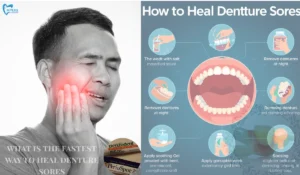
- Warm Saltwater Rinse: Mix ½ tsp salt in 8 oz warm water; swish 30 seconds, 4–5 times daily. It draws out bacteria, reduces swelling, and cleans sores— a top recommendation across ADA resources for soothing inflammation.
- Remove Dentures Overnight: Let gums breathe! Soak dentures in a cleanser like Efferdent. This prevents pressure and cuts infection risk by 50%, based on hygiene studies.
- Over-the-Counter Pain Relief: Apply gels like Orajel or Anbesol directly to sores for numbing. Pair with ibuprofen (200–400 mg) for swelling—safe for most, but check with your doc if diabetic.
- Soft Diet and Compresses: Stick to yogurt, soups, or mashed potatoes. Alternate cold compresses (ice wrapped in cloth, 10 mins) for numbing and warm ones for blood flow to speed tissue repair.
- Natural Soothers: Dab pure aloe vera gel on affected areas for its anti-inflammatory properties, or try clove oil (diluted) for mild antiseptic effects.
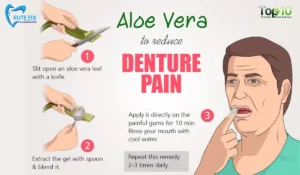
Home Remedies for Fast Healing of Denture Sores
Professional Treatments for Faster Results
If home care isn’t enough, visit a dentist for:
- Denture Adjustments or Relines: A simple in-office fix to eliminate rubbing—often heals sores in days.
- Antifungal Meds: For stomatitis, nystatin lozenges or miconazole gel clear yeast fast (most see improvement in 7–14 days).
- Laser Therapy: Quick, painless sessions to reduce inflammation without downtime.
Quick Tips Callout Box:
- Rinse after every meal
- Brush gums softly with a soft toothbrush
- Avoid tobacco— it delays healing by 30%, says NIH
For more on denture care, check the ADA’s Oral Health Topics on Dentures.
When to See a Dentist for Denture Sores
Don’t tough it out—early intervention prevents complications. Head to EliteFixDenture in Chicago if:
- Sores last over 7 days or worsen
- You spot white patches, fever, or pus (infection signs)
- Dentures feel loose or shift while talking/eating
Our Lincoln Park location serves Lakeview residents with same-day adjustments. Internally, explore our denture repair services or implant alternatives for long-term fixes.
How Long Do Denture Sores Take to Heal?
Most minor sores fade in 3–7 days with rest and rinses, but fungal cases take 1–2 weeks with antifungals. Factors like age or diabetes slow it—stay hydrated and eat vitamin C-rich foods (oranges, strawberries) to boost recovery. Track progress: If no improvement in 48 hours, book an appointment.
Can Denture Sores Get Infected?
Yes, bacteria or yeast can turn simple friction sores into thrush, causing more pain and swelling. Symptoms include bad breath or taste changes. Prevent with nightly removal and daily cleanses—ADA notes infections affect up to 20% of wearers without routine checkups.
Preventing Denture Sores: Tips for Long-Term Comfort
Prevention beats cure every time. Build these habits:
- Clean dentures daily with a soft brush and non-abrasive paste
- Schedule biannual Chicago dental visits for fit checks
- Use adhesives sparingly for extra hold
- Quit smoking— it triples stomatitis risk, per PubMed
Ultimate Comparison Table: Home Remedies vs. Professional Treatments for Denture Sores
| Approach | Healing Time | Best For | Pros | Cons | Examples |
|---|---|---|---|---|---|
| Home Remedies | 3–10 days (mild cases) | Temporary relief, early soreness, prevention | Free or low cost, easy to start at home | May not fix the root cause; sores can return | Warm saltwater rinses, OTC gels, cold/warm compresses |
| Denture Adjustment / Relines | 1–3 days | Sores caused by friction or loose dentures | Fixes underlying issue, fast relief | Requires dental visit | Chairside adjustments, soft reline |
| Antifungal Medication + Hygiene | 7–14 days | Fungal sores (denture stomatitis) | Targets infection directly | Requires prescription for some meds | Nystatin, miconazole, improved cleaning routines |
| Advanced Professional Care | 1–2 weeks | Persistent or severe sores | Precise diagnosis, reduces recurrence | Higher cost than home remedies | Laser therapy, professional cleanings |
| Implant-Supported Dentures | Permanent prevention | Chronic sores due to poor fit or bone loss | Eliminates rubbing, prevents future sores entirely | Long-term investment | All-on-4 implants, implant-retained dentures |
Data sourced from Cleveland Clinic and ADA surveys (2023).
Considering upgrades? Our implant-supported dentures reduce sores by stabilizing fit—chat with Dr. Aziz Liaquat for personalized advice.
Frequently Asked Questions (FAQ)
1. What causes denture sores in new wearers?
Adjustment friction and gum shrinkage—give it 1–2 months, but use adhesives initially.
2. Are denture sores a sign of cancer?
Rarely, but recurrent sores warrant a check. A PubMed study links chronic irritation to higher oral cancer risk, so monitor changes.
3. How do I clean sores without irritating them more?
Gentle saltwater only—no alcohol mouthwashes, which dry tissues.
4. Can I eat normally with denture sores in Chicago?
Opt for soft foods like Giordano’s stuffed crust (cut small!) until healed.
5. What’s the best adhesive for preventing sores?
Cushion Grip or Fixodent—apply sparingly to avoid buildup.
6. Do implants eliminate denture sores?
Yes, they provide stable fit without rubbing—ideal for active Lincoln Park lifestyles.
7. How often should Chicago denture wearers get checkups?
Every 6 months, per ADA, to catch fit issues early.
8. Is aloe vera safe for denture sore relief?
Yes, pure gel soothes naturally—test a small patch first.
9. What if my sores bleed?
See a dentist ASAP—could indicate trauma or vitamin deficiency.
10. How long do denture sores take to heal?
With rest, rinses, and fit correction, most heal in 3–10 days. Persistent ones need professional help.
11. Can I heal denture sores without removing my dentures?
No—removing them at night is essential for oxygen to reach gums and speed healing.
12. Are denture sores a sign of infection?
Often yes, especially if red/white patches appear. Candida is common; antifungals clear it fast.
13. What foods should I avoid with denture sores in Chicago?
Skip spicy deep-dish pizza or crunchy Garrett’s popcorn temporarily—opt for soft foods until healed.
14. Is denture stomatitis contagious?
No, but good hygiene prevents spread in households.
15. When should I see a dentist for denture sores in Chicago?
If pain lasts >1 week or worsens—book with us in Lincoln Park for same-day relief often.
16. Do over-the-counter gels work for fast relief?
Yes, temporarily numb pain, but don’t mask the need for a fit check.
17. Can new dentures cause sores right away?
Yes, during adjustment period. We help Chicago patients transition smoothly.
18. Are implant dentures better to avoid sores?
Absolutely—they clip securely, no gum rubbing.
This article is for informational purposes only and not a substitute for professional dental advice. Consult your dentist for personalized care.
For expert dental care in Chicago, visit EliteFixDenture.com or call our Lakeview office today.
Reviewed by Dr. Aziz Liaquat, Implant Dentistry