
Teeth Diagram
As a Chicago resident juggling busy days in Lakeview or Lincoln Park, you might stumble upon questions about your smile during a routine checkup or while helping your kids with school projects. Whether you’re curious about why your front teeth feel sharp or how dentists number them for treatments, a clear diagram of the teeth can make it all click. At EliteFixDenture.com, we believe knowledge empowers better oral health—think of it as your personal map to a confident grin.
Quick Answer: What Does a Teeth Diagram Show?
A standard teeth diagram illustrates the 32 permanent adult teeth, arranged in four quadrants: 8 incisors for cutting, 4 canines for tearing, 8 premolars for crushing, and 12 molars for grinding. It also highlights key parts like enamel and roots, helping patients visualize anatomy during Chicago dental visits.
Key Dental Terms About Teeth Diagrams
Teeth Anatomy Diagram:
A visual representation showing the structure and layout of teeth, including enamel, dentin, pulp, and root systems.
Types of Teeth Diagram:
Charts that label incisors, canines, premolars, and molars, explaining each tooth’s shape and chewing function.
Adult Teeth Chart:
A 32-tooth diagram detailing permanent dentition—used by dentists to track oral health and alignment.
Baby Teeth Diagram:
An illustration of primary (deciduous) teeth, typically 20 in total, showing eruption and shedding order.
Tooth Numbering System:
A standardized dental chart (like the Universal or FDI system) used to identify and reference each tooth precisely.
Parts of a Tooth:
Includes the crown, root, enamel, dentin, pulp, and cementum—each contributing to strength, sensitivity, and support.
Functions of Teeth:
Breaking down food, aiding speech, and shaping facial aesthetics—each type of tooth has a distinct role.
Tooth Eruption Chart:
A timeline showing when baby and adult teeth typically emerge, helping parents and dentists monitor growth stages.
💡 Chicago Tip:
Lakeview and Lincoln Park dentists often use digital teeth diagrams during checkups to educate patients and plan personalized treatments.
The Basics of Tooth Anatomy: A Simple Breakdown
Imagine biting into a deep-dish pizza slice from Giordano’s—your teeth handle that effortlessly thanks to smart design. Tooth anatomy isn’t just trivia; it’s the foundation for preventing issues like cavities, which affect 90% of U.S. adults according to the CDC. Let’s unpack it like a trusted Lakeview dentist would during your exam.
Key Parts of a Tooth
Every tooth has three main sections: the crown (the visible top), neck (at the gumline), and root (anchored in the jaw). Inside:
- Enamel: The tough outer layer, harder than bone, shielding against daily wear.
- Dentin: A sensitive layer beneath enamel that forms most of the tooth’s bulk.
- Pulp: The soft core with nerves and blood vessels for vitality.
- Cementum: Covers the root, helping secure it in place.
For a visual, picture a cross-section diagram: enamel gleams on top, dentin supports below, and pulp pulses at the center. This structure keeps Chicago smiles strong against coffee runs and cold winters.
Pro Tip: Brushing twice daily protects enamel—vital since it doesn’t regrow. Learn more from the American Dental Association.
Types of Teeth: Your Mouth’s Specialized Team
A full diagram of the teeth divides them into four types, each with a job tailored to your diet. Adults have 32 permanent teeth; kids start with 20 baby ones. Here’s a handy comparison table:
| Type | Number (Adults) | Location | Function | Appearance |
| Incisors | 8 | Front | Cutting and biting food | Flat, chisel-shaped edge |
| Canines | 4 | Sides of front | Tearing tough foods like meat | Pointed, fang-like |
| Premolars | 8 | Middle | Crushing and initial grinding | Two-cusped, broader |
| Molars | 12 (incl. wisdom) | Back | Grinding and chewing | Flat, ridged surface |
This setup ensures efficient eating—incisors slice your Italian beef sandwich, while molars mash it down. Many Chicago parents in Lincoln Park use these diagrams to explain why baby teeth matter early on.
What Are the 4 Types of Teeth? (A Common Question)
Yes, there are exactly four: incisors for precision cuts, canines for grip-and-rip action, premolars as multi-taskers, and molars as the heavy grinders. No premolars in kids’ mouths—that’s why their molars handle more load initially.
Adult Teeth Diagram: Numbering and Layout
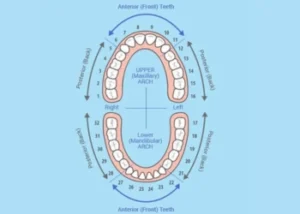
Adult Teeth Diagram Chicago
Dentists in Chicago use the Universal Numbering System on diagrams to pinpoint issues fast—think #1 for your upper right third molar (wisdom tooth) down to #32 for the lower left. The mouth splits into quadrants:
- Upper right (1-8), upper left (9-16)
- Lower left (17-24), lower right (25-32)
Visualize it: Front incisors are low numbers, molars climb higher. This system shines during treatments like fillings. For a relatable example, a Lakeview patient once spotted their #19 molar on our chart during a root canal chat—it demystified the whole process.
Baby Teeth Diagram: A Parent’s Guide
Chicago families know teething can disrupt nap schedules. A baby teeth diagram shows 20 primary teeth erupting from 6 months to 3 years, in this order: lower central incisors first, then uppers, followed by molars and canines. No premolars here—they arrive with permanents around age 10-12.
These act as placeholders, guiding adult teeth into place. According to Mayo Clinic, they shed in reverse order, starting with those bottom fronts around age 6-7.
Emotional Note: One Lincoln Park mom shared how a simple diagram eased her worries about her toddler’s gaps—reminding us smiles start young. Mayo Clinic’s baby teeth guide is a great free resource.
For little ones, see our pediatric dentistry services.
How Many Teeth Does an Adult Have?
Most adults rock 32 permanent teeth, but wisdom teeth (the last 4 molars) might stay put or get extracted—leaving 28. Variations like missing laterals are common, per NIH studies.
Functions of Teeth: Beyond Just Chewing
Teeth aren’t solo artists—they team with your tongue for speech and swallowing. Incisors nip neatly, canines chomp steak from Gene & Georgetti’s, premolars prep bites, and molars manage the mash (handling 90% of grinding). Fun fact: This division evolved for omnivores like us Chicagoans, blending deep-dish and salads.
Neglect? It risks misalignment—link to our orthodontics page for straight-talk solutions.
What Is the Function of Each Type of Tooth?
- Incisors: Slice and dice for easy entry.
- Canines: Tear and hold, like nature’s forks.
- Premolars: Crush veggies and nuts midway.
- Molars: Grind grains and meats thoroughly.
Quick Tips Callout: Protect Your Smile Daily
- Brush 2x daily with fluoride toothpaste.
- Floss to guard those interdental spaces.
- Visit your Chicago dentist biannually—early detection saves smiles.
FAQ: Common Questions About Teeth Diagrams
What is a tooth diagram used for?
It’s a visual tool for learning anatomy, numbering teeth for treatments, or tracking eruption in kids—essential for patient education in Chicago clinics.
How do you label a teeth diagram?
Mark types (incisor, etc.), numbers (1-32), and parts (enamel, root) for clarity.
What’s the difference between primary and permanent teeth diagrams?
Baby diagrams show 20 teeth without premolars; adult ones add 12 more, including wisdom teeth.
Where can I find a free teeth diagram PDF?
Trusted sites like Cleveland Clinic offer downloads—great for Lakeview study sessions.
Do all adults have the same number of teeth?
Typically 32, but extractions or congenitally missing ones vary it to 28-34.
How does tooth numbering work in diagrams?
Universal system: Starts at upper right #1, circles clockwise to lower left #32.
Why are baby teeth important in diagrams?
They guide permanent alignment—misplaced ones can shift adult smiles.
Can a teeth diagram help with Chicago dental anxiety?
Absolutely—visuals like ours demystify procedures, easing nerves for locals.
When do wisdom teeth appear on diagrams?
As #1, #16, #17, #32—the back molars erupting late teens.
This article is for informational purposes only and not a substitute for professional dental advice. Consult your dentist for personalized care.
For expert dental care in Chicago, visit EliteFixDenture.com or book your appointment today. Your smile deserves the Windy City’s best!
Reviewed by Dr. Iqbal Ali, Orthodontics