Is Chewing Ice Bad for Your Teeth
It is one of the most common habits we see here in Chicago: finishing a cold drink and crunching down on the leftover ice. It might feel refreshing or satisfying, but as a dentist, I hear a different sound. I hear the sound of microscopic fractures forming in your enamel.
The short answer is yes. Chewing ice is harmful to your oral health. It can lead to cracked teeth, damaged fillings, and serious gum injuries.
At Elite Fix Denture, my goal is to help you preserve your natural smile for as long as possible. Here is a breakdown of why this habit is dangerous and the science behind why your teeth hate ice.
The 3 Major Risks of Chewing Ice
To understand the damage, you have to understand tooth anatomy. Enamel is the hardest substance in the human body, but it is brittle, much like a crystal.
1. The “Thermal Shock” Effect
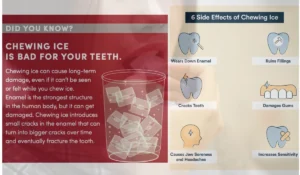
When your teeth are exposed to extreme temperature changes, the enamel expands and contracts.
- The Science: Ice causes the enamel to contract rapidly. If you are chewing ice while drinking a hot coffee or eating warm food, this rapid change creates internal stress.
- The Result: Over time, this leads to vertical cracks known as “craze lines.” While these start as cosmetic issues, they can deepen into full tooth fractures that require crowns or extraction.
2. Destruction of Dental Restorations
This is particularly important for my patients at Elite Fix Denture. Dental work—whether it is a filling, a veneer, or a denture—is not designed to withstand the crushing force of ice.
- Fillings: Amalgam (silver) and composite (white) fillings react to cold differently than natural tooth structure. Chewing ice can cause the filling to pull away from the tooth, creating gaps where bacteria can enter and cause decay.
- Dentures & Implants: Biting down on a hard ice cube can chip the porcelain on a crown or crack the acrylic base of a denture, leading to an emergency repair visit.
3. Gum Recession and Soft Tissue Injury
Ice can be incredibly sharp. When you crush it, shards of ice can slip and puncture the soft tissue of your gums. Repeated trauma can lead to gum recession, exposing the sensitive root of the tooth and making you more susceptible to decay.
Why Do I Crave Ice? (The Medical Connection)
If you find yourself mindlessly chewing ice occasionally, it is likely just a habit. However, if you have an intense, uncontrollable urge to chew ice, it may be a medical condition called Pagophagia.
Pagophagia is a specific type of pica (a craving for non-food items) and is frequently linked to Iron Deficiency Anemia.
Doctor’s Note: Research indicates that chewing ice may increase blood flow to the brain in individuals with anemia, providing a temporary boost in alertness. According to the American Dental Association on ice chewing, if you crave ice daily, it is crucial to speak with your primary care physician to check your iron levels.
How to Break the Habit
I know that breaking a sensory habit is difficult. Here are three steps to stop damaging your teeth without losing the cooling sensation:
Switch to “Slush”: If you must have ice, switch to shaved ice. It is softer and puts significantly less stress on the enamel.
Let it Melt: Enjoy the cold temperature by letting the cube melt slowly in your mouth like a lozenge, rather than crushing it.
Find a Crunch Substitute: Often, the craving is for the crunch, not the cold. Try snacking on crisp apple slices, carrots, or cucumbers.
Need Help with a Chipped Tooth?
If you have been chewing ice and notice that a tooth feels rough, sensitive to cold, or painful when you bite down, you may have already sustained a fracture.
Don’t wait for the tooth to break completely. Contact Dr. Aziz Liaquat at Elite Fix Denture in Chicago today. We can assess the health of your enamel and ensure your smile stays strong.