Inlay vs Filling
Quick Answer: Dental Inlay vs Filling
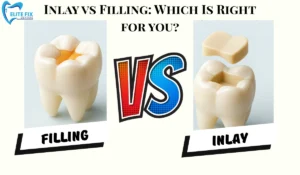
Dental fillings are placed directly into cavities during a single visit and work well for small to moderate decay. Inlays are custom-fabricated restorations created in a lab that fit precisely into the tooth’s grooves, offering superior durability and fit for larger areas of decay that don’t require a full crown. Inlays typically last 20-30 years compared to fillings’ 5-15 years, but cost more upfront.
Understanding Dental Fillings and Inlays
When decay damages your tooth, restoration is essential to prevent further deterioration and preserve function. Both fillings and inlays serve this purpose, but they differ significantly in fabrication, application, and longevity.
Dental fillings represent the most common restorative procedure in dentistry. Your Chicago dentist removes decay, cleans the affected area, and directly fills the cavity with composite resin, amalgam, or other materials during a single appointment.
Dental inlays are indirect restorations custom-made in a dental laboratory or using CAD/CAM technology. They’re precisely crafted to fit within the cusps (points) of your tooth, offering a more conservative alternative to crowns when damage extends beyond what a simple filling can address.
Many patients in Lincoln Park and Lakeview neighborhoods visit EliteFixDenture seeking guidance on which restoration best suits their specific situation. The choice depends on cavity size, location, budget, and long-term goals.
How Traditional Dental Fillings Work
The Direct Restoration Process
Traditional fillings follow a straightforward procedure that typically takes 30-60 minutes:
- Anesthesia administration – Local numbing ensures comfort
- Decay removal – Your dentist eliminates damaged tooth structure using specialized instruments
- Cavity preparation – The area is cleaned and shaped
- Filling placement – Material is placed directly into the cavity in layers
- Shaping and polishing – The filling is sculpted to match your bite and polished smooth
Types of Filling Materials
Composite resin fillings are tooth-colored materials that bond directly to tooth structure. According to the American Dental Association, composite fillings now represent over 70% of all posterior restorations due to their aesthetic appeal and improved durability.
Amalgam fillings combine silver, mercury, tin, and copper. While less popular today due to appearance concerns, they remain exceptionally durable for back teeth and cost less than tooth-colored alternatives.
Glass ionomer fillings release fluoride and work well for root surface cavities or pediatric applications, though they’re less durable than other options.
Advantages of Traditional Fillings
- Single-visit completion – Leave with a restored tooth the same day
- Lower initial cost – Generally $150-$400 per tooth in Chicago
- Effective for small to moderate cavities – Ideal when decay is limited
- Minimal tooth removal – Conservative approach preserves natural structure
- Immediate function – Eat normally within hours
Limitations of Fillings
- Shorter lifespan – Typically 5-15 years depending on material and location
- Potential for shrinkage – Composite materials contract slightly during curing, potentially creating gaps
- Less precise fit – Direct placement cannot achieve the exact margins of lab-fabricated restorations
- Not ideal for large cavities – May crack or fail when supporting significant chewing forces
What Makes Inlays Different
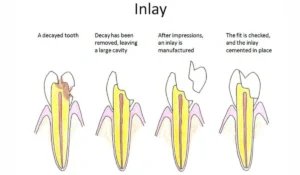
Inlay
The Indirect Restoration Approach
Inlays require two appointments and involve collaboration between your dentist and a dental laboratory:
First Visit (60-90 minutes):
- Decay removal and cavity preparation
- Digital impression or traditional mold taken
- Temporary filling placed to protect the tooth
- Shade selection to match surrounding teeth
Laboratory Phase (1-2 weeks):
- Skilled technicians fabricate your custom inlay using porcelain, composite, or gold
- Precise fitting ensures optimal contact with adjacent teeth
Second Visit (30-45 minutes):
- Temporary filling removed
- Inlay tried in and adjusted for perfect fit
- Permanent cementation using strong bonding agents
- Final bite adjustment and polishing
Materials Used for Inlays
Porcelain inlays offer superior aesthetics and stain resistance. They mimic natural tooth enamel’s translucency and are the most popular choice for visible teeth.
Composite inlays cost less than porcelain while providing good appearance and adequate strength for moderate chewing forces.
Gold inlays represent the gold standard for durability. While less aesthetic, they’re biocompatible, gentle on opposing teeth, and can last 30+ years. Many Chicago patients choose gold for back molars where appearance matters less.
Why Choose an Inlay Over a Filling
Inlays excel when decay extends beyond what a simple filling can reliably restore but doesn’t require a full crown:
- Superior fit and seal – Lab fabrication allows micron-level precision, reducing leakage risk
- Enhanced durability – Porcelain and gold inlays routinely last 20-30 years
- Better preservation of tooth structure – Inlays support weakened cusps rather than just filling spaces
- Reduced shrinkage concerns – Pre-fabricated materials don’t contract after placement
- Improved contact with adjacent teeth – Prevents food impaction and decay between teeth
- Easier to keep clean – Smooth, well-contoured margins facilitate oral hygiene
A 2023 study published in the Journal of Prosthetic Dentistry found that porcelain inlays demonstrated a 96% success rate at 10 years, significantly outperforming large composite fillings in similar situations.
Inlay vs Filling: Direct Comparison
| Factor | Dental Filling | Dental Inlay |
| Appointments | One visit | Two visits (1-2 weeks apart) |
| Fabrication | Direct placement in mouth | Custom-made in laboratory |
| Typical Lifespan | 5-15 years | 20-30 years |
| Cost in Chicago | $150-$400 | $650-$1,500 |
| Best For | Small to moderate cavities | Larger cavities, cuspal damage |
| Precision | Good | Excellent |
| Durability | Moderate to good | Excellent |
| Aesthetics | Very good (composite) | Excellent (porcelain) |
| Tooth Removal | Minimal | Slightly more (to accommodate inlay) |
| Shrinkage | Possible with composite | None (pre-fabricated) |
When Your Chicago Dentist Recommends an Inlay
Cavity Size and Location
Dr. Aziz Liaquat typically recommends inlays when:
- Decay extends to involve one or more tooth cusps
- The cavity is too large for a filling but doesn’t require full crown coverage
- Previous large fillings have failed and need replacement
- You have significant wear requiring reconstruction
Tooth Structure Considerations
If substantial healthy tooth structure remains but the cavity affects chewing surfaces significantly, an inlay provides strength while preserving more natural tooth than a crown would require.
Many Loop professionals seek inlays for back teeth that handle heavy chewing forces during business lunches and dinners. The superior durability justifies the investment.
Long-Term Value Assessment
While inlays cost 3-4 times more initially, their extended lifespan often makes them more economical over time. A $1,200 inlay lasting 25 years costs $48 annually, while a $300 filling needing replacement every 8 years costs $37.50 annually—plus the inconvenience and additional tooth structure loss with each replacement.
When a Traditional Filling Is the Right Choice
Fillings remain the optimal solution for many situations:
Small to Moderate Cavities
When decay is detected early and confined to a limited area, a composite or amalgam filling provides reliable restoration at reasonable cost.
Front Teeth Restorations
Small cavities on front teeth typically respond beautifully to direct composite bonding, which offers excellent aesthetics and conservative tooth preparation.
Budget Constraints
For Chicago families managing dental expenses, fillings provide effective restoration when inlays aren’t financially feasible. Many patients on the South Side and West Side neighborhoods appreciate this accessible option.
Emergency Situations
When immediate relief is needed and multiple appointments aren’t practical, fillings solve the problem in one visit.
Understanding the Cost Difference
Filling Costs in Chicago
- Amalgam fillings: $150-$300
- Composite fillings: $200-$400
- Glass ionomer fillings: $180-$350
Most dental insurance covers 70-80% of basic fillings after deductible.
Inlay Costs in Chicago
- Composite inlays: $650-$1,000
- Porcelain inlays: $900-$1,500
- Gold inlays: $1,000-$2,000
Insurance typically classifies inlays as major restorations, covering 50% after deductible. Some plans categorize them as fillings, providing better coverage.
EliteFixDenture offers flexible payment plans for patients throughout Chicagoland, making quality care accessible regardless of budget.
What About Onlays? Understanding the Full Spectrum
Onlays extend the restoration concept further, covering one or more cusps when damage is more extensive:
- Fillings restore only the cavity within tooth grooves
- Inlays fit within the cusps without covering them
- Onlays extend over one or more cusps for additional protection
- Crowns cover the entire visible tooth
Think of these as a continuum of restoration options, allowing your dentist to select the most conservative approach that still provides adequate strength and longevity.
The Treatment Decision: Key Factors
Clinical Considerations
Your Chicago dentist evaluates:
- Extent of decay – How much tooth structure is compromised?
- Remaining tooth strength – Can the tooth withstand chewing forces with just a filling?
- Previous restorations – Has this tooth been filled before?
- Bite forces – Do you grind your teeth or have a heavy bite?
- Adjacent tooth contact – Is decay present between teeth?
Personal Factors
- Budget and insurance coverage – What can you reasonably afford?
- Time availability – Can you attend multiple appointments?
- Long-term goals – Do you prioritize durability over initial savings?
- Aesthetic expectations – How important is appearance in this location?
Risk of Future Problems
Fillings in large cavities face higher failure risk. When a filling breaks, additional tooth structure is often lost during repair. Multiple filling replacements over years can eventually necessitate a crown anyway—making the initial inlay investment wiser in retrospect.
The Procedure Experience: What to Expect
Getting a Filling at EliteFixDenture
Patients describe the filling process as straightforward and efficient. After numbing takes effect (usually 5-10 minutes), you’ll feel pressure but no pain during decay removal. The tooth-colored composite is applied in thin layers, each hardened with a special blue light for 20-30 seconds.
Most Chicago patients return to work immediately after their appointment, with numbness wearing off within 2-3 hours.
The Inlay Journey
Your first visit mirrors the filling process through decay removal, but instead of placing filling material, Dr. Liaquat takes a precise digital scan of the prepared tooth. This 3D image goes to a specialized laboratory where skilled technicians craft your custom restoration.
You’ll leave with a temporary filling that protects the tooth. Most patients find this period unremarkable—the temporary functions adequately for the 1-2 weeks before your second appointment.
At your final visit, the inlay is carefully bonded in place using modern adhesive technology. This creates a seal actually stronger than the original tooth structure in many cases.
Longevity and Maintenance
How Long Each Option Lasts
According to research published in the Journal of the American Dental Association:
- Amalgam fillings: 10-15 years average
- Composite fillings: 5-10 years on back teeth, 7-12 years on front teeth
- Porcelain inlays: 20-30 years with proper care
- Gold inlays: 25-35+ years
Lifespan depends heavily on:
- Oral hygiene habits
- Dietary choices (frequency of sugary/acidic foods)
- Teeth grinding or clenching
- Original cavity size and location
- Quality of placement
Caring for Your Restoration
Both fillings and inlays require the same maintenance:
Daily care:
- Brush twice daily with fluoride toothpaste
- Floss once daily, especially around restorations
- Rinse after meals when brushing isn’t possible
Dietary considerations:
- Avoid chewing ice, hard candy, or popcorn kernels
- Limit sticky foods that can dislodge restorations
- Consider a nightguard if you grind teeth
Professional maintenance:
- Visit EliteFixDenture every six months for cleanings
- Regular exams catch problems early
- Professional fluoride treatments strengthen surrounding enamel
Many Streeterville and River North professionals maintain their inlays for decades through consistent care and regular dental visits.
Potential Complications and How to Avoid Them
Filling-Related Issues
Marginal leakage occurs when the seal between filling and tooth deteriorates, allowing bacteria to enter. This causes sensitivity and new decay under the filling. Composite shrinkage during curing contributes to this problem, though modern materials have improved significantly.
Filling fracture becomes more likely as size increases. Large fillings lack structural support and may crack under chewing forces, especially in patients who grind teeth.
Secondary decay develops around filling margins when oral hygiene is inadequate. The junction between filling and tooth is vulnerable to bacterial accumulation.
Inlay-Related Concerns
Temporary filling dislodgement occasionally occurs between appointments. Contact your dentist immediately if this happens—the prepared tooth needs protection.
Bite adjustment needs are common after cementation. Your bite may feel slightly off initially; small adjustments at a follow-up visit resolve this.
Debonding is rare with modern adhesive techniques but can occur if moisture contamination happens during cementation or if chewing forces exceed the restoration’s design limits.
Recent Advances in Tooth Restoration
CEREC Same-Day Inlays
Some Chicago dental offices now offer CAD/CAM technology that creates inlays during a single extended appointment. A digital camera captures tooth images, computer software designs the restoration, and an in-office milling machine fabricates it from a ceramic block—all within 2-3 hours.
This eliminates temporary fillings and second appointments, though some dentists believe laboratory-fabricated inlays still offer superior aesthetics and fit for complex cases.
Improved Composite Materials
Nanotechnology has enhanced composite resin strength and wear resistance. Modern composites shrink less during curing and better resist chewing forces, making direct fillings more viable for larger cavities than previously possible.
Biomimetic Dentistry Principles
This approach emphasizes restoring teeth to function like natural, intact teeth. Biomimetic dentists often prefer inlays and onlays over crowns when possible, as they preserve more tooth structure and better replicate natural tooth flexibility under load.
Making Your Decision: Questions to Ask
When discussing restoration options with Dr. Aziz Liaquat or your Chicago dentist, consider asking:
- How large is the cavity, and what percentage of my tooth is affected?
- What are the failure rates for each option in this specific situation?
- If I choose a filling now, what’s the likelihood I’ll need a crown later?
- Does my insurance cover inlays, and what would my out-of-pocket cost be?
- What material do you recommend and why?
- How many of these procedures do you perform monthly?
- Can you show me examples of similar cases you’ve completed?
- What happens if the restoration fails within the first few years?
Your dentist should provide clear, honest answers that help you make an informed decision aligned with your values and circumstances.
Frequently Asked Questions
Can an inlay be placed where I currently have a filling?
Yes, absolutely. When large fillings fail or develop decay around margins, inlays often provide superior long-term replacement. Your dentist removes the old filling, eliminates any new decay, and prepares the tooth to receive a custom inlay. This approach preserves more natural tooth structure than placing a crown while providing greater durability than another filling.
Do inlays and fillings hurt during placement?
Neither procedure should cause pain due to local anesthesia. You’ll feel pressure and hear instruments working, but discomfort should be minimal. After numbness wears off, mild sensitivity is normal for a few days to weeks. Over-the-counter pain relievers typically manage any discomfort. If pain is severe or persistent beyond two weeks, contact your dentist—this may indicate bite adjustment needs or other issues requiring attention.
Which option is better for back teeth that do heavy chewing?
For small to moderate cavities on molars, quality composite fillings perform well. However, when decay extends to involve cusps or requires removal of significant tooth structure, inlays provide superior strength and longevity. The precise lab fabrication creates a restoration that withstands chewing forces much better than direct-placed material in large cavities. Many Chicago patients find the two-visit process worthwhile for the decades of reliable function inlays provide.
Will my dental insurance cover an inlay if my dentist recommends it?
Coverage varies significantly by plan. Most insurance classifies inlays as either “indirect restorations” or “major restorations,” typically covering 50% after deductible. However, some plans equate inlays with large fillings and provide 70-80% coverage. The EliteFixDenture team can contact your insurance company for pre-authorization, giving you exact out-of-pocket costs before proceeding. Even when insurance coverage is limited, the long-term value often justifies the investment.
How do I know if my filling needs replacement with an inlay?
Warning signs include persistent sensitivity to hot or cold, pain when chewing, visible cracks or gaps around the filling, rough edges catching your tongue or floss, or discoloration indicating decay. During routine examinations, your dentist uses magnification and digital x-rays to detect problems before symptoms develop. If a filling shows signs of failure and the affected area is large, an inlay may be recommended to prevent eventual crown needs.
Can I get a tooth-colored inlay, or are they only metal?
Porcelain (ceramic) inlays offer excellent aesthetics and are the most popular choice for visible teeth. They’re custom-shaded to match surrounding enamel precisely and resist staining over time. Composite inlays also provide good appearance at lower cost. Gold inlays, while less aesthetic, remain valuable for back teeth where durability matters most—many patients appreciate gold’s longevity despite appearance. Your dentist can show you samples and discuss which material best suits your specific situation.
What’s the recovery time difference between fillings and inlays?
Fillings allow immediate return to normal activities once numbness subsides (2-3 hours). Avoid hard or sticky foods on the filled tooth for the first 24 hours with composite fillings. Inlays require similar precautions after cementation, though temporary fillings between appointments may need extra care—avoid very hard or sticky foods for the 1-2 weeks before your final appointment. Full settling typically occurs within a few days to two weeks for both restoration types.
Do Chicago dentists prefer one over the other?
Ethical dentists recommend treatments based on clinical need, not preference. Fillings excel for small to moderate cavities, offering efficient, economical restoration. Inlays become preferable when cavity size, location, or previous restoration failures indicate that a filling would likely fail prematurely. At EliteFixDenture, Dr. Aziz Liaquat presents all appropriate options with honest discussion of pros, cons, and expected longevity, allowing you to make informed decisions aligned with your priorities.
Are there any medical conditions that affect my choice?
Patients with active decay, poor oral hygiene, or heavy grinding habits may experience shorter restoration lifespans regardless of type. Autoimmune conditions, radiation therapy, or medications causing dry mouth increase decay risk, potentially affecting restoration longevity. Some patients with metal allergies cannot have gold or amalgam. Your dentist reviews your complete medical history to recommend options that work best with your overall health status.
Conclusion: Personalized Restoration for Your Smile
The choice between dental inlays and fillings isn’t about which is universally “better”—it’s about which provides optimal restoration for your specific situation. Small to moderate cavities respond beautifully to direct fillings, offering efficient, economical treatment that preserves tooth structure and function.
When decay extends beyond what fillings can reliably manage, or when previous large fillings have failed, inlays provide superior durability, fit, and long-term value. The two-visit process and higher initial cost deliver decades of dependable function, often preventing eventual crown needs.
At EliteFixDenture, Dr. Aziz Liaquat and our team evaluate each tooth individually, considering cavity size, location, previous restoration history, bite forces, and your personal preferences. We present all appropriate options with transparent cost information, allowing you to make confident decisions about your dental health.
Chicago patients deserve restorations that balance clinical excellence with practical realities. Whether you choose the efficiency of same-day fillings or invest in the longevity of custom inlays, you’re taking important steps toward preserving your natural teeth for years to come.
Ready to discuss which restoration option is right for you? Contact EliteFixDenture today to schedule a consultation with Dr. Aziz Liaquat, where you’ll receive personalized recommendations based on your unique dental needs.
Reviewed by Dr. Aziz Liaquat, Implant Dentistry Specialist
Disclaimer: This article is for informational purposes only and not a substitute for professional dental advice, diagnosis, or treatment. Always seek the advice of your dentist or other qualified healthcare provider with any questions you may have regarding a dental condition. Never disregard professional medical advice or delay seeking it because of something you have read in this article.
References:
- American Dental Association – Dental Filling Options
https://www.mouthhealthy.org/all-topics-a-z/dental-filling-options - ADA – Materials for Direct Restorations
https://www.ada.org/resources/ada-library/oral-health-topics/materials-for-direct-restorations - Cleveland Clinic – Dental Fillings: What to Expect
https://my.clevelandclinic.org/health/treatments/17002-dental-fillings - PubMed – Survival Rate of Resin & Ceramic Inlays/Onlays
https://pubmed.ncbi.nlm.nih.gov/27287305/