As a Chicago resident, that throbbing pain in your tooth might feel like just another busy day in Lincoln Park—rushing between meetings or grabbing coffee in Lakeview. But if it’s an infection brewing, ignoring it could turn serious fast. At EliteFixDenture, we’ve seen patients walk in scared, wondering if it’s too late. The good news? Early action saves smiles and lives.
Quick Answer: An untreated tooth infection usually takes weeks to months to become life-threatening by spreading to your jaw, bloodstream, or brain, but severe cases can escalate in days. Always see a dentist immediately for swelling or fever—don’t wait.
Understanding Tooth Infections: The Basics
A tooth infection, often called a dental abscess, happens when bacteria invade the tooth’s inner pulp or surrounding gums. Think of it like a tiny storm cloud in your mouth—harmless at first, but capable of raging if unchecked. In Chicago’s fast-paced life, where winters keep us indoors sipping hot cocoa (hello, enamel erosion!), poor oral hygiene or untreated cavities can spark this.
Common Causes in Everyday Chicago Life
- Untreated cavities: Bacteria from sugary snacks or acidic drinks eat away at enamel.
- Cracked or chipped teeth: From biting Lakeview’s best street food or a rogue ice cube.
- Gum disease: More common in adults over 30, affecting nearly 4 in 10 Chicagoans per national trends.
One patient shared, “I thought my sweet tooth from Wrigleyville games was just normal—until the pain hit during a Cubs watch party.”
Symptoms of a Tooth Infection: Don’t Ignore These Red Flags
Spotting signs early can prevent a trip to the ER. Symptoms start mild but build quickly.
- Throbbing pain: Sharp and worsening, especially when chewing.
- Swelling: In the gums, cheek, or jaw—making your face feel puffy after a windy day on the Mag Mile.
- Fever and chills: Your body’s alarm bell for spreading infection.
- Bad breath or foul taste: Pus buildup signaling trouble.
- Swollen lymph nodes: Tender spots under your jaw.
If you have trouble swallowing or breathing, head to an emergency dentist in Chicago right away—this could mean the infection’s heading to your neck.
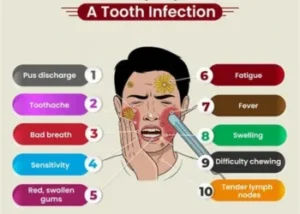
Symptoms of a Tooth Infection
The Timeline: How Quickly Can a Tooth Infection Turn Deadly?
No two cases are identical, but here’s a general progression based on medical insights. Remember, this isn’t a game of wait-and-see; Chicago traffic alone can delay you.
| Stage | Timeline | What Happens |
| Early | Days 1–3 | Mild pain, sensitivity to hot/cold. Bacteria multiply in the tooth pulp. |
| Advancing | Days 4–7 | Swelling, pus pocket forms. Infection pushes into gums. |
| Spreading | Weeks 1–4 | Moves to jawbone or neck (Ludwig’s angina). Fever spikes. |
| Critical | Weeks to Months | Enters bloodstream (sepsis) or brain—potentially fatal without IV antibiotics and surgery. |
In rare cases, like with weakened immunity, it can escalate in days. According to the CDC, tooth issues lead to nearly 2 million ER visits yearly nationwide—many preventable.
Serious Complications: Why Untreated Infections Are a Big Deal
Left alone, a simple abscess isn’t just uncomfortable—it’s a gateway to chaos. Bacteria can hitch a ride through your body, causing:
- Sepsis: A whole-body response that overwhelms your immune system.
- Brain abscess: Rare but deadly, spreading via blood vessels.
- Heart issues: Linked to endocarditis in severe gum infections, per ADA research.
We’ve treated Chicago folks who’ve dodged these bullets with quick root canals. For more on this, check Mayo Clinic’s guide to tooth abscesses.
Can a Tooth Infection Spread to Your Brain? (A Common Worry)
Yes, but it’s uncommon with prompt care. The infection travels through facial veins, potentially forming a brain abscess. Symptoms include severe headaches, confusion, or neck stiffness. Healthline notes this risk rises after weeks of neglect. In Chicago, our team at EliteFixDenture prioritizes fast diagnostics to stop it cold.
Key Dental Terms About Tooth Infections
Tooth Abscess:
A pocket of pus caused by bacterial infection inside or around a tooth, often resulting in swelling, throbbing pain, and sensitivity.
Dental Infection:
An infection that begins in the tooth pulp or gums and can spread to nearby tissues or even the bloodstream if untreated.
Sepsis:
A rare but serious complication where infection spreads through the blood, causing a whole-body inflammatory response.
Root Canal:
A dental procedure that removes infected pulp, disinfects the canal, and seals the tooth to prevent further infection.
Ludwig’s Angina:
A severe form of jaw and neck infection that can occur when dental abscesses spread to deep tissues—considered a medical emergency.
Brain Abscess:
A rare but dangerous condition where dental bacteria reach the brain through the bloodstream, causing inflammation and pressure.
Antibiotics:
Medications like amoxicillin or clindamycin prescribed to stop bacterial spread and control infection before or after dental treatment.
Emergency Dentist:
A professional available for same-day appointments to treat swelling, fever, or severe pain from abscesses—common in urgent Chicago cases.
💡 Chicago Tip:
Dentists in Lakeview and Lincoln Park recommend treating dental pain within 24–48 hours to prevent infections from spreading beyond the jaw.
Diagnosis and Treatment: What to Expect at Your Chicago Visit
Your dentist will examine with X-rays and possibly tap the tooth for sensitivity. Treatment? Swift and effective:
- Drainage: Releasing pus to ease pressure.
- Antibiotics: Like amoxicillin to fight bacteria (7–10 days course).
- Root canal: Saves the tooth by cleaning the pulp.
- Extraction: If too damaged—followed by implant options.
Recovery is quick: Pain fades in days with over-the-counter meds. Costs? Root canals run $700–$1,500; extractions $150–$300—worth every penny over ER bills.
Prevention Tips: Keep Chicago Smiles Infection-Free
Prevention beats cure, especially with our city’s grab-and-go eats. Brush twice daily, floss, and visit biannually. Pro tip: Rinse after deep-dish pizza nights. The ADA reports untreated cavities hit 26% of U.S. adults—don’t join that club.
Quick Tips Callout:
- Use fluoride toothpaste.
- Limit sugary drinks.
- Schedule check-ups at EliteFixDenture in Lakeview.
For cosmetic boosts post-treatment, explore our veneers services.
When Should You See an Emergency Dentist in Chicago?
If pain keeps you up or swelling blocks breathing, call us 24/7. Lincoln Park locals: We’re minutes away. Better safe than sorry—delays cost lives, as ADA data on hospitalizations shows.
FAQ: Your Tooth Infection Questions Answered
How long does it take for a tooth infection to spread?
Typically 1–2 weeks to nearby tissues, but up to months for systemic spread. Act fast!
Can a tooth infection cause sepsis?
Absolutely—it’s a leading risk if bacteria enter the blood. Symptoms: High fever, rapid heart rate.
Is a tooth infection an emergency in Chicago?
Yes, if swelling or fever hits. Our Lakeview office offers same-day slots.
What happens if you ignore a dental abscess?
It can lead to bone loss, facial swelling, or worse—sepsis or airway blockage.
How do you know if your tooth infection is getting worse?
Watch for increasing pain, facial numbness, or pus drainage. ER if breathing’s affected.
Can kids get deadly tooth infections?
Yes, pediatric abscesses spread quickly. See our pediatric dentistry page for tips.
What’s the survival rate for severe tooth infections?
High with treatment (over 95%), but drops sharply if sepsis sets in.
Can a tooth infection cause death if untreated?
Rarely today, but yes—without antibiotics or drainage, the infection can spread to the bloodstream or brain. Prompt dental care makes it entirely preventable.
Do antibiotics alone cure a tooth abscess?
No—they control spread, but drainage or root canal is key.
This article is for informational purposes only and not a substitute for professional dental advice. Consult a dentist for personalized care.
For expert dental care in Chicago, visit EliteFixDenture.com or call our Lakeview office today.
Reviewed by Dr. Aziz Liaquat, Implant Dentistry