We understand how frustrating a broken denture feels. It disrupts your meals, conversations, and confidence. At EliteFixDenture.com in Chicago, we prioritize your comfort. This guide draws from trusted sources like the American Dental Association (ADA) and Cleveland Clinic to help you navigate denture repairs wisely.
Understanding Denture Repair Needs
Dentures restore function and boost your smile. Yet, daily wear leads to cracks, looseness, or chips over time. Factors like chewing tough foods or Chicago’s dry winter air can accelerate wear.
Spot early signs: discomfort while eating, slipping during speech, or visible damage. Address them quickly to avoid mouth sores or infections.
In Lakeview’s bustling vibe, you need reliable solutions. Professional care ensures safety, but temporary fixes bridge the gap.
Types of Denture Repair Kits
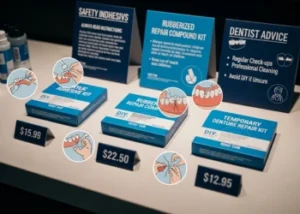
Denture repair kits offer quick at-home options for minor issues. However, experts caution against routine use. They risk permanent damage to your appliance.
Common types include:
- Adhesive creams or powders: Help secure loose dentures temporarily. Apply sparingly to avoid residue buildup.
- Self-curing resin kits: Mend small cracks or reattach loose teeth. Mix and apply per instructions, but results last only weeks.
- Reliner materials: Soft pads or pastes to cushion ill-fitting bases. Use for short-term relief until professional adjustment.
Adhesive Creams or Powders: Securing Loose Dentures
Adhesive creams and powders provide a quick grip for dentures that shift slightly during eating or speaking. They create a temporary seal between your denture and gums, holding everything steady without altering the appliance itself.
How They Work
Apply a small amount—about three to four pea-sized dollops—to your clean, dry denture. Press the denture into place and hold for a few seconds as instructed. The adhesive forms a thin layer that enhances suction, especially helpful if you have dry mouth from medications or Chicago’s low humidity. It boosts bite force and chewing efficiency, letting you enjoy meals in Lakeview cafes with confidence.
Key Benefits
- Improves retention and stability for well-fitting dentures.
- Reduces food particle trapping, minimizing irritation.
- Available in zinc-free formulas to avoid health risks.
Important Risks and Limitations
Overuse irritates gums, leading to sores or accelerated bone loss. Products with zinc, if used excessively, can cause numbness or tingling—stop immediately and see your doctor. Adhesives mask underlying fit issues; they’re not a fix for loose dentures, which may need relining.
Safe Use Guidelines
Clean your dentures first, then apply sparingly. Remove nightly by soaking and brushing gently with mild soap—never hot water, which warps plastic. A standard tube lasts seven to eight weeks with proper dosing. Choose ADA Seal-approved options for proven safety and efficacy.
Duration and When to Stop
Effects last 8–12 hours, but reapply only as needed, no more than once daily. If you rely on them constantly, schedule a checkup—your gums change over time.
Self-Curing Resin Kits: Mending Cracks and Chips
Self-curing resin kits let you patch minor breaks at home, like a small crack from dropping your denture on a hard Lincoln Park sidewalk. These involve a two-part acrylic material that hardens without heat, mimicking professional repairs temporarily.
How They Work
Mix the powder and liquid per package ratios—usually in a provided tray—to form a putty-like resin. Apply it to the clean, damaged area, shape with tools, and let it cure for 10–20 minutes. The chemical reaction hardens it, restoring basic structure for light use.
Key Benefits
- Fast fix for emergencies, avoiding immediate dentist visits.
- Affordable and accessible for tiny fractures or loose teeth reattachment.
- Matches denture color for discreet results.
Important Risks and Limitations
These kits often weaken the denture over time, causing warping or further breaks—experts strongly advise against routine use. Swallowing uncured resin irritates your mouth or stomach. They don’t address root causes like wear from grinding tough foods.
Safe Use Guidelines
Work over a soft towel in bright light. Wear gloves to avoid skin contact, and ventilate the area—fumes can sting eyes. Cure fully before wearing, and avoid hot liquids that soften the bond. Clean tools immediately with acetone if specified.
Duration and When to Stop
Repairs hold 1–4 weeks at best, but inspect daily for cracks. Rush to a professional if pain, slipping, or odor develops—DIY attempts complicate expert fixes.
Reliner Materials: Cushioning for Comfort
Reliner materials add a soft layer to the denture base, improving fit when gums shrink or shift. Think of them as padded inserts that absorb pressure, easing soreness from an outdated appliance.
How They Work
Options include soft pads (pre-cut cushions) or pastes (moldable gels). Clean and dry your denture, then press the reliner into the fitting surface. Bite down gently to mold it to your gums, trim excess, and insert. Pastes set in minutes, creating a custom cushion.
Key Benefits
- Eases discomfort from loose fits, preventing sores during winter’s dry spells.
- Extends denture life short-term, buying time for pro adjustments.
- Soft varieties reduce pressure on sensitive ridges.
Important Risks and Limitations
DIY reliners trap bacteria if not cleaned well, raising infection risks like stomatitis. They alter bite alignment, potentially causing jaw pain or uneven wear. Not suitable for major changes—over-reliance speeds bone resorption.
Safe Use Guidelines
Replace every 1–3 months, or sooner if crumbling. Soak overnight in cool water to maintain pliability, and brush daily with non-abrasive cleanser. Avoid if you have allergies to acrylics.
Duration and When to Stop
Provides relief for 1–3 months, but monitor for slippage. See your dentist for a lab reline every 1–2 years—it’s more durable and precise.
| Type | Ideal For | Lasts | Top Caution |
| Adhesives | Daily grip | 8–12 hours | Zinc overuse; not for poor fit |
| Resin Kits | Small breaks | 1–4 weeks | Weakens structure; pro repair needed soon |
| Reliners | Cushioning | 1–3 months | Infection risk; masks gum changes |
Dr. Aziz Liaquat, our implant dentistry expert, reminds us: “Temporary kits bridge gaps, but lasting comfort comes from tailored care.
Choose ADA-approved products for safety. Always follow package directions.
Safe Use of Denture Repair Kits
Safety comes first. Mishandling kits harms your oral health. Rinse hands and work area before starting.
Work in good light over a soft towel—drops cause breaks. Mix resins precisely to avoid uneven sets. Let cures fully before wearing.
Remove kits daily. Brush your gums and remaining teeth twice daily with a soft brush. Soak dentures overnight in cool water or mild solution to prevent warping.
In Lincoln Park’s chilly winters, humidity drops. Add a humidifier at home to keep dentures pliable and reduce cracking risks.
Costs of Denture Repairs: DIY vs. Professional
DIY kits cost $5–$20 per use. They’re budget-friendly for emergencies but short-lived.
Professional repairs vary. A simple reline runs $200–$400. Full replacements? $900–$2,000 for partials, $1,500–$3,000 for completes, per Healthline estimates. Insurance often covers part—check yours.
Long-term, pros save money. Dr. Aziz Liaquat, our implant dentistry specialist at EliteFixDenture.com, notes frequent DIY attempts lead to costly redo’s.
DIY Fixes: When and How
Reserve DIY for true urgencies, like a dinner in Lakeview. Never glue hardware store products—they contain toxic chemicals unsafe for your mouth.
Quick tips:
- For looseness: Dab adhesive thinly; wipe excess.
- For small chips: Apply resin, shape gently, cure 10–15 minutes.
- Clean immediately after: Use soft brush and non-abrasive soap.
Limit to 48 hours. Schedule a pro visit ASAP. Ill-fitting dentures cause sores or bone loss.
Dentist Advice on Denture Repairs
Dentists urge skipping DIY kits for breaks. “Don’t try to fix broken dentures using over-the-counter repair kits or glue. You may irreparably damage the appliance,” warns the Cleveland Clinic.
See your dentist for:
- Adjustments if slipping occurs.
- Relines every 1–2 years as gums change.
- Full exams twice yearly to catch issues early.
Follow ADA guidelines: Soak in cool water, brush daily, and avoid hot liquids. This extends denture life to 7–10 years.

patient consulting dentist in Chicago clinic, discussing denture model
FAQs: Denture Repair Essentials
Q: How often should I replace dentures?
A: Every 7–10 years, or sooner if damaged. Gums shrink over time.
Q: Can I sleep in dentures?
A: No—remove nightly for gum rest and bacteria control.
Q: What if my denture cracks in winter?
A: Dry Chicago air contributes. Humidify and seek pro repair fast.
Q: Are repair kits safe long-term?
A: No—use temporarily only. They risk mouth irritation.
Q: How do I clean after using a kit?
A: Rinse thoroughly; brush with soft tool and mild soap.
Q: When to see a dentist urgently?
A: For pain, sores, or looseness causing chewing issues.
Q: Do adhesives replace relining?
A: Never—they’re temporary. Get fitted properly.
Q: What’s the best storage for dentures?
A: Cool water or solution overnight—never dry.
This guide offers general information only and isn’t medical advice. Consult a professional for personalized care.
For expert dental care in Chicago, visit EliteFixDenture.com. Schedule your appointment today in Lincoln Park or Lakeview—your smile deserves it.
Reviewed by Dr. Aziz Liaquat, Implant Dentistry