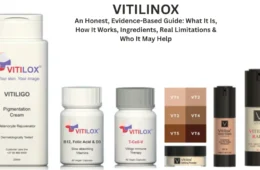
VITILINOX
An Honest, Evidence-Based Guide: What It Is, How It Works, Ingredients, Real Limitations & Who It May Help
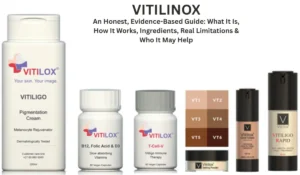
| 🌿 Type Natural topical / oral supplement | 🎯 Target Condition Vitiligo skin depigmentation | 🔬 Key Ingredients Babchi, Piperine, Antioxidants | ⚠️ Status Not FDA-approved treatment |
What Is Vitilinox?
Vitilinox is a term used to describe natural supplement products — available in topical (cream) and oral (capsule or liquid) forms — designed to provide nutritional and antioxidant support for people living with vitiligo. The name combines ‘vitiligo’ with a suffix suggesting strength or protection, and it has been adopted by several brands offering plant-based, non-pharmaceutical approaches to managing the visible skin changes caused by vitiligo.
It is important to be clear from the outset: Vitilinox is not a pharmaceutical drug, not an FDA-approved treatment, and not a cure for vitiligo. It is a natural health product positioned as a complementary support option — something that may assist in managing vitiligo alongside, but not instead of, evidence-based medical care.
The product category typically combines botanical extracts with proven evidence for melanocyte support (particularly Psoralea corylifolia, also known as babchi, and piperine from black pepper) with nutritional compounds frequently found deficient in vitiligo patients (vitamin B12, folic acid, vitamin D3, zinc). The core rationale is addressing the two primary mechanisms believed to drive vitiligo: oxidative stress damaging melanocytes, and immune dysregulation attacking pigment-producing cells.
| 📌 | Multiple brands use the ‘Vitilinox’ name or very similar names (Vitilox, Vitilinox UK). Formulations, ingredient doses, and quality standards vary between products. This article evaluates the concept and the evidence for the common ingredients — not any single proprietary brand. Always check the specific ingredient label of any product you consider purchasing. |
Understanding Vitiligo: Why It Matters for Evaluating Any Treatment
To evaluate Vitilinox honestly, you first need to understand what vitiligo is and what causes it — because any natural product’s claims should be measured against the actual disease mechanisms.
What Is Vitiligo?
Vitiligo is a chronic autoimmune skin condition in which the body’s immune system attacks and destroys melanocytes — the cells responsible for producing melanin, the pigment that gives skin, hair, and eyes their color. The result is well-defined white or depigmented patches that can appear anywhere on the body, most visibly on the face, hands, arms, and genital areas. Vitiligo affects approximately 1 to 2% of the global population — around 70 to 100 million people worldwide — with no significant difference by ethnicity, sex, or geography.
What Causes Vitiligo?
The exact cause is not fully understood, but three mechanisms are established as central to the disease:
- Autoimmune attack: The immune system produces cytotoxic T-cells that specifically target and destroy melanocytes. This is the dominant current theory, supported by the association of vitiligo with other autoimmune conditions (thyroid disease, type 1 diabetes, alopecia areata).
- Oxidative stress: An imbalance between free radical production and antioxidant defenses leads to hydrogen peroxide (H₂O₂) accumulation in the epidermis, damaging melanocyte function and viability. Vitiligo skin shows significantly elevated H₂O₂ levels compared to unaffected skin.
- Melanocyte vulnerability: Some individuals have intrinsically more fragile melanocytes, possibly due to genetic factors including NALP1 gene variants, that are more susceptible to oxidative and immune damage.
| 💡 | The oxidative stress mechanism is the primary scientific rationale for antioxidant-based approaches like Vitilinox. If oxidative stress damages melanocytes, reducing that oxidative burden logically supports melanocyte survival. This is a mechanistically reasonable hypothesis — but translating a mechanism into a clinically effective treatment is a different step that requires clinical trial evidence. |
Vitilinox Ingredients: The Evidence Behind Each
The ingredients most commonly found in Vitilinox-type products fall into two categories: botanical extracts with traditional use in skin pigmentation, and micronutrients with documented deficiency rates in vitiligo patients. Here is an honest assessment of what the science says about each:
| Ingredient | Proposed Role in Vitiligo | Evidence Level |
| Psoralea corylifolia (Babchi) | Melanocyte stimulation via psoralen compounds; enhances photosensitivity | Moderate — traditional use + some RCTs; psoralens are active compounds |
| Piperine (Black Pepper extract) | Promotes melanocyte proliferation and dendritic branching; improves absorption of other compounds | Moderate — in vitro and animal studies; limited large human trials |
| Nigella sativa (Black Cumin seed oil) | Anti-inflammatory; immunomodulatory; reduces oxidative stress on melanocytes | Moderate — topical studies show VASI score improvement in some trials |
| Thymol / Thyme oil | Antioxidant; antibacterial; reduces skin surface oxidative burden | Limited — lab studies; no standalone vitiligo RCTs |
| Vitamin B12 + Folic acid | B12 inhibits homocysteine (which damages tyrosinase); folic acid works in tandem for melanin synthesis | Moderate-Strong — multiple clinical studies; often combined with phototherapy |
| Vitamin D3 | Immunomodulatory; regulates T-cell activity; deficiency common in vitiligo patients | Moderate — deficiency linked to disease activity; high-dose D3 trials show promise |
| Zinc | Cofactor for tyrosinase (melanin synthesis enzyme); antioxidant; immune support | Moderate — deficiency documented in vitiligo; supplementation shows adjunct benefit |
| Vitamin C + E | Antioxidant pair protecting melanocytes from oxidative damage (H₂O₂ accumulation) | Moderate — antioxidant basis well-established; combination studies positive |
| ⚠️ | Psoralea corylifolia (babchi) contains psoralen compounds, which are photosensitizing agents. When applied to skin and exposed to sunlight or UVA light, psoralens can cause significant phototoxic reactions — blistering, burning, and lasting hyperpigmentation — if used improperly. This is the same class of compound used in pharmaceutical PUVA therapy, but at uncontrolled doses in topical products. Never apply babchi-containing products to open or broken skin, and start with short, supervised sun exposure when using any psoralen-based topical. |
Does Vitilinox Work? An Honest Assessment
This is the central question — and it deserves a direct, evidence-respecting answer rather than promotional enthusiasm or reflexive dismissal.
What the Evidence Supports
At the ingredient level, several components in Vitilinox-type formulations have published clinical research supporting their use in vitiligo management:
- Vitamin B12 and folic acid combined with sun exposure showed repigmentation benefits in a published study of 100 vitiligo patients, with 64% showing some repigmentation versus lower rates with sun exposure alone.
- High-dose vitamin D3 (35,000 IU daily for 6 months) showed 25–75% repigmentation in 14 of 16 patients in a pilot study by Finamor et al. — though this is a very high dose requiring medical supervision and monitoring.
- Ginkgo biloba (sometimes included in Vitilinox formulations) was studied in a double-blind RCT of 47 patients, showing statistically significant reduction in vitiligo progression and modest repigmentation compared to placebo.
- Zinc supplementation in vitiligo patients with documented zinc deficiency has shown adjunct benefit in several trials, particularly when combined with topical corticosteroids or phototherapy.
- Piperine has shown melanocyte proliferation effects in laboratory and animal studies; human clinical trial data is limited but mechanistically promising.
What the Evidence Does NOT Support
- No clinical trial has evaluated Vitilinox as a combined formulation — all evidence exists at the individual ingredient level.
- None of these ingredients produces complete repigmentation as a standalone treatment in controlled clinical settings.
- Results vary enormously based on vitiligo type (segmental vs. non-segmental), disease duration, skin phototype, affected body location, and individual immune activity.
- Areas of long-standing, fully depigmented vitiligo — particularly on hands, feet, and bony prominences — are the least likely to respond to any treatment, including phototherapy.
| ✅ | The honest summary: Vitilinox-type products are not medically proven treatments for vitiligo, but they are not without biological rationale. Specific ingredients have genuine published research in vitiligo support — particularly vitamin B12/folate, vitamin D3, and ginkgo biloba. Used as an adjunct to medical treatment (not a replacement for it), a well-formulated natural supplement may provide meaningful nutritional support for melanocyte health. |
Vitilinox: Honest Pros and Cons
| ✅ POTENTIAL BENEFITS | ❌ REAL LIMITATIONS |
| Core ingredients (babchi, piperine, B12) have published research in vitiligo | No independent large-scale RCT of the combined Vitilinox formula |
| Non-steroidal — avoids skin atrophy risk of corticosteroids | Not an FDA-approved or dermatologically regulated treatment |
| May reduce oxidative stress damaging melanocytes | Results vary widely — not effective for all patients or all vitiligo types |
| Can complement (not replace) NB-UVB phototherapy | Babchi (psoralen) can cause photosensitivity burns if misused |
| Accessible without a prescription | Cannot reverse advanced or long-standing depigmentation alone |
| Antioxidant support addresses a known mechanism in vitiligo pathology | Marketing claims often exceed what clinical evidence directly supports |
| Generally well-tolerated for most adults | Quality and formulation consistency varies between brands using this name |
Vitilinox vs. Conventional Vitiligo Treatments
Understanding where Vitilinox sits relative to evidence-based medical treatments helps set realistic expectations. Here is the honest comparison:
| Factor | Vitilinox (Natural) | Conventional Treatment |
| Mechanism | Natural antioxidants + melanocyte stimulants | Corticosteroids / calcineurin inhibitors / NB-UVB |
| Requires prescription? | No | Most require prescription or clinic |
| Side effect risk | Low — mild skin irritation possible | Moderate — skin atrophy (steroids), photosensitivity |
| Clinical trial evidence | Limited — ingredient-level data | Strong — FDA/NICE-approved treatment protocols |
| Cost (monthly estimate) | $20–$80 | $30–$500+ depending on treatment type |
| Suitable as sole treatment? | No — adjunct/supportive only | Can be primary treatment under medical supervision |
| Speed of results | Slow — months of consistent use | Variable — NB-UVB shows results in 3–6 months |
| Best used as | Complementary support to medical treatment | Primary or secondary treatment |
Evidence-Based Conventional Vitiligo Treatments (for context)
Narrowband UVB (NB-UVB) phototherapy: Currently the most effective and widely recommended treatment for widespread vitiligo. Stimulates melanocyte migration from hair follicles. Produces meaningful repigmentation in approximately 50–75% of patients with consistent treatment. Available through dermatology clinics.
Topical corticosteroids: First-line for localized vitiligo. Effective for active disease but carry risk of skin atrophy with prolonged use. Not suitable for face or flexural areas long-term.
Topical calcineurin inhibitors (tacrolimus, pimecrolimus): Steroid-free immune modulators effective for facial and sensitive-area vitiligo. Good safety profile. Slower response than steroids.
JAK inhibitors (ruxolitinib cream — Opzelura): The first FDA-approved topical treatment specifically for vitiligo (approved 2022). Shown to produce significant repigmentation in clinical trials. Represents a major advance in vitiligo pharmacotherapy.
Oral minipulse corticosteroids: Used to stop rapidly spreading (active) vitiligo. Short-course protocol to arrest disease activity. Not for long-term use.
| 📌 | Ruxolitinib (Opzelura) cream represents the first FDA-approved topical treatment specifically indicated for non-segmental vitiligo in patients 12 and older. If you have not discussed this option with a dermatologist, it is worth asking about — it is the most significant advance in vitiligo treatment in decades and has a stronger evidence base than any natural supplement approach. |
Vitilinox Safety and Side Effects
Generally Safe Ingredients
The antioxidant and vitamin components of Vitilinox-type products (vitamins B12, C, D, E; zinc; folic acid) are well-characterized nutritional compounds with established safety profiles at recommended doses. For most healthy adults, these components carry minimal risk.
Important Safety Considerations
- Babchi / Psoralen photosensitivity: The most significant risk. Topical babchi extracts can cause severe phototoxic burns if the treated area is exposed to significant sunlight. Always do a patch test. Limit sun exposure to 5–15 minutes initially after application. Never apply to broken, infected, or actively inflamed skin.
- High-dose vitamin D3: Doses above 4,000 IU daily require medical supervision and periodic blood monitoring (calcium, 25-OH vitamin D levels). Vitamin D toxicity (hypercalcemia) is a real risk at very high supplemental doses used in some vitiligo protocols.
- Zinc at high doses: Long-term zinc supplementation above 40mg daily can inhibit copper absorption and cause copper deficiency. Follow labeled doses.
- Drug interactions: Vitamin D interacts with certain antiepileptic drugs, corticosteroids, and thiazide diuretics. B12 may interact with certain diabetes medications (metformin reduces B12 absorption). Consult a doctor if you take any prescription medications.
- Pregnancy and breastfeeding: Psoralen-containing topicals and high-dose vitamins should be reviewed with a healthcare provider before use during pregnancy.
- Children: Babchi-containing products are generally not recommended for children without medical guidance due to the photosensitivity risk.
Who Is Vitilinox Best Suited For?
Most Likely to Find Value
- Adults with stable, non-rapidly-spreading vitiligo seeking complementary nutritional support alongside medical treatment
- People who have confirmed nutritional deficiencies (B12, D, zinc, folate) through blood testing — in whom supplementation addresses a real deficit
- Patients already using NB-UVB phototherapy who want to maximize antioxidant support — some evidence suggests antioxidant supplementation improves phototherapy outcomes
- Individuals who cannot access or afford prescription vitiligo treatments and want a low-risk supportive option
- Those who prefer a natural, non-steroidal approach and understand its limitations relative to pharmaceutical options
Less Appropriate For
- People expecting rapid or complete repigmentation — Vitilinox does not deliver this and no responsible claim suggests it does
- Patients with active, rapidly-spreading vitiligo who need medical intervention to arrest disease progression
- Those seeking a replacement for dermatological evaluation — particularly when new patches are appearing, to rule out associated autoimmune conditions (thyroid disease, type 1 diabetes)
- Anyone with photosensitivity disorders or conditions that contraindicate psoralen compounds
| ❌ | Vitilinox should not be used as a reason to avoid seeing a dermatologist. New or spreading vitiligo warrants medical evaluation — both to access the most effective treatments available and to screen for associated autoimmune conditions. A supplement does not replace this. |
Frequently Asked Questions About Vitilinox
Q: What is Vitilinox used for?
A: Vitilinox is a natural supplement (topical cream and/or oral capsule) designed to provide antioxidant and nutritional support for people with vitiligo. Its ingredients aim to reduce oxidative stress damaging melanocytes and support the body’s melanin production pathways. It is not a pharmaceutical treatment and not a cure for vitiligo.
Q: Does Vitilinox really work for vitiligo?
A: Individual ingredients in Vitilinox-type products — particularly vitamin B12, folic acid, vitamin D3, ginkgo biloba, and piperine — have published research suggesting supportive benefits for vitiligo management. However, the combined Vitilinox formula has not been evaluated in large independent clinical trials. Results vary significantly between individuals, and Vitilinox is most accurately described as a complementary support option, not a standalone treatment.
Q: Is Vitilinox safe to use?
A: For most healthy adults, the antioxidant and vitamin components are safe at recommended doses. The most important safety consideration is babchi (Psoralen corylifolia), which can cause phototoxic burns if treated skin is exposed to sunlight without proper precautions. A patch test and gradual sun exposure are essential when starting any babchi-containing topical. Consult a doctor if you take prescription medications or have any existing health conditions.
Q: How long does Vitilinox take to work?
A: Natural supplements work gradually. Most users who report any positive response describe changes over 3 to 6 months of consistent daily use. Vitiligo is a slow-moving condition in both progression and response to treatment — any approach, pharmaceutical or natural, requires months of consistency before meaningful evaluation is possible.
Q: Can Vitilinox be used with NB-UVB phototherapy?
A: Several ingredients in Vitilinox formulations (antioxidants, B12, folic acid) have been studied as adjuncts to phototherapy and show complementary benefits in some research. Babchi-containing topicals should not be used immediately before phototherapy sessions due to additive photosensitization risk. Always inform your dermatologist of all supplements you are taking when undergoing phototherapy.
Q: Is Vitilinox FDA approved?
A: No dietary supplement is FDA-approved — that designation is for pharmaceutical drugs. Vitilinox products are regulated as dietary supplements or cosmetics depending on their formulation and label claims. The first FDA-approved treatment specifically for vitiligo is ruxolitinib cream (Opzelura), approved in 2022. If you have not discussed prescription treatment options with a dermatologist, this is worth exploring.
Q: What is the difference between Vitilinox and Vitilox?
A: Vitilinox and Vitilox are different brand names in the vitiligo supplement space with similar naming. Vitilox is an established brand (vitilox.com) with multiple products including topical creams and oral supplements. Vitilinox appears to be a newer or alternative brand name used by different products. Because ‘Vitilinox’ is not a single, globally registered brand, the specific formulation and ingredient quality can vary significantly between products using this name.
Q: Can vitiligo be cured naturally?
A: There is no proven natural cure for vitiligo. The condition involves autoimmune destruction of melanocytes — a process that no natural product has been demonstrated to reverse completely in controlled clinical trials. Some patients experience spontaneous partial repigmentation regardless of treatment. Natural approaches including antioxidant supplementation, vitamin D, and piperine have supportive research but produce partial responses at best in a subset of patients. The most effective treatments remain NB-UVB phototherapy and, more recently, ruxolitinib (Opzelura) cream.
Final Assessment: What Vitilinox Is and What It Is Not
Vitilinox represents a natural, plant-based approach to supporting skin health in people living with vitiligo — grounded in the real science of oxidative stress and melanocyte nutrition, but not yet validated as a standalone treatment in large independent clinical trials.
The ingredients it typically contains are not arbitrary — babchi, piperine, vitamin B12, folic acid, vitamin D3, and antioxidant vitamins all have genuine mechanistic relevance to vitiligo pathology. Some have direct clinical research support, particularly when used alongside conventional treatments like phototherapy. The honest limitation is that the combined product formula lacks the kind of large, independent, controlled trial evidence that would establish it as a proven treatment.
For people living with vitiligo who want to explore supportive, low-risk nutritional options alongside medical care, a well-formulated Vitilinox-type product is a reasonable complement — not a replacement for dermatological treatment. The expectations must be realistic: gradual, partial support rather than dramatic repigmentation. And critically, it should never substitute for a proper dermatological evaluation, particularly for new or spreading vitiligo.
| ✅ | Vitilinox earns a cautious, evidence-respecting positive rating as a complementary support option for stable vitiligo — particularly for patients already working with a dermatologist. Its core ingredients are scientifically grounded, its safety profile is acceptable, and its approach (reducing oxidative stress, supporting melanocyte nutrition) aligns with established vitiligo biology. It is not a cure. It is not FDA-approved. And for anyone with new or spreading patches, a dermatologist visit — not a supplement — is the right first step. |
Medical Disclaimer
This article is for informational and educational purposes only and does not constitute medical or dermatological advice. Vitiligo is a medical condition that warrants professional diagnosis and management. Vitilinox and similar natural products are not proven treatments for vitiligo and should not replace medical care. Always consult a licensed dermatologist before starting any new supplement, particularly if you are pregnant, breastfeeding, taking prescription medications, or have other health conditions. In the USA, the most up-to-date treatment options including ruxolitinib (Opzelura) can be discussed with a board-certified dermatologist.
Medically reviewed by: Dr. Aziz Liaquat, DDS – Lead Dentist
New York University College of Dentistry | Health content reviewer