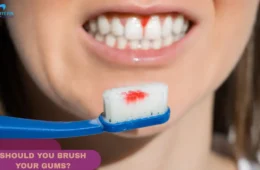
SHOULD YOU BRUSH YOUR GUMS?
The Complete, Dentist-Informed Answer: How to Brush Gums Correctly, What Happens If You Don’t, and When Bleeding Means a Problem
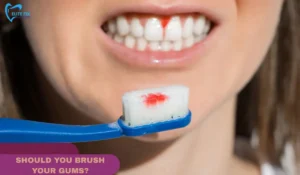
| 📌 | Short answer: Yes — you should brush your gums, gently and correctly. The gumline is where plaque bacteria accumulate most aggressively, and failing to clean it is the primary cause of gingivitis and gum disease. However, brushing gums incorrectly — with too much pressure or the wrong brush — causes gum recession and enamel erosion that can’t be reversed. How you brush matters as much as whether you brush. |
Why Brushing Your Gums Matters
Most people focus their toothbrushing on the visible surfaces of teeth — the enamel you can see in the mirror. But the most clinically important area to clean is the gumline: the narrow border where the gum tissue meets the tooth. This is where Streptococcus mutans, Porphyromonas gingivalis, and other oral bacteria form biofilm colonies, protected from saliva’s natural antibacterial action by the tight crevice between tooth and gum tissue.
When plaque is allowed to accumulate at the gumline undisturbed for 24 to 72 hours, it triggers an inflammatory immune response in the gum tissue. The gums become red, swollen, and bleed easily when touched — this is gingivitis, the earliest and fully reversible stage of gum disease. If plaque stays long enough, it mineralizes into calculus (tartar), which cannot be removed by brushing and requires professional dental cleaning.
The good news: gingivitis is entirely preventable and reversible with effective daily brushing and flossing. The American Dental Association (ADA) and the American Academy of Periodontology (AAP) both identify consistent, correct gumline brushing as the foundational behavior for gum health across a lifetime.
| 💡 | Gum disease (periodontitis) affects approximately 47% of US adults over 30, according to the CDC. It is the leading cause of tooth loss in adults — not cavities. The single most effective prevention is consistent mechanical removal of plaque at the gumline through daily brushing and flossing. No mouthwash, oil pull, or supplement replaces this. |
How to Brush Your Gums Correctly: Step-by-Step
The correct technique for brushing gums — recommended by the ADA and most dental hygienists — is the modified Bass technique. Here is exactly how to do it:
- Hold your toothbrush at a 45-degree angle to the gumline — not flat against the teeth. This angle directs the bristle tips slightly under the gum margin, where the plaque accumulation is most critical.
- Use gentle pressure. You should feel the bristles flexing slightly against the gum tissue, not bending flat. The pressure you use to stroke your eyelid is roughly the right force. Harder does not mean cleaner — it means damaged gum tissue.
- Use short, gentle back-and-forth strokes or small circular strokes, covering one to two teeth at a time. The goal is disrupting the plaque biofilm, not scrubbing it off forcefully.
- Work systematically around every surface — outer surfaces of upper teeth, outer surfaces of lower teeth, inner surfaces of upper teeth, inner surfaces of lower teeth, and chewing surfaces. Missing the same spot every time allows disease to develop predictably at that location.
- Spend at least two minutes total — 30 seconds per quadrant of the mouth. Most people who skip gum brushing do so on the inner (tongue-side) surfaces of lower front teeth, where tartar accumulates fastest.
- End by gently brushing the tongue and the roof of the mouth to reduce bacterial load that causes bad breath.
| ⚠️ | The most common toothbrushing mistake in adults is horizontal scrubbing with hard pressure — the ‘saw’ motion. This technique is highly effective at removing tooth enamel and pushing the gum margin downward (gum recession), both of which are irreversible. Once gum tissue has receded, it does not grow back without surgical intervention. |
Gum Brushing: Complete Do’s and Don’ts
| ✅ DO THIS | ❌ AVOID THIS |
| Use a soft-bristled toothbrush only | Never use a medium or hard-bristled brush on gums |
| Brush at a 45° angle to the gumline | Never scrub side-to-side aggressively |
| Use gentle, circular or back-and-forth strokes | Never press hard — gentle pressure only |
| Spend 2 minutes total — 30 sec per quadrant | Never skip the gumline thinking ‘teeth only’ |
| Brush gums morning and night | Never brush immediately after acidic food/drinks |
| Replace your toothbrush every 3 months | Never use whitening toothpaste daily on sensitive gums |
| Brush your tongue and roof of mouth too | Never ignore bleeding that persists beyond 2 weeks |
| Floss or use interdental brushes daily | Never use a worn-out brush with splayed bristles |
Best Toothbrush for Brushing Gums
Toothbrush selection has a significant impact on gum health outcomes. Here is the honest comparison:
| Brush Type | For Gums? | Notes |
| Soft manual toothbrush | ✅ Best for gums | Recommended by ADA; gentle on gum tissue; widely available |
| Electric toothbrush (oscillating) | ✅ Excellent | Studies show superior plaque removal; built-in timers; pressure sensors on premium models |
| Sonic toothbrush | ✅ Excellent | High-frequency vibration disrupts bacteria at gumline; good for gum disease prevention |
| Medium-bristled brush | ⚠️ Use with care | Can be too abrasive for most people; not recommended for sensitive gums or recession |
| Hard-bristled brush | ❌ Avoid | Causes gum recession and enamel erosion; no clinical benefit over soft bristles |
| Whitening brush / stiff-tipped | ⚠️ Use with care | Scrubbing action around gums with stiff tips can irritate gum margins |
Manual vs. electric for gum health: A 2019 Cochrane Review analyzing 56 trials found that oscillating-rotating electric toothbrushes reduced gingivitis by 11% and plaque by 21% more than manual brushing over 3 months. Electric brushes with pressure sensors are particularly valuable for people who habitually brush too hard — the sensor alerts you when pressure exceeds the safe threshold. That said, a soft manual brush used with correct technique is fully effective. The brush you will use consistently and correctly is the right brush.
Bristle hardness: Use only soft or extra-soft bristles for gums. Medium and hard bristles marketed as ‘deep cleaning’ are not endorsed by the ADA for gum brushing. Multiple clinical studies show no additional plaque removal benefit from harder bristles, while gum tissue damage and enamel erosion are measurably higher.
Brush head size: A compact or small head allows better access to the inner surfaces of back molars — the most commonly missed area in both tooth and gum brushing.
| 💡 | Replace your toothbrush every 3 months or sooner if bristles are visibly splayed or flattened. A worn toothbrush with bent bristles cannot clean the gumline effectively regardless of technique — the tips no longer reach the critical 45-degree gumline angle. Studies show most people replace their brush 2–3 times less frequently than recommended. |
What Toothpaste Is Best for Gum Health?
Toothpaste choice is secondary to technique, but some formulations have meaningful clinical evidence for gum health specifically:
Fluoride toothpaste: The foundational ingredient for overall oral health. All standard fluoride toothpastes support gum health by preventing cavities at the gumline (root caries), which are common when gum recession exposes the root surface. Use fluoride toothpaste as your baseline.
Triclosan/copolymer formulations: Toothpastes containing triclosan (such as Colgate Total, which reformulated without triclosan in 2019) showed significant anti-gingivitis benefits in multiple clinical trials. Current alternatives use stannous fluoride or essential oil complexes for similar antibacterial effect.
Stannous fluoride: Toothpastes with stannous fluoride (e.g., Crest Pro-Health, Sensodyne Pronamel) have evidence for reducing gingival bleeding and gingivitis, not just cavity prevention. The ADA recommends stannous fluoride formulations for patients with early signs of gum disease.
‘Gum health’ specialty toothpastes: Products marketed specifically for gum health (Parodontax, Crest Gum Detoxify) typically contain stannous fluoride, activated charcoal, or herbal extracts. Stannous fluoride formulations have the strongest clinical evidence. Charcoal-based products have limited evidence and may be more abrasive than standard toothpastes.
Sensitivity toothpaste: If gum recession has exposed root surfaces causing sensitivity, potassium nitrate or stannous fluoride sensitivity toothpastes reduce nerve sensitivity while maintaining gum-brushing comfort. Using a sensitivity toothpaste does not eliminate the need for gum brushing — it makes consistent brushing more comfortable.
| 📌 | No toothpaste can reverse gingivitis or gum disease alone. Toothpaste is the delivery vehicle for fluoride and anti-bacterial agents — the mechanical action of the brush removing the plaque biofilm is what prevents and reverses gum inflammation. Mouthwash and toothpaste are adjuncts to brushing and flossing, not substitutes. |
Should You Brush Bleeding Gums?
This is one of the most common questions people search — and the answer surprises many patients. The instinct is to stop brushing when gums bleed. The clinically correct answer is the opposite.
Why Gums Bleed When Brushed
Healthy gum tissue is firm, pale pink, and does not bleed when brushed correctly. Gums that bleed when brushed are inflamed — their blood vessels are dilated and fragile due to the inflammatory response to bacterial plaque. The inflammation, not the brushing, causes the bleeding.
Should You Stop Brushing If Your Gums Bleed?
No. Stopping brushing because gums bleed removes the very action that clears the plaque causing the inflammation. This is the most common self-defeating response to early gum disease. If you stop brushing inflamed gums, plaque accumulates further, inflammation worsens, and bleeding becomes more frequent — a cycle that accelerates gum disease progression.
The correct response to bleeding gums: maintain or improve your brushing and flossing consistency using correct gentle technique. For most patients with gingivitis, consistent twice-daily brushing and daily flossing resolves gum bleeding within 2 to 3 weeks as inflammation subsides.
| ❌ | If gum bleeding persists for more than 2 weeks of improved brushing and flossing, see a dentist or dental hygienist. Persistent bleeding may indicate: calculus buildup requiring professional cleaning, more advanced periodontal disease, blood thinning medications, vitamin deficiency (particularly vitamin C or vitamin K), or in rare cases, systemic conditions. Do not ignore bleeding that continues beyond 2 weeks. |
Gum Symptoms When Brushing: What They Mean and What to Do
| Symptom | Likely Cause | Action |
| Bleeding when brushing (new) | Likely gingivitis — gums inflamed from plaque | Improve brushing + flossing; see dentist if persists 2 weeks |
| Bleeding when brushing (ongoing) | Active gingivitis or early periodontitis | Dental cleaning needed; do not stop brushing |
| Gums receding (teeth look longer) | Brushing too hard OR gum disease | Switch to soft brush; see dentist for assessment |
| Puffy, swollen, red gums | Inflammation from plaque buildup | Improve cleaning; professional cleaning recommended |
| Gums sensitive when brushing | Gum recession exposing root surface | Use sensitive toothpaste; softer technique; see dentist |
| Persistent bad breath | Bacteria in gum pockets or on tongue | Thorough brushing + flossing + tongue cleaning; dentist check |
| Gum pain when brushing | Canker sore, injury, or infection | Gentle brushing; see dentist if pain persists beyond 1 week |
| White/yellow deposits at gumline | Calculus (tartar) — cannot be brushed off | Professional dental cleaning (scaling) required |
Brushing Too Hard: Gum Recession and What You Can Do
Gum recession — where the gum margin gradually moves downward, exposing more of the tooth root — is one of the most common consequences of incorrect brushing technique in adults. It is also irreversible without surgical intervention.
Signs You May Be Brushing Too Hard
- Teeth appear longer than they used to — the crown-to-root ratio visible in the mirror has changed
- Sensitivity to cold food, cold water, or cold air, particularly at the gumline area
- Notched or grooved areas at the gumline of teeth (abfraction lesions)
- Toothbrush bristles splay and flatten within 6 weeks of a new brush
- Gum tissue is uneven — some areas appear lower than adjacent areas
What To Do About Gum Recession From Brushing
- Switch immediately to a soft or extra-soft bristled brush and retrain your pressure
- Consider an electric toothbrush with a built-in pressure sensor — many patients significantly reduce their pressure within 2 weeks when given real-time feedback
- Use a desensitizing toothpaste (potassium nitrate or stannous fluoride) for sensitivity management
- See a periodontist if recession is significant — gum grafting procedures (connective tissue graft, free gingival graft) can restore lost gum tissue, but are surgical procedures with recovery time and cost ($600–$3,000 per area)
| ⚠️ | Gum recession is not just aesthetic. Exposed root surfaces are softer than enamel-covered tooth crowns, more vulnerable to cavities (root caries), and more sensitive. Once significant recession has occurred, the risk of tooth loss increases. Correct brushing technique from an early age is the most effective prevention available. |
The Complete Daily Gum Care Routine
Brushing gums correctly is the foundation, but a complete gum care routine adds layers of protection that brushing alone cannot provide:
Morning: Brush all tooth surfaces + gumline for 2 minutes using the 45-degree Bass technique. Floss or use an interdental brush between every tooth — the gum between teeth (the interdental papilla) is only accessible this way; a toothbrush cannot reach it. Use an antiseptic or fluoride mouthwash if recommended by your dentist.
Evening (most important session): The evening brush is more critical than the morning brush because saliva flow drops during sleep, removing its natural antibacterial protection. Any plaque left at bedtime has 6–8 uninterrupted hours to colonize and inflame gum tissue. Never skip the evening brush.
Flossing or interdental brushes: Forty percent of tooth surfaces are between teeth — unreachable by any toothbrush. Flossing daily removes the interproximal plaque that is responsible for both cavities between teeth and interproximal gum disease. Water flossers (Waterpik) are a good alternative for patients with bridges, braces, or dexterity issues.
Tongue brushing: The tongue surface harbors bacteria that cause bad breath (halitosis) and recolonize gum pockets. Brushing the tongue or using a tongue scraper reduces bacterial load by 30–50% compared to brushing teeth alone.
Professional cleaning: Even perfect home care cannot remove calculus once it has formed. A professional dental cleaning (prophylaxis) every 6 months removes calculus from above and just below the gumline. Patients with active gum disease or a history of periodontitis typically need cleanings every 3–4 months.
| ✅ | The ADA’s recommended daily oral hygiene routine — brush twice daily for 2 minutes with a soft-bristled brush and fluoride toothpaste, floss once daily, replace the brush every 3 months, and see a dentist for professional cleaning every 6 months — remains the most evidence-supported protocol for gum health available. It requires no special products, devices, or supplements beyond a $3 toothbrush and dental floss. |
Frequently Asked Questions
Q: Should you brush your gums?
A: Yes. The gumline is the most critical area to clean in your mouth — it is where plaque bacteria accumulate and cause gingivitis and gum disease. The key is technique: use a soft-bristled brush at a 45-degree angle to the gumline with gentle pressure. Brushing gums too hard causes gum recession, which is irreversible.
Q: Is it normal for gums to bleed when brushing?
A: Bleeding gums when brushing are not normal — they are a sign of gum inflammation (gingivitis) caused by plaque buildup at the gumline. However, the correct response is to brush more consistently and correctly, not to stop brushing. For most people, 2 to 3 weeks of improved brushing and flossing resolves gingivitis bleeding. Bleeding that persists beyond 2 weeks warrants a dental visit.
Q: Can brushing your gums cause damage?
A: Yes — incorrect brushing technique causes gum recession and enamel erosion. Using a hard-bristled brush, scrubbing aggressively with horizontal strokes, or applying excessive pressure can permanently damage gum tissue. Gum recession is irreversible without surgical correction. The solution is using a soft-bristled brush with gentle pressure and correct 45-degree angle technique.
Q: How do you brush your gums without causing recession?
A: Use a soft-bristled brush held at a 45-degree angle to the gumline. Apply only light pressure — firm enough to flex the bristles slightly, nothing more. Use small circular or gentle back-and-forth strokes. An electric toothbrush with a built-in pressure sensor is the easiest way to retrain from too-hard brushing, as it alerts you in real time when you are pressing too firmly.
Q: Should you brush your gums if they are swollen?
A: Yes. Swollen gums are inflamed due to plaque bacteria — stopping brushing worsens the inflammation. Brush gently with a soft brush using correct technique. The swelling should reduce within 1 to 2 weeks of consistent gentle brushing and flossing. See a dentist if swelling is severe, painful, or persists beyond 2 weeks.
Q: What happens if you never brush your gums?
A: Consistently neglecting the gumline allows plaque to accumulate and harden into calculus (tartar). This causes gingivitis (reversible gum inflammation), then periodontitis (irreversible bone and tissue destruction around teeth), and eventually tooth loss. Periodontitis affects 47% of US adults over 30 and is the leading cause of adult tooth loss — almost entirely preventable with consistent gumline brushing and flossing.
Q: Is mouthwash enough to clean gums without brushing?
A: No. Mouthwash cannot mechanically disrupt the plaque biofilm attached to teeth and gums — it can only reach the surfaces of biofilm and reduce surface bacteria temporarily. Plaque is a sticky, structured bacterial community that requires physical disruption (brushing and flossing) to be removed. Mouthwash is a useful adjunct to brushing, not a replacement for it.
Q: How often should you brush your gums?
A: Twice daily — morning and evening. The evening session is the more critical one, as overnight reduction in saliva flow allows bacteria to work undisturbed for 6 to 8 hours. Each session should last 2 minutes minimum. Some patients with active gum disease or a high plaque accumulation rate benefit from brushing after lunch as well, but twice daily with correct technique is the evidence-supported minimum.
Final Answer: Yes — Brush Your Gums, But Do It Right
The answer to ‘should you brush your gums?’ is unambiguously yes. The gumline is the most important area in your mouth to clean, and neglecting it is the most direct path to gingivitis, gum disease, and eventual tooth loss. Gum disease is the leading cause of adult tooth loss in the United States — and it is almost entirely preventable.
The equally important caveat: brushing gums correctly is as important as brushing them at all. A hard-bristled brush used with aggressive horizontal scrubbing does more damage than good — causing irreversible gum recession and root exposure that can lead to sensitivity, root cavities, and a less attractive smile. The right approach is a soft-bristled brush at a 45-degree angle to the gumline, with gentle pressure and short strokes, twice daily, for a full two minutes.
The complete picture: brush gums twice daily with correct technique, floss or use interdental brushes daily, see your dentist every 6 months for professional cleaning, and replace your toothbrush every 3 months. These four habits, done consistently, are the most evidence-supported investment you can make in your long-term oral and systemic health.
| ✅ | Bottom line: Brush your gums gently and correctly, every day, twice a day. Use a soft brush at 45 degrees, light pressure, small strokes. Floss the spaces between where no brush can reach. See a dentist if bleeding continues more than 2 weeks. These are the only things you need — no special product required. |
Medical Disclaimer
This article is for informational and educational purposes only and does not constitute dental or medical advice. All oral hygiene recommendations are based on current ADA and AAP clinical guidelines. Individual oral health conditions vary — consult a licensed dentist or dental hygienist for personalized guidance, particularly if you have gum disease, dental restorations, braces, implants, or systemic health conditions affecting oral health.
Medically reviewed by:
Dr. Aziz Liaquat, DDS
Doctor of Dental Surgery
New York University College of Dentistry