How to Apply Denture Adhesive to Upper Dentures
Living with upper dentures in the bustling streets of Chicago can bring back your smile and confidence, whether you’re grabbing deep-dish pizza in Lincoln Park or strolling along Lake Michigan in Lakeview. But getting that secure fit starts with proper adhesive application. As a trusted Chicago dental practice, EliteFixDenture.com understands the daily challenges many of our patients face—slipping dentures during a Windy City conversation can be frustrating. That’s why we’re sharing this straightforward guide, drawn from expert guidelines, to help you apply denture adhesive effectively and comfortably.
Quick Answer: Step-by-Step Application
Clean and dry your upper dentures thoroughly. Apply 3-4 pea-sized dabs of adhesive cream evenly across the upper surface, avoiding edges. Rinse your mouth, insert the dentures, and press firmly against your gums for 5-10 seconds while biting down gently. This ensures a strong hold without excess oozing, per American Dental Association recommendations.
What Are Upper Dentures and Why Use Adhesive?
Upper dentures, also called maxillary dentures, replace the top row of teeth and fit against the roof of your mouth. They’re essential for about 90% of edentulous (toothless) adults who wear dentures, helping with chewing, speaking, and that natural smile. Adhesive acts as a temporary cushion and sealant, improving stability when your gums change shape over time—a common issue after tooth loss.
Many Chicago patients in Lakeview tell us they feel more at ease eating corn on the cob at summer festivals when using adhesive. It bridges the gap until your next dental check-up, but remember, it’s not a fix for ill-fitting dentures. For long-term solutions like implants, explore our implant dentistry services.
Types of Denture Adhesives: Cream, Powder, or Strips?
Choosing the right adhesive matters for comfort. Here’s a quick comparison:
| Type | Pros | Cons | Best For |
| Cream (e.g., Fixodent) | Strong, all-day hold; zinc-free options available | Can ooze if over-applied; messier removal | Daily use on upper dentures |
| Powder (e.g., Polident) | Easy to apply; less mess; breathable | Shorter hold (4-6 hours); needs reapplication | Beginners or sensitive gums |
| Strips/Gel | Precise application; no measuring | May not conform well to irregular fits | Occasional use or travel |
Opt for ADA-accepted products to ensure safety—look for the Seal of Acceptance on packaging. Avoid those with zinc, as overuse can affect health, according to FDA guidelines.
Preparing Your Dentures: The Essential First Step
Before any adhesive, preparation is key to avoid irritation or bacteria buildup. Start by:
- Removing your dentures and rinsing them under lukewarm water.
- Brushing gently with a soft denture brush and non-abrasive cleaner (never use regular toothpaste, as it’s too gritty).
- Drying the dentures completely with a clean towel—wet surfaces weaken adhesive grip.
- Rinsing your mouth to clear debris, but skip mouthwash if it dries your gums too much.
This routine, recommended by the Mayo Clinic, prevents sores and keeps your oral health in check. One of our Lakeview patients shared how skipping this led to discomfort during a brisk Chicago walk—now it’s her non-negotiable morning ritual.
Step-by-Step Guide: How to Apply Adhesive to Upper Dentures
Applying adhesive to top dentures is simple once you know the technique. Follow these steps for a secure, natural feel:
- Gather Supplies: Have your clean, dry dentures, adhesive tube, and a mirror ready.
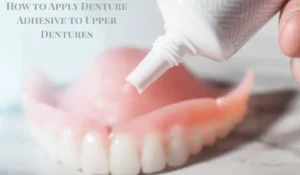
- Apply Sparingly: Squeeze 3-4 pea-sized dabs (about the size of a pencil eraser) onto the upper (gum-facing) side. Place them evenly: one in the center, and others toward the front and sides. Stay 1/4 inch from edges to prevent oozing into your mouth.
- Spread if Needed: For creams, gently press with a clean finger for even coverage; powders require a light shake-off after sprinkling.
- Insert Dentures: Rinse your mouth with water. Position the dentures over your upper gums, starting at the front. Bite down gently and hold for 5-10 seconds to set the bond.
- Check the Fit: Speak a few words or sip water. If it feels loose, remove and reapply a tiny bit more—less is often more.
Pro Tip: In humid Chicago summers, adhesives may set faster; test in small amounts. This method aligns with ADA evidence-based guidelines for optimal retention.
Common Mistakes to Avoid When Using Upper Denture Adhesive
Even seasoned users slip up. Here’s what not to do, based on patient stories and expert advice:
- Overapplying: Too much leads to gagging or zinc buildup—stick to pea-sized amounts.
- Skipping Cleaning: Residue causes slippage; always start fresh.
- Applying to Wet Dentures: It dilutes the hold—pat dry every time.
- Ignoring Expiry: Old adhesive loses stickiness; check dates monthly.
By dodging these, you’ll enjoy worry-free meals, like our Lincoln Park patients do at local bistros.
How to Safely Remove Denture Adhesive
End your day right to protect your gums:
- Soak dentures in warm water with a denture cleanser for 5-10 minutes.
- Gently brush off residue from grooves.
- Rinse your mouth thoroughly—avoid harsh scraping.
Healthline experts note this prevents irritation and maintains hygiene. If adhesive lingers, a soft cloth with olive oil works wonders.
When to See a Chicago Dentist for Denture Issues
Adhesive is a helper, not a hero. Consult a pro if you notice persistent slipping, sores, or pain—these signal refitting needs. In Chicago’s diverse neighborhoods, factors like diet or allergies can affect fit. Schedule with us for personalized care, or consider implants for adhesive-free living. Learn more from the American Dental Association’s denture care page.
For alternatives, check our cosmetic dentistry options with Dr. Maya Lin or pediatric care for families.
Frequently Asked Questions (FAQs)
How much denture adhesive should I use on upper dentures?
Start with 3-4 pea-sized dabs—enough for hold without excess. Adjust based on fit, but never exceed manufacturer guidelines to avoid health risks.
Do you apply denture adhesive to gums or the denture?
Always apply to the clean, dry denture surface that contacts your gums. This ensures even distribution and stronger adhesion.
How long does it take for upper denture adhesive to set?
It sets in 5-10 seconds after insertion, but full hold builds over 15-30 minutes. Avoid hot foods initially for best results.
Is denture adhesive safe for daily use in Chicago’s climate?
Yes, when used as directed—choose zinc-free, ADA-approved options. Humidity here can affect longevity, so reapply as needed.
Can you swallow denture adhesive accidentally?
Small amounts are generally safe, but overuse isn’t. Opt for non-toxic formulas and apply sparingly.
How often should I replace my upper dentures if adhesive isn’t enough?
Every 5-7 years, or sooner if your jaw changes. A Chicago check-up can assess this.
What’s the difference between upper and lower denture adhesive application?
Uppers need less (3-4 dabs) due to natural suction; lowers often require more along the ridge for stability.
Are there natural alternatives to commercial denture adhesives?
Some use aloe vera gel, but they lack the hold of tested products. Consult your dentist before switching.
Where can I get denture adhesive in Chicago?
Pharmacies like Walgreens in Lakeview stock ADA-approved brands. For fittings, visit EliteFixDenture.com.
Reviewed by Dr. Aziz Liaquat, Implant Dentistry
Disclaimer: This article is for informational purposes only and not a substitute for professional dental advice. Consult your Chicago dentist for personalized guidance.
For expert dental care in Chicago, visit EliteFixDenture.com today and reclaim your confident smile.