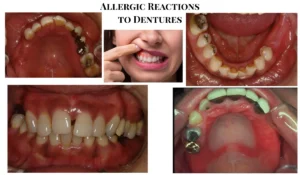
Allergic Reactions to Dentures
If you’ve recently gotten new dentures and noticed a nagging itch or burn in your mouth, you’re not alone. Many Chicagoans in bustling neighborhoods like Lakeview and Lincoln Park discover these discomforts soon after fitting. But here’s the quick answer you’re likely searching for: Allergic reactions to dentures are rare but possible, often triggered by acrylic resins or metals like nickel. Symptoms include redness, itching, and burning sensations—seek a dentist for patch testing and hypoallergenic alternatives like flexible nylon dentures for quick relief.
Key Dental Terms About Allergic Reactions to Dentures
Allergic Reactions to Dentures
Refers to sensitivity or immune response caused by denture materials such as acrylic resin or metal alloys. Common symptoms include mouth burning, redness, and itching.
Denture Allergy Symptoms
Describes signs like gum inflammation, oral rashes, or a metallic taste resulting from contact with denture materials. Early recognition prevents tissue irritation and infection.
Acrylic Denture Allergy
A reaction to methyl methacrylate (MMA) monomer found in acrylic bases. May cause burning mouth or mucosal redness; flexible nylon dentures are a popular hypoallergenic alternative.
Signs of Denture Allergy
Visible indicators such as swelling, soreness, or dry mouth under the denture plate—often confused with stomatitis or fungal irritation.
Metal Allergy in Dentures
Occurs when nickel or cobalt in metal clasps triggers oral contact dermatitis or lip rash. Metal-free or titanium options reduce risk.
Patch Testing for Dentures
A diagnostic test placing small denture material samples on skin or mucosa to identify allergic components safely. Recommended for persistent irritation cases.
Denture Material Allergies
Covers reactions linked to acrylics, residual monomers, or cleaning agents like persulfates. Addressed by switching to biocompatible materials and following ADA cleaning protocols.
Flexible Denture Alternatives
Soft, hypoallergenic options (e.g., Valplast or nylon) that eliminate metal and acrylic exposure while improving comfort and aesthetics.
Denture Irritation Relief
Refers to soothing techniques such as removing dentures overnight, using saltwater rinses, and applying dentist-prescribed steroid gels.
Chicago Denture Specialists
Local dental professionals, like the team at EliteFixDenture, who offer allergy testing, flexible denture fittings, and implant alternatives for sensitive patients.
What Are Allergic Reactions to Dentures?
Imagine settling into your favorite coffee spot in Lincoln Park, only to feel a persistent tingle under your dentures that ruins the moment. Allergic reactions happen when your immune system overreacts to materials in your dentures, like the acrylic base or metal clasps. True allergies affect less than 1% of wearers, per a National Institutes of Health review. More often, what feels like an allergy is actually irritation from poor fit, buildup of bacteria, or fungal issues like denture stomatitis.
These reactions can mimic common mouth woes, but spotting the difference early prevents bigger problems. At EliteFixDenture, we’ve helped countless locals tweak their prosthetics for comfort.
Common Causes of Denture Allergies
Denture materials are designed for durability, but they can sometimes clash with sensitive systems. Here’s what typically sparks trouble:
- Acrylic Resins: The pink base of most dentures contains methyl methacrylate, a monomer that can linger and irritate. Residual amounts cause burning in about 1% of cases.
- Metals in Clasps: Nickel or cobalt in partial dentures triggers rashes, especially if you’re already sensitive to jewelry.
- Other Culprits: Rare ties to latex gloves during fitting or cleaning agents with persulfates.
For Chicago’s active crowd—think weekend jogs along the lakefront—sweat and diet can worsen exposure. Learn more about safe materials from the American Dental Association’s denture care guide.
Types of Allergic Reactions and Irritations Caused by Dentures
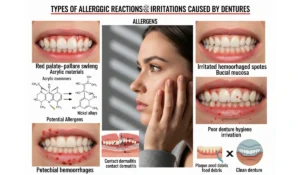
Types of Allergic Reactions and Irritations Caused by Dentures
Not all denture discomfort is the same. Some reactions come from irritation, while others are true allergies to denture materials. Here are the most common types dentists see—and how to tell them apart.
Irritant Contact Dermatitis
- Cause: It is typically caused by mechanical friction from an ill-fitting denture or chemical irritation from residual denture cleansers (specifically persulfates in some cases), rather than a true allergic reaction.
- Symptoms: Symptoms include localized redness, soreness, and irritation under the denture.
- Fix: Treatment focuses on removing the irritant, which may involve adjusting the denture fit, changing cleaning products, or relining the denture.
Allergic Contact Dermatitis
- Cause: This is a true immune response (specifically, a delayed type IV hypersensitivity reaction) to materials like the acrylic monomer (methyl methacrylate) in new dentures or certain metals (like cobalt-chromium in some partial dentures).
- Symptoms: The symptoms can include a burning sensation, swelling, redness, and a rash on the gums and lips.
- Fix: Management involves identifying the specific allergen through patch testing and replacing the denture with a non-allergenic material, such as hypoallergenic acrylics or a different metal alloy.
Denture Stomatitis (often mistaken for allergy)
- Cause: This is the most common denture-related condition, and it is primarily a fungal infection caused by Candida yeast, often due to poor oral/denture hygiene, continuous denture wear (especially at night), and ill-fitting dentures.
- Symptoms: Key signs are redness or inflammation on the palate (roof of the mouth) or other denture-bearing areas, which can sometimes be asymptomatic, but may also involve mild burning, a bad taste, or bad breath.
- Fix: Treatment involves antifungal medications (e.g., nystatin rinse), improved hygiene practices, and ensuring dentures are removed at night to allow tissues to rest.
Burning Mouth Syndrome (BMS)
- Cause: BMS is often multifactorial, sometimes linked to nerve issues, but it can also be associated with underlying conditions like dry mouth (xerostomia), nutritional deficiencies, hormonal changes (e.g., menopause), or in some cases, an undiagnosed allergy to denture materials.
- Symptoms: It is characterized by a burning or tingling sensation that occurs without visible signs of inflammation or redness on the tissues.
- Fix: The approach involves ruling out and addressing potential underlying causes (allergies, dry mouth), managing systemic factors (stress, nutrition), and ensuring proper denture fit.
Can Dentures Cause Allergic Reactions Over Time?
Yes — even long after you first start wearing them. Denture allergies can develop gradually as your mouth tissues and immune system change. Over time, repeated exposure to materials like acrylic resin, nickel, or cleaning agents can cause sensitivity that wasn’t present before.
According to NIH oral biomaterial studies, microscopic breakdown of older dentures can release trace irritants (residual monomers or metal ions), leading to delayed contact dermatitis or burning sensations.
What to watch for:
- Red or sore patches under older dentures
- Itchy gums after cleaning or soaking
- Taste changes or mild burning when wearing them longer hours
💡 Tip: If your dentures are over 5 years old, a quick reline or switch to hypoallergenic flexible materials (like nylon or titanium-supported designs) can prevent late-onset irritation and maintain oral comfort.
Symptoms to Watch For
Symptoms often creep up within days of wearing new dentures, starting mild but building if ignored. Keep an eye out for:
- Redness or swelling under the denture line
- Itching, burning, or a metallic taste
- Hives, rashes on lips, or mouth sores
- Dry mouth or loss of taste
One Lakeview patient shared how her “constant gum itch” turned out to be acrylic sensitivity—simple swap, and she was back to enjoying deep-dish without worry. If these hit, note when they flare; it helps your dentist pinpoint the issue.
Quick Tip Callout: Track symptoms in a journal. Jot down what you eat, how long you’ve worn your dentures, and any new cleaners—it’s gold for diagnosis.
How Is a Denture Allergy Diagnosed?
Don’t self-diagnose; a pro check is key. Your dentist starts with a gentle exam, ruling out fit issues or infections first. From there:
- Visual Inspection: Looking for inflammation patterns.
- Patch Testing: Small material samples on your skin to ID allergens—safe and quick, like an allergy scratch test.
- Referral if Needed: To an allergist for blood tests.
At EliteFixDenture, we use in-house tools to speed this up, getting you answers without the hassle of multiple visits.
Treatment Options for Allergic Reactions
Relief is straightforward once confirmed. Start by removing the dentures overnight to let tissues heal. Then:
- Medications: Antihistamines or steroid rinses for quick soothing.
- Material Switches: Opt for flexible, metal-free nylon dentures or porcelain blends.
- Advanced Fixes: Laser adjustments or, for long-term stability, dental implants.
| Option | Pros | Cons | Best For |
| Flexible Nylon Dentures | Soft, hypoallergenic, no metals | Slightly less durable | Sensitive mouths in active Chicagoans |
| Porcelain Alternatives | Natural look, allergy-free | Higher cost | Cosmetic concerns |
| Implants | Permanent, no daily removal | Surgical step | Full-arch needs |
Dr. Aziz Liaquat, our implant dentistry expert, often guides patients toward these for lasting comfort. Explore our dental implants page for more.
For deeper reading, check this NIH study on acrylic allergens.
Prevention and Aftercare Tips
Preventing flare-ups is easier than treating them. Daily habits make a big difference:
- Clean dentures with mild soap, not harsh chemicals.
- Soak overnight in cool water to reduce monomer leaching.
- Schedule biannual checkups—Chicago winters can dry mouths, amplifying risks.
Pro tip: If you’re in humid summers near the Loop, extra hydration keeps irritation at bay.
Comparison Table: Dentures vs. Implants for Allergy-Prone Patients
| Factor | Traditional Dentures | Dental Implants |
| Allergy Risk | Higher (acrylic/metals) | Low (titanium base) |
| Comfort | Removable, potential irritation | Fixed, natural feel |
| Maintenance | Daily cleaning | Like natural teeth |
| Cost in Chicago | $1,000–$3,000 | $3,000–$5,000 per arch |
When to See a Dentist for Denture Issues
Rush in if swelling blocks breathing or pain lasts over 48 hours—rare but serious. Otherwise, book if symptoms linger post-adjustment. Our Lakeview clinic offers same-week slots for peace of mind.
Frequently Asked Questions (FAQ)
Can You Be Allergic to Acrylic Dentures?
Yes, though rare. Acrylic’s monomer can cause contact dermatitis in sensitive folks. Switch to alternatives for relief.
How Common Are Denture Allergies?
Under 1% true cases, per NIH data—most “allergies” are fit or hygiene issues.
What Should I Do If I’m Allergic to My Dentures?
Stop wearing them, rinse with saltwater, and see your dentist for testing. Antihistamines help short-term.
Is Burning Mouth a Sign of Denture Allergy?
It can be, linked to residual chemicals. But check for thrush first—Mayo Clinic notes it’s often misdiagnosed.
Are There Hypoallergenic Dentures Available in Chicago?
Absolutely—our team crafts custom flexible options. Pair with veneers services for full smiles.
What are the first signs of a denture allergy?
Redness, itching, or burning under the denture—often within a week of use.
How do I know if it’s an allergy or just irritation?
Allergies persist despite good fit; irritation eases with adjustments. Patch tests confirm.
Can cleaning products cause denture reactions?
Yes, persulfates in cleansers trigger some. Stick to ADA-approved, mild options.
Are metal-free dentures better for allergies?
Often yes—they avoid nickel sensitivities common in 10% of groups.
How long does denture allergy recovery take?
1–2 weeks with removal and meds; full healing varies by severity.
Where can I get allergy-tested for dentures in Chicago?
EliteFixDenture in Lakeview offers on-site patch testing—convenient for Lincoln Park locals.
Do pediatric dentures cause allergies too?
Rare in kids, but check with a specialist. See our pediatric care page.
What’s the cost of hypoallergenic dentures in Chicago?
$1,500–$4,000, depending on type—insurance often covers basics.
Can orthodontics prevent denture allergies later?
Early alignment reduces future needs. Learn more on our orthodontics services.
This article is for informational purposes only and not a substitute for professional dental advice. Consult your dentist for personalized care.
For expert dental care in Chicago, visit EliteFixDenture.com or call our Lakeview office today.
Reviewed by Dr. Aziz Liaquat, Implant Dentistry