How to Remove Denture Glue
Struggling with that stubborn, sticky feeling after a long day wearing your dentures? You’re not alone—many Chicagoans in bustling neighborhoods like Lakeview and Lincoln Park deal with denture adhesive residue that can leave gums irritated and mouths uncomfortable. At EliteFixDenture.com, we understand how important it is to keep your smile fresh and healthy. As trusted local dentists, we’re here to guide you through simple, effective ways to remove denture glue without hassle or harm.
Quick Answer: How to Remove Denture Glue
To safely remove denture glue, start by rinsing your mouth with warm salt water for 30 seconds to loosen the bond. Gently rock your dentures side to side and lift them out. Brush your gums softly with a soft-bristle toothbrush and mild soap, then soak the dentures overnight in a denture cleaner solution. This routine takes just 5-10 minutes and prevents buildup.
Key Dental Terms About Denture Glue Removal
Denture Adhesive:
A paste, powder, or strip applied to hold dentures securely through suction.
Denture Glue Residue:
Leftover adhesive film that sticks to gums or the denture base after removal.
Adhesive Remover:
Mild cleaning agents, saltwater rinses, or natural oils used to safely dissolve glue.
Denture Stomatitis:
Inflammation caused by trapped bacteria from poor adhesive removal.
Natural Denture Cleaner:
Safe household solutions such as baking soda, vinegar, or olive oil that loosen residue.
Overnight Denture Soak:
A daily practice of submerging dentures in water or cleanser to maintain fit and hygiene.
💡 Chicago Tip:
Local dentists in Lakeview recommend rinsing dentures with warm (not hot) water nightly—especially during dry, heated indoor winters.
Why Proper Denture Glue Removal Matters for Your Oral Health
Imagine ending your day with a deep-dish pizza in Wrigleyville—delicious, but that extra security from denture adhesive can leave behind a gooey mess if not handled right. According to the American Dental Association (ADA), daily removal of adhesive is essential to avoid plaque buildup, gum irritation, and potential infections. Leftover residue traps bacteria, which can lead to sore spots or even denture stomatitis, a common inflammation affecting up to 65% of denture wearers per NIH studies.
In Chicago’s variable weather, dry winds off Lake Michigan can make gums extra sensitive, so gentle removal isn’t just convenient—it’s key to long-term comfort. Skipping it? You risk needing adjustments sooner than expected. For more on daily routines, check the ADA’s denture care guidelines.
Step-by-Step Guide to Removing Denture Glue from Your Mouth and Gums
Follow these expert-recommended steps from sources like Mayo Clinic and Cleveland Clinic for a hassle-free process. Always wash your hands first to keep things hygienic.
Loosening the Adhesive with a Simple Rinse
- Swish warm (not hot) salt water in your mouth for 30-60 seconds. Mix 1/2 teaspoon of salt in 8 ounces of water—it’s a natural solvent that breaks down the glue without irritation.
- Why it works: Salt draws out moisture, softening the adhesive seal. Many of our Lakeview patients swear by this after windy Cubs games.
Gently Removing Your Dentures
- Place a finger on each side of your upper denture and rock it gently up and down, then lift straight out. For lowers, tilt the front slightly.
- Tip: Fill your sink with water first—if they slip, they’ll land softly without cracking.
Cleaning Your Gums Thoroughly
- Use a soft-bristle toothbrush (no toothpaste yet) with mild dish soap or hand soap. Brush in circular motions for 1-2 minutes.
- Rinse with cool water and follow with an alcohol-free mouthwash to freshen. Avoid harsh scrubbing to prevent gum abrasions, as advised by Healthline.
How to Clean Denture Glue from Your Dentures
Your dentures deserve TLC too—residue can warp the fit over time. Soak them nightly to mimic a “spa day” for your smile.
- Rinse under lukewarm running water to dislodge chunks.
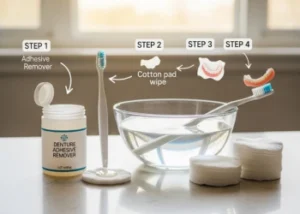
- Apply a pea-sized amount of denture cleanser (like Polident, per product guidelines) or mild soap to a dedicated soft brush.
- Scrub gently, focusing on grooves where glue hides. Avoid regular toothpaste—it’s abrasive and can scratch acrylic.
- Soak overnight in a fizzy cleanser solution or water. In the morning, rinse well.
How to Remove Denture Glue
Pro tip: For Chicago’s hard water, add a splash of white vinegar to the soak weekly for extra shine (more on that below).
Natural Home Remedies for Stubborn Denture Glue
Prefer DIY over store-bought? These gentle options, backed by everyday oral health wisdom from Mayo Clinic, work wonders.
- Baking Soda Paste: Mix 1 teaspoon with water into a paste; brush on gums and dentures. It neutralizes and lifts residue without chemicals.
- Olive Oil Dab: Apply a tiny amount to gums with a cotton swab—oils dissolve adhesives naturally. Rinse after 1 minute.
- Vinegar Soak: 1 part white vinegar to 3 parts water for dentures. Soak 10 minutes max; it’s acidic enough to break bonds but safe for acrylic.
Quick Tips Callout Box
- Rinse immediately after meals to prevent hardening.
- Store dentures in water overnight—never dry.
- Rotate adhesives; overuse signals a refit need.
- Track gum health: Redness? Schedule a checkup.
What Dissolves Denture Adhesive Best?
Warm water-based rinses top the list, but for tough spots, effervescent denture cleaners dissolve glue fastest, per PubMed research on surfactant efficiency. Avoid acetone or harsh solvents—they damage materials. In our Chicago practice, we recommend starting simple: salt water for 80% of cases.
How to Remove Dried Denture Glue Without Irritation?
Dried glue? Soften it first with a 5-minute warm compress on your cheeks, then proceed with the rinse-and-brush method. If it’s caked on dentures, a 10-minute baking soda soak revives them. Patience prevents tears—rushing leads to gum nicks.
Is Vinegar Safe for Removing Denture Glue?
Yes, diluted white vinegar is a safe, affordable dissolver for dentures (not directly on gums). It breaks down adhesive proteins gently. Cleveland Clinic echoes this for natural cleaning, but limit to once weekly to avoid over-acidifying. For more natural remedies, visit the Mayo Clinic’s oral health page.
Comparison: Denture Adhesive Types and Removal Ease
| Adhesive Type | Pros | Cons | Removal Time | Best For Chicago Lifestyles |
| Cream | Strong hold, all-day comfort | Can ooze, harder to remove | 5-7 min | Busy professionals in Lincoln Park |
| Powder | Easy apply, less mess | Weaker hold in humid weather | 3-5 min | Active folks hiking in Lincoln Park |
| Strips | No squeezing, precise | May shift during meals | 4-6 min | Seniors enjoying Gold Coast brunches |
Data adapted from ADA guidelines on adhesive use. Considering a switch? Explore our denture implants page for permanent options.
When Chicago Winters Make Denture Care Trickier
Our cold snaps can dry out mouths faster, thickening adhesive. If removal feels extra tough, it might signal ill-fitting dentures from bone changes—common after age 65, per NIH. Swing by EliteFixDenture in Chicago for a quick adjustment. Dr. Aziz Liaquat, our Implant Dentistry specialist, often sees this in winter checkups and recommends humidifiers alongside routines.
FAQ: Your Denture Glue Questions Answered
How often should I remove denture glue?
Every night before bed to let gums rest and prevent infections.
Can I use mouthwash to remove denture adhesive?
Yes, alcohol-free versions loosen it well—gargle for 30 seconds post-rinse.
What if denture glue irritates my gums in Chicago’s dry air?
Switch to powder adhesives and moisturize with oral gels; book a local fitting if persistent.
How do I remove denture glue from the roof of my mouth?
Use a damp cloth or soft brush after rinsing—gentle upward strokes work best.
Is sleeping with dentures and glue safe?
No—remove nightly for gum health, as per ADA recommendations.
What’s the fastest way to remove denture glue at home?
Warm salt rinse followed by soft brushing; under 5 minutes total.
Can kids with partial dentures use the same removal methods?
Yes, but supervise and use milder soaps. See our pediatric dentistry page for kid-specific tips.
How much denture adhesive is too much?
Stick to 3-4 pea-sized dabs; more signals a need for professional refit.
Where can I get denture care supplies in Chicago?
Local pharmacies in Lakeview stock ADA-approved cleaners— or ask us for recs!
This article is for informational purposes only and not a substitute for professional dental advice. Consult your dentist for personalized guidance.
For expert dental care in Chicago, visit EliteFixDenture.com or call to schedule your fitting today. Your confident smile awaits!
Reviewed by Dr. Aziz Liaquat, Implant Dentistry